To save content items to your account,
please confirm that you agree to abide by our usage policies.
If this is the first time you use this feature, you will be asked to authorise Cambridge Core to connect with your account.
Find out more about saving content to .
To save content items to your Kindle, first ensure no-reply@cambridge.org
is added to your Approved Personal Document E-mail List under your Personal Document Settings
on the Manage Your Content and Devices page of your Amazon account. Then enter the ‘name’ part
of your Kindle email address below.
Find out more about saving to your Kindle.
Note you can select to save to either the @free.kindle.com or @kindle.com variations.
‘@free.kindle.com’ emails are free but can only be saved to your device when it is connected to wi-fi.
‘@kindle.com’ emails can be delivered even when you are not connected to wi-fi, but note that service fees apply.
While George MacDonald’s reputation as a fiction writer rests upon fantasy and Christianity more than realism, his realist novels reflect a remarkable generic range. MacDonald wrote twenty-nine realist novels between 1863 and 1897, most of them set in Scotland and England. Together, these novels share many overlapping themes and plot trajectories, and critics have objected to their formulaic characters (noble workmen, saintly women, dying children) and predictably happy endings. These shared features aside, the novels set in England also provide a micro-history of ‘the novel’ in the later Victorian age, incorporating elements of the social-problem novel and a concern for the urban poor; the sensation novel’s detective plot; and the gothic novel’s seeming supernaturalism, ultimately explained by nature. This chapter examines these subgenres as well as MacDonald’s sophisticated use of metafiction. While metafiction has been dominantly explored in modernism, MacDonald is one of many Victorian novelists whose self-conscious formal techniques draw attention to his experimental realism.
George MacDonald (1824–1905) remains one of the most persistently read and beloved of the Victorians. His fairy tales and children's books have delighted generations of young readers, while his sermons, essays, and poems still offer startling insights into life and literature. He has increasingly been recognised as one of Scotland's most important nineteenth-century novelists. Here, seventeen new essays from an international, diverse group of scholars illuminate the crucial aspects of MacDonald's remarkable, varied works. The chapters are organised around MacDonald's life, major genres, and central themes, and provide clear points of entry for students, researchers, and curious readers. For readers approaching MacDonald's works for the first time and for those renewing a long acquaintance, The Cambridge Companion to George MacDonald is an indispensable guide. With a foreword by Malcom Guite and an afterword by Roderick McGillis.
This Element offers the first comprehensive study of George Crabbe's engagement with medical thought and practice in his poetry. Drawing on his interest in illness, care, and healing as a trained physician, surgeon, apothecary, and obstetrician, it addresses how his medical expertise and awareness inform his assessment of social problems, his perspective on the role of a poet, and his views on education and religion. The study examines the intersection between Crabbe's poetic achievement and medical discourse in advancing humanist healing for mind and soul, and explores how his verse registers systemic and ethical issues surrounding poverty, addiction, intoxication, and madness through an unsentimental and truthful style. By tracing the moral and social implications of the connection between medical vision and poetic philosophy, it recovers Crabbe as a significant poet-physician of the long eighteenth century and invites renewed attention to the cultural work of his poetry in health and medicine.
Gothic Dementia: Troubled Minds in Gothic Timelines introduces Gothic studies as a valuable lens through which to critically consider how we think about dementia. It argues that the Gothic's foundational narrative techniques can model approaches to similar dementia symptoms, such as chronological confusion, fragmentation, cyclical storytelling, repetition, unreliable narrators, unstable identities, uncanny behaviours, and Otherness. If we can navigate these challenging narrative elements in literature, can we navigate similar challenging dementia signs using interpretive strategies? Gothic Dementia considers this question in two ways: (1) through Gothic literary elements that correlate to characteristics of dementia and (2) through contentious horror film depictions of characters with dementia and their caregivers. Reading Gothic works and horror films within the context of dementia studies—and vice versa—can contribute valuable insights into a feared disease that threatens the core of who we imagine ourselves and others to be.
This chapter explores Elizabeth Bowen’s career as a literary critic, which is a significant but often overlooked aspect of her writing life. Focusing on her two published essay collections – Collected Impressions (1950) and Afterthought: Pieces about Writing (1962) – as well as a series of uncollected book reviews and articles that appeared in a wide range of British and American newspapers and journals, this chapter examines Bowen’s distinctive approach to criticism and traces the development of her public persona as a critic, particularly from the late 1940s onwards. While it is well documented that Bowen’s prodigious critical output was driven in part by financial necessity, her writing in this domain demonstrates a sensitivity to atmosphere and a deep interest in better understanding the craft of writing. A reviewer who kept the common reader in mind, Bowen above all else conveyed to her readers the sense of being a reasonable judge with varied taste. This chapter assesses Bowen’s enduring critical legacy and argues that her contributions to literary journalism merit sustained attention within the broader histories of twentieth-century criticism.
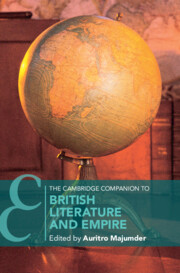
The chapter provides an overview situating the literatures produced or circulated in Britain and the racialized, classed, and gendered imaginaries of empire. English literature was informed by imperial concerns and anti-capitalist critique alike since the sixteenth century, even as England was a minor player among European imperial powers. Contemporary scholarship, while attending to marginalized authors, such as women, immigrants, minorities, and the working class, demonstrates that diverse literature, prose especially, but also drama and verse, were shaped by expanding trade, global markets, territorial appropriations, military conquests, human emigration, and cultural contact. A mix of ideologies spawned in the nineteenth century to rationalize British presence as not only inevitable but beneficial for the colonized; for colonized intellectuals, on the other hand, literature fostered alternative visions of resistance. Diasporic writers in twentieth-century Britain introduced readers to the vocabulary and memory of colonized lands. The chapter contends that many themes of contemporary culture are not unique to the present but variations of older, far-flung contests. Literature, in its ability to articulate shifts in perception, sensibilities, and relations before such changes are actualized, is an indispensable site of analysis and study.
This book focuses on the modernist epic, analyzing the intricate manifestations of nostalgia in these texts in order to provide a new perspective on the emotion's political ramifications. It argues that the modernist epic, with its fragmentary forms and vast allusive range, exhibits a mode of nostalgia that disrupts linear cultural tradition in favor of layering and juxtaposing past and present. Focusing on techniques like juxtaposition and parallelism not only provides insight into modernist poetics; it also permits a more complex assessment of nostalgia's cultural implications. The methodological lens of literary form illuminates how these texts seek neither to abandon nor to reconstruct the past, rather striving to preserve and reimagine it. This innovative poetics of nostalgia addresses not only literary scholarship, but also history, politics, classics, and media and cultural studies.Archlgcl Hokkdo Japan Indgns Hokkdo.
The volume outlines modern British literature's relation to global empire from the 16th century to the present. Spanning the interactions between Britain, Europe, and the world outside, in Asia, Africa, Australasia, North America, and the Caribbean, it suggests the centrality of colonial-capitalist empire and global exchanges in the development of major genres of literary fiction, poetry, drama, and non-fiction. Illuminating the vital role of categories such as race, class, gender, religion, commerce, war, slavery, resistance, and decolonization, the twenty-one chapters of the book chart major aspects of British literature and empire. In rigorous yet accessible prose, an international team of experts provides an updated account of earlier and latest scholarship. Suitable for a general readership and academics in the field, the Companion will aid readers in familiarizing with Britain's imperial past and its continuing relevance for the present.
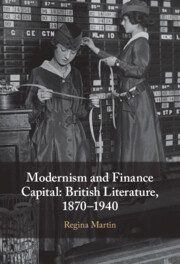
Drawing on Giovanni Arrighi’s The Long Twentieth Century, the introduction develops a theory of finance capital as a complex historical process, which, during the modernist period, involved the economic and cultural turn toward London, the rise of the modern corporation, the growth of the professional classes, and the emergence of affect as value form. The introduction differentiates this definition of finance capital from those definitions that inform the field of critical financial studies, and it surveys economic criticism in modernist studies to demonstrate the minimal attention paid to finance capital in the field despite the fact that the period corresponds to an era of rapid and widespread financialization. The introduction argues that the crisis in representation often identified with modernism participates in a historical moment of financial crisis as artists and intellectuals account for the emergence of new value forms like speculation, volatility, risk, and affect.
Modernism and Finance Capital interprets modernism as a historical moment of financial crisis. It expands the definition of finance capital beyond mode of capital accumulation and value form to include a complex of historical processes during the modernist period, which includes the growth of the professional classes, the rise of the modern corporation, the economic turn toward London, and the emergence of affect as economic and literary value form. The book thereby locates the origins of twenty-first century affective economy in the turn-of-the-twentieth century modernist and financial revolutions. Scholars working at the crossroads of economic and cultural studies will find a model for how to interpret literature and other cultural artifacts as participating in economic processes of finance capital even when they do not engage explicitly with such issues.
Folk Gothic begins with the assertion that a significant part of what has been categorised as folk horror is more accurately and usefully labelled as Folk Gothic. Through the modifier 'folk', Folk Gothic obviously shares with folk horror its deployment (and frequent fabrication) of diegetic folklore. Folk Gothic does not share, however, folk horror's incarnate monsters, its forward impetus across spatial and ontological boundaries and the shock and repulsion elicited through its bodily violence. The author argues that the Folk Gothic as a literary, televisual and cinematic formation is defined by particular temporal and spatial structures that serve to forge distinctly nonhuman stories. In emphasising these temporal and spatial structures – not literal 'folk' and 'monsters' – the Folk Gothic tells stories that foreground land and 'things', consequently loosening the grip of anthropocentrism.
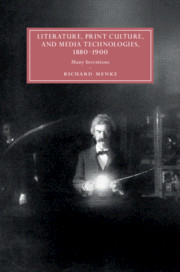
From telephones and transoceanic telegraphy to typewriters and phonographs, the era of Bell and Edison brought an array of wondrous new technologies for recording and communication. At the same time, print was becoming a mass medium, as works from newspapers to novels exploited new markets and innovations in publishing to address expanded readerships. Amid the accelerated movements of inventions and language, questions about media change became a transatlantic topic, connecting writers from Whitman to Kipling, Mark Twain to Bram Stoker and Marie Corelli. Media multiplicity seemed either to unite societies or bring division and conflict, to emphasize the material nature of communication or its transcendent side, to highlight distinctions between media or to let them be ignored. Literature, Print Culture, and Media Technologies, 1880–1900 analyzes this ferment as an urgent subject as authors sought to understand the places of printed writing in the late nineteenth century's emerging media cultures.
In the years 1774-1830 literature became increasingly subject to modes of marketing and consumption that helped consolidate its functions, whether for entertainment or instruction, within a domestic space. One material sign of this was the rise in production of smaller format books, namely more octavos and duodecimos, and fewer quartos, signalling portability and accessibility. Most famously, Wordsworth and Coleridge, both notorious in their deferring of print publication, consider the problem of how to discover the true reader among an amorphous mass readership how to circumvent the levelling properties of print and address the 'clerisy' of readers through the 'living' text. The distinction between writing and reading, with its attendant implications of authentic and inauthentic communication, can also surface as one of genre, with poetry occupying the high ground and the novel relegated to a lesser space shaped by the low expectations of its mass readership and the commodifying strictures of the print industry.
To understand how war found its place in British literature in the late eighteenth and early nineteenth centuries, one might follow William Cowper's lead when, in The Task he organizes the scene of war around the figure of the post-boy. Cowper's post-boy offers but one example of how a war fought on foreign ground and distant seas came home to England. Wartime creates itself out of continual, daily reading: the facts shift from day to day, from excerpt to excerpt, yielding the sense that no single instalment will deliver the truth and yet every snippet is crucial. Military historians remind us that, for infantrymen and cavalrymen, warfare in the age of Napoleon consisted primarily of the tedium of waiting. Registering the agony of those waiting for news of war, one begin to realize how frequently war's pain is transferred from the body of the soldier to those Coleridge calls 'spectators and non-combatants', from battlefield to home.
Recommend this
Email your librarian or administrator to recommend adding this to your organisation's collection.