To save content items to your account,
please confirm that you agree to abide by our usage policies.
If this is the first time you use this feature, you will be asked to authorise Cambridge Core to connect with your account.
Find out more about saving content to .
To save content items to your Kindle, first ensure no-reply@cambridge.org
is added to your Approved Personal Document E-mail List under your Personal Document Settings
on the Manage Your Content and Devices page of your Amazon account. Then enter the ‘name’ part
of your Kindle email address below.
Find out more about saving to your Kindle.
Note you can select to save to either the @free.kindle.com or @kindle.com variations.
‘@free.kindle.com’ emails are free but can only be saved to your device when it is connected to wi-fi.
‘@kindle.com’ emails can be delivered even when you are not connected to wi-fi, but note that service fees apply.
This chapter explores the external influences that have shaped the symphony in Britain and Ireland from 1900 to the present, focusing on how composers engaged with styles, techniques and cultural forces outside the traditional Austro-German symphonic tradition. It considers two broad categories: stylistic techniques present in local musical traditions, such as folk music and Renaissance polyphony, and international influences ranging from Sibelius and serialism to electronic music and post-imperial cultural exchange. The symphony in the British Isles is framed as a flexible medium – simultaneously conservative and adaptive – capable of assimilating modernist, popular and global idioms. Particular attention is given to the deep and lasting impact of Sibelius, alongside responses to continental modernism and emerging polystylist approaches. Rather than forming a singular school, British and Irish symphonic writing reflects a patchwork of individual voices negotiating complex cultural, political and musical inheritances in ways that have kept the genre relevant and richly varied into the twenty-first century.
The perceived success (or failure) of symphonies by British composers rested largely, in part, on how music critics, writers and the general public felt about the works and how they discussed the works publicly. The British musical press, firmly established by the beginning of the twentieth century, provided any number of outlets for critics, anonymous writers, performers, conductors and others to write about symphonic music as it was being premiered and performed. And it is this body of writing that this chapter primarily engages with, to provide insight into how both the public and the press perceived the then current state and future of British symphonic music.
The four symphonies of Michael Tippett occupy a central position in his output. Written at different stages in his compositional career, each symphony not only functions as an important waypoint along Tippett’s stylistic journey, but also has something of significance to express, whether that concerns the genre itself and its relationship to past composers and models, the human condition, or contemporary society. The concept of humanity is central to Tippett’s oeuvre; in interrogating this humanistic element, this chapter examines Tippett’s four symphonies (and the withdrawn early Symphony in B♭) through a triple lens of narrative, agency and embodiment, an approach driven not only by the immediacy of the symphonies’ communicative musical language, but also through a recognition of Tippett’s views of symphonic music as reflecting the ‘inner flow of life’. The chapter argues that listening for narratives of agency and embodiment brings new light, and life, to Tippett’s symphonies and acts as a powerful reminder of what it is to be human.
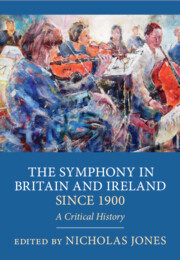
The symphony has long stood as one of music's most prestigious and enduring genres, yet in Britain and Ireland its story since 1900 remains surprisingly underexplored. This landmark volume offers the first comprehensive account of the symphony's trajectory across the twentieth and twenty-first centuries, revealing a rich, multifaceted tradition shaped by an extraordinary diversity of voices, styles and contexts. Drawing together distinguished international scholars and composers, the book surveys both celebrated figures such as Elgar, Vaughan Williams and Tippett, and lesser-known yet vital contributors including Ruth Gipps, Ina Boyle and Alan Bush. Through historical, analytical, and critical perspectives, contributors examine commissioning networks, cultural influences, performance traditions and questions of identity, representation and reception. Contemporary reflections by leading composers extend the discussion into the present, where changing approaches and aesthetics challenge and expand definitions of the symphony itself. Accessible, authoritative and groundbreaking, this volume redefines our understanding of the British and Irish symphony – past, present and future.
Recommend this
Email your librarian or administrator to recommend adding this to your organisation's collection.