To save content items to your account,
please confirm that you agree to abide by our usage policies.
If this is the first time you use this feature, you will be asked to authorise Cambridge Core to connect with your account.
Find out more about saving content to .
To save content items to your Kindle, first ensure no-reply@cambridge.org
is added to your Approved Personal Document E-mail List under your Personal Document Settings
on the Manage Your Content and Devices page of your Amazon account. Then enter the ‘name’ part
of your Kindle email address below.
Find out more about saving to your Kindle.
Note you can select to save to either the @free.kindle.com or @kindle.com variations.
‘@free.kindle.com’ emails are free but can only be saved to your device when it is connected to wi-fi.
‘@kindle.com’ emails can be delivered even when you are not connected to wi-fi, but note that service fees apply.
Domestication is not just something that humans impose on animals, but an ancient structure binding both creatures within shared systems of subjugation. Advancing trenchant new ideas, David Carr unpacks Genesis 1–11 to reveal ways in which embedded human–animal, gender, and group hierarchies constitute our world. Drawing on animal studies and Indigenous perspectives alike, he treats the Bible's origin stories as an invitation to rethink inter-species flourishing and re-imagine community based on intrinsic worth rather than mere utility. Tracing human rule over creation in Eden to slavery and concentrated human power at Babel, the author exposes an escalating trajectory of domination. Yet these foundational stories also suggest that global subjugation is not inevitable, but instead the consequence of a fall from an earlier relational, reciprocal mode of living. Here is a hopeful framework that recognizes this crisis while offering alternatives rooted in respectful relations and multispecies kinship.
Moringa (Moringa oleifera Lam.) is cultivated globally for leaf powder, fruit, seed oil and pharmaceuticals, yet germplasm characterization remains limited, constraining its use and improvement. We characterized 148 individuals from 32 families across seven countries/programmes in a two-season randomized complete block trial in Hawaii, USA, measuring 12 morphological, phenological and agronomic traits. Significant family-level variation (p < 0.05) was detected for nine traits. Genetic correlations between 1-year and 6-month post-coppice regrowth ranged from rg = 0.544 (leaf count) to rg = 0.776 (tree height), indicating trait-dependent rank stability; coppice shoot production was highly consistent between 1- and 6-month regrowth (rg = 0.896). Trait antagonisms between market classes were evident, with tree height positively correlated with leaf production (r = 0.61) and flowering time negatively correlated with seed weight (r = −0.41). Selection indices identified 80 individuals specialized for either leaf or fruit/seed markets, with none excelling in both, documenting complete market specialization not previously reported in moringa. These stable traits underpin principal markets, making this characterized, public-domain germplasm immediately valuable for market-targeted evaluation and breeding.
Chapter 1 uses the picture of human creation to “rule” other creatures in Genesis 1 as an entry point for exploring how the category of “animal” most fundamentally identifies a nonhuman being that is a) exploitable if useful or b) expendable if not. At the same time, Genesis 1 provides an occasion to reflect on how agriculturally oriented humans created gods in their image, gods who exhibited both the power and the care of other beings characteristic of domesticators.
Introduction: Using “The Lord is my shepherd” as a point of entry, this chapter rethinks domestication as a shared condition forming both human and animal lives rather than a practice imposed only upon nonhuman creatures. By exposing how ancient, human-centered frameworks of subjugation obscure the mutual confinement of humans and animals within long-standing systems of power, it reveals domestication as a pervasive and largely unrecognized structure of social life.
Chapter 2 looks at how the Genesis 1 and related domination-oriented onto-stories compare with accounts of domestication that emphasize co-evolution and mutuality of humans and animals. It places human domestication of animals within a broader picture of forms of inter-species relations, including mutualistic symbiosis, parasitic symbiosis, commensalism and mixed categories.
Despite a long and dynamic history of coexistence with humans, the prehistory and domestication of the common pigeon (Columba livia) are not well understood. Here, the authors re-examine a large assemblage of avian bones excavated from Late Bronze Age contexts at Hala Sultan Tekke on Cyprus, aiming to contextualise the presence of pigeons within the settlement and their relationship with contemporaneous humans. The results of zooarchaeological and stable isotope analyses, they argue, suggest that these birds may have been semi-domesticated and may have held a symbolic/ritualistic role that challenges their common perception as mere urban dwellers.
This article offers an assessment of the current state of scholarship on animal ethics in Islam. It first discusses a group of texts that share the preoccupation of demonstrating the superiority of Islam’s animal teachings, thus exhibiting a clearly apologetic tone. Then it turns to the debate on animal ethics in Western academia. By raising challenging questions, the latter holds the promise of delving deeper into the subject, but at its current stage much of it is still hampered by factual inaccuracies and methodological flaws. In conclusion, the article explains why the subject of animal ethics in Islam is particularly deserving of careful study.
Giving animals the opportunity to exercise agency can improve their welfare, but horse owners and researchers may not be aware of the growing body of agency research in other animals, and studies on agency and choice in horses are scattered across disciplines and not connected to each other or to broader theory. This paper summarises research findings on management of domestic horses through the lens of animal agency and explores the potential applications of research on choice, control, and challenge in animals to improve the welfare of horses.
Friendship has its public life in urban spaces. Drawing on recent social constructionist approaches to the domestication of space in urban studies, and based on ethnographic fieldwork conducted in the outdoor spaces of a mall in Beijing, China, this chapter explores how ordinary visitors domesticate the mall in their everyday lives. Focusing on the practice of friendship in three small groups, I trace how the mall’s spaces are (1) appropriated as “playgrounds” by after-school children, (2) negotiated as “informal childcare workshops” by guardians, and (3) claimed as “senior centers” by elderly visitors. I argue that the mall is not merely a backdrop for friendship, but that friendship practices constitute the mall beyond its default setting as merely a space for consumption. This chapter contributes to scholarship on modern friendship beyond the private realm and advocates for a more embracing conceptualization of friendship in urban spaces.
Threats to the ability of democratically elected governments to drive and preserve their citizens’ economic development and thus promote their human rights are threats to the confidence of their citizens in democracy itself. Threats to the cyber resilience of critical infrastructure assets — that enable and preserve economic development — are threats to that very confidence. This chapter positions the technical backbones for digital public infrastructure (DPI), which delivers digitally native essential services, as critical infrastructure assets. This chapter uses the approach to DPI of the world’s largest democracy as a case study. It explores how India’s DPI — built per an open standards-based paradigm, implemented by protocols and Application Programming Interfaces (APIs) that comprise the ‘India Stack’ – operates at the scale of the world’s largest population. It finds the cyber resilience of the technical backbones for India’s DPI vital to India’s democratic resilience. This chapter thus calls on India to prosecute systemic cyber risks to these backbones that stem from the critical software running on them. India must incentivise vendors of that software to invest in the security of their software development life cycles and mitigate software supply chain risks. India must also manage open source software risks to its DPI appropriately. This chapter concludes by putting forward how India can export its approach and the India Stack. Other democracies, especially India’s Global South partners, stand to gain from its experience, including by strengthening the trust and confidence of their citizens in democracy itself, as well as by implementing norms for responsible state conduct in cyberspace that were approved by the United Nations General Assembly. Such benefits will be reinforced by Indian advice on how to deploy DPI in a cyber-resilient manner, informed by the multilateral consensus on DPI, software security and cyber resilience, which India forged as G20 President in 2023.
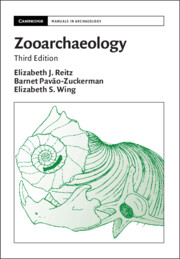
This leading textbook introduces students and practitioners to the identification and analysis of animal remains at archaeology sites. The authors use global examples from the Pleistocene era into the present to explain how zooarchaeology allows us to form insights about relationships among people and their natural and social environments, especially site-formation processes, economic strategies, domestication, and paleoenvironments. This new edition reflects the significant technological developments in zooarchaeology that have occurred in the past two decades, notably ancient DNA, proteomics, and isotope geochemistry. Substantially revised to reflect these trends, the volume also highlights novel applications, current issues in the field, the growth of international zooarchaeology, and the increased role of interdisciplinary collaborations. In view of the growing importance of legacy collections, voucher specimens, and access to research materials, it also includes a substantially revised chapter that addresses management of zooarchaeological collections and curation of data.
The chapter deals with fidelity of content, specifically concepts and register. I first discuss the querelle (‘dispute’) between those who favoured word-for-word translations and those who believed in updating or beautifying the ancient text for their contemporary audience, as captured in the phrase ‘les belles infidèles’, an approach which involves the notion of ‘compensation’. I then ask how translators tackle key concepts in Virgil’s oeuvre, such as the untranslatable pietas of the Aeneid, along with specific challenges that arise from Virgil’s Latin texts, such as puns and the incomplete lines. I investigate how translators attempt to match the various registers of the Eclogues, Georgics and Aeneid, then I consider the lens provided by the theoretical spectrum of domestication and foreignization, with examples including Aeneid translations in Italian, English, Romanian, German, Brazilian Portuguese and Russian, concluding with Chew’s uncategorizable Georgics.
This introductory chapter includes analysis of the earliest versions of Virgil: in eleventh-century Ireland, in the Roman d’Enéas and in Middle High German. It explains how I chose to organize discussion of the translation history of Virgil in the Western tradition. I explain the chronological, geographical and linguistic scope of the book and discuss the relevance of translation theory and reception theory to the project. I account for the organization of the book by considering what it might have been (and is not) as well as what it is; I include summaries of the ten following chapters along with indications of the major and minor translations tackled in each. Because the book is composed of numerous case studies, I close by facing the hermeneutic challenge of how to rise above the case study and by indicating the interpretative gains of this study and ways in which it opens up further avenues for exploration by other scholars.
We explore and document the joint evolution of domesticated cereal production and highly hierarchical social structures in deep history and then trace the similar structures thorough to the plantation system. All of this history points to the gradual evolution of the monocultural system, today very prevalent but highly criticized on both social and ecological grounds. This is followed by a detailed examination of what it means to convert from the monocultural ideology to a polycultural system and all the details that emerge from such a move. We note that agriculture did not start with the idea of monoculture, the latter situated in particular historical moments, but that early agriculture and today’s more advanced agroecological systems are more accurately characterized as diversified farming systems.
The transition to sedentary agricultural societies in northern China fuelled considerable demographic growth from 5000 to 2000 BC. In this article, we draw together archaeobotanical, zooarchaeological and bioarchaeological data and explore the relationship between several aspects of this transition, with an emphasis on the millet-farming productivity during the Yangshao period and how it facilitated changes in animal husbandry and consolidation of sedentism. We place the period of domestication (the evolution of non-shattering, initial grain size increase and panicle development) between 8300 and 4300 BC. The domestication and post-domestication of foxtail (Setaria italica) and broomcorn (Panicum miliaceum) millet increased their productivity substantially, with much greater rate of change than for rice (Oryza sativa). However, millets are significantly less productive per hectare than wet rice farming, a point reflected in the greater geographical expanse of northern Neolithic millet cultures (5000–3000 BC) in comparison with their Yangtze rice-growing counterparts. The domestication of pigs in the Yellow River region is evidenced by changes in their morphology after 6000 BC, and a transition to a millet-based diet c. 4500–3500 BC. Genetic data and isotopic data from dogs indicate a similar dietary transition from 6000 to 4000 BC, leading to new starch-consuming dog breeds. Significant population increase associated with agricultural transitions arose predominately from the improvement of these crops and animals following domestication, leading to the formation of the first proto-urban centres and the demic-diffusion of millet agriculture beyond central northern China between 4300–2000 BC.
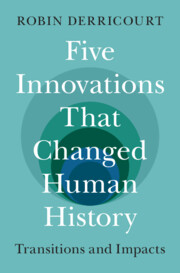
We live in an era of major technological developments, post-pandemic social adjustment, and dramatic climate change arising from human activity. Considering these phenomena within the long span of human history, we might ask: which innovations brought about truly significant and long-lasting transformations? Drawing on both historical sources and archaeological discoveries, Robin Derricourt explores the origins and earliest development of five major achievements in our deep history, and their impacts on multiple aspects of human lives. The topics presented are the taming and control of fire, the domestication of the horse,and its later association with the wheeled vehicle, the invention of writing in early civilisations, the creation of the printing press and the printed book, and the revolution of wireless communication with the harnessing of radio waves. Written in an engaging and accessible style, Derricourt's survey of key innovations makes us consider what we mean by long-term change, and how the modern world fits into the human story.
The introduction provides an overview of current theoretical concepts in animal and environmental studies for examining historical equine-human relations and previews the book chapters. The author argues that the embodied experiences of historical horses created real-world entanglements with the political and social structures that aimed to define or control them. This animal imprint, made visible in governance structures, was one way that animals participated in early modern social relations and imperial ecologies, and also gave rise to numerous possibilities for feral or counter-intentional responses within an expanding early modern empire.
As the Spanish empire expanded, the growing abundance of horses elevated an underlying tension between two colonial goals: to populate land with horses bred in new settlements, and to control land in new settlements by regulating the movement, reproduction, and possession of horses in them. The horse population increased due to both evolutionary environmental affinities and the use of traditional husbandry methods, such as loose herd management and protection of the commons, which had some unintended consequences. The responses of Spanish and Indigenous actors to these changes presented opportunities to negotiate the perception of and exercise of Spanish imperial power in a new equine political ecology.
Colonial horse breeding regulations attempted to manage and classify equine difference, but conceded to the numerous challenges in establishing desired physical traits. Likewise, emerging feral horse herds challenged narratives of Spanish domination over colonial environments. Importantly, these feral horses were a direct product of Spanish husbandry methods that used both controlled and uncontrolled breeding. In this sense, both the free-ranging horses and selectively bred colonial horses illustrated the limits of domestication in their diverging from human efforts to intervene and control them.
Dates from recently excavated Gangetic site of Sakas in Bihar, India, place it at ca.1800–1100 BC. The ceramic and lithic chronologies have been interpreted as Early Farming, Transitional and Chalcolithic/Developed Farming in date. However, depending on where in the Ganges Plains is studied, the time frame of Early, Developed and Advanced Farming periods varies widely, from 7th millennium to 2nd millennium BC and beyond, making the chronological framing of absolute dates within a regional scheme highly complex. In this paper we report the new radiocarbon results from Sakas and note how while these are critical for cementing the absolute dating of the site, until such time as a more stable periodization linked not only to relative and absolute dates but also human lifeways within the different zones of the Ganges plains is created, there remains difficulties in understanding how Sakas and other sites of similar date fit into the changing social, cultural and economic systems in this region.