To save content items to your account,
please confirm that you agree to abide by our usage policies.
If this is the first time you use this feature, you will be asked to authorise Cambridge Core to connect with your account.
Find out more about saving content to .
To save content items to your Kindle, first ensure no-reply@cambridge.org
is added to your Approved Personal Document E-mail List under your Personal Document Settings
on the Manage Your Content and Devices page of your Amazon account. Then enter the ‘name’ part
of your Kindle email address below.
Find out more about saving to your Kindle.
Note you can select to save to either the @free.kindle.com or @kindle.com variations.
‘@free.kindle.com’ emails are free but can only be saved to your device when it is connected to wi-fi.
‘@kindle.com’ emails can be delivered even when you are not connected to wi-fi, but note that service fees apply.
In post-Brexit Europe, it has never been more important to understand who benefits from the European Union and its Single Market. In this innovative approach to the history of European integration, Grace Ballor reconstructs the creation of the Single Market in the 1980s and 1990s through the lens of multinational business. She both shows how policymakers viewed big business as an ally in market integration and uncovers the diverse responses of European companies, ranging from enthusiastic support for the market to opposition to its attendant social and environmental policies. Drawing on institutional and corporate archives and interviews with key policymakers and business leaders, Ballor demonstrates how businesses adapted their strategies to the new realities of integration and how these adaptations in turn shaped international markets. This is essential reading for anyone wishing to make sense of contemporary European economics and the complex relationships between business and policymaking, economy and society.
It was a turning point in the history of European integration and a unique moment for the first President of the European Commission, Walter Hallstein. On 16 June 1965 in the afternoon, Hallstein appeared before the European Parliament (EP) to express his strong support for the constitutional interpretation of European law launched by the European Court of Justice (ECJ) in the new Van Gend en Loos (1963) and Costa v ENEL (1964) judgments. Here the ECJ had controversially assumed the competence to define the relationship between European law and national constitutional orders. By doing so the ECJ sidestepped the respective constitutional clauses of the member states on how to receive international (and European) law. Primary legal norms from the founding treaties, when clear and unambiguous, would have direct effect inside the legal order of the member states as well as primacy vis-à-vis national legislation, whether precedent or antecedent. This was a remarkable breakthrough for a constitutional interpretation of European law.
This formative period of EU law witnessed an intense struggle over the emergence of a constitutional practice. While the supranational institutions, including the European Commission, the European Court of Justice and the European Parliament, as well as EU law academics helped to develop and promote the constitutional practice, member state governments and judiciaries were generally reluctant to embrace it. The struggle resulted in an uneasy stalemate in which the constitutional practice was allowed to influence the doctrines, shape and functioning of the European legal order that now underpins the EU, but a majority of member state governments rejected European constitutionalism as the legitimating principle of the new EU formed on basis of the Treaty of Maastricht (1992). The struggle and eventual stalemate over the constitutional practice traced in this book accounts for the fragile and partial system of rule of law that exists in the EU today.
In The Resilience of the Old Regime, David Art reevaluates the so-called first wave of democratization in Western Europe through the lens of authoritarian resilience. He argues that non-democrats succeeded to a very large degree in managing, diverting, disrupting, and repressing democratic movements until the end of the First World War. This was true both in states political scientists have long considered either full democracies or democratic vanguards (such as the UK and Sweden), as well as in others (such as Germany and Italy) that appeared to be democratizing. He challenges both the Whiggish view that democracy in the West moved progressively forward, and the influential theory that threats of revolution explain democratization. Drawing on extensive historical sources and data, Art recasts European political development from 1832–1919 as a period in which competitive oligarchies and competitive authoritarian regimes predominated.
Between 1789 and 1815, the nation evolved from a political novelty to a constitutional cornerstone.This chapter summarizes the turning points in that process, through the shifting relations among European monarchies and empires and between those empires and their populations and cultural communities. The ‘ground zero’ of emerging nationalism was not one or another specific country but rather the grinding tectonic fault-lines between empires with conflicted populations along their peripheries: importantly that between the Holy Roman Empire and France, owing to their advanced state of institutionalized literacy and communicative technologies and infrastructures. Amidst these crises and transitions, the nation did not so much wrest power from the monarchical state as gain prestige, charisma and influence within it. When the two came to arm-wrestling, the nation almost invariably lost the battle – but it was never quite annulled as a political force. When Europe’s states were unmade in the constitutional and strategic conflicts between 1789 and 1914, the nation influenced and shaped their remakings. The nation, through a steady flow of appealing and inspiring cultural production, positioned itself as the natural, logical platform for democratic civil rights. Nations gained soft power as states and empires lost their hard power.
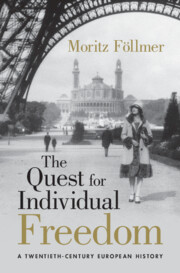
What does it mean to see oneself as free? And how can this freedom be attained in times of conflict and social upheaval? In this ambitious study, Moritz Föllmer explores what twentieth-century Europeans understood by individual freedom and how they endeavoured to achieve it. Combining cultural, social, and political history, this book highlights the tension between ordinary people's efforts to secure personal independence and the ambitious attempts of thinkers and activists to embed notions of freedom in political and cultural agendas. The quest to be a free individual was multi-faceted; no single concept predominated. Men and women articulated and pursued it against the backdrop of two world wars, the expanding power of the state, the constraints of working life, pre-established moral norms, the growing influence of America, and uncertain futures of colonial rule. But although claims to individual freedom could be steered and stymied, they could not, ultimately, be suppressed.
This book has historicized the quest for individual freedom in twentieth-century Europe by highlighting conflict-ridden expansion: more and more people claimed the status of free individuals, but they did so in very different ways, in various contexts, and more often than not in the face of powerful opposition. The Conclusion brings out the overarching narrative centered around ordinary Europeans’ efforts to expand their realm of control in spite of obstacles, to carve out a space for themselves, and to live freely according to their own preferred understandings. It also argues that these efforts stood in tension with various political movements that aspired to combine individual and collective freedom. This tension eased when the quest in its unheroic versions, having put both democracies and dictatorships under pressure to adapt, could be pursued in the more favorable context of détente and affluence. With the end of the Cold war, it seemed indeed to have prevailed. But the relationship between individual freedom and Europeanness was never entirely exempt from conflict and complexity and has recently become more controversial again.
This book explores what Europeans in the twentieth century understood by individual freedom and how they endeavored to achieve it, often against the odds. The Introduction lays out its conceptual bases, arguing that the quest was multi-faceted and unfolded in nonlinear ways, which jars with teleological narratives of the rise and decline of “the individual.” It disputes Annelien de Dijn’s recent account of one dominant concept of modern liberty and is attentive to mainstream as well as marginalized versions of individual freedom, questioning Michel Foucault’s idea that the former were “imposed on us” through disciplinary power. Instead, the book borrows from sociologist Georg Simmel and political philosopher Isaiah Berlin to stress the subjective, gradual, and unpredictable character of individual freedom and the fact that it was pursued against a range of obstacles and constraints. It tells a story of conflict-ridden expansion. Men and women had to claim their personal freedom in a context marked by world wars, the expanding power of the state, the constraints of work life, pre-established moral norms, the growing influence of America, and the uncertain future of colonial rule.
The book begins in the Turkish beach town of Şarköy, home to a community of first- and second-generation return migrants who were interviewed for this book. These returnees are just some of the millions of people who have journeyed back and forth between Turkey and Germany for over 60 years. The introduction lays out the book’s four core arguments, which together reveal that Turkish-German migration history is far more dynamic than typically told. First, return migration was not an illusion or unrealized dream but rather a core component of all migrants’ lives, and migration was not a one-directional event but rather a transnational process of reciprocal exchange that fundamentally reshaped both countries’ politics, societies, economies, and cultures. Second, migration introduced new ambivalence into European identities: although Germans assailed Turks’ alleged inability to integrate, they had integrated enough to be criticized in Turkey as “Germanized Turks” (Almancı). Third, examining West German efforts to “kick out” the Turks in the 1980s exposes the reality of racism in the liberal, democratic Federal Republic of Germany. Finally, including Muslims and Turks in European history expands our idea of what “Europe” is and who “Europeans” are.
Via an investigation of the collaboration between banks and foreign offices, this article demonstrates that the restructuring of China’s state debt before and after the revolution of 1911 was not simply a part of Chinese globalisation undertaken under the benign stewardship of foreign banks. Rather, the contest for Chinese loans reflected a power struggle for regional hegemony between expansionist states that hinged on both competition and cooperation, as well as Chinese attempts to preserve their economic and territorial sovereignty. It further shows that the notion that financial institutions operated independently of the state does not reflect the clear record of close coordination between states and financial institutions during loan negotiations.
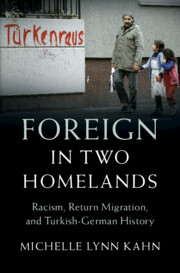
What happens when migrants are rejected by the host society that first invited them? How do they return to a homeland that considers them outsiders? Foreign in Two Homelands explores the transnational history of Turkish migrants, Germany's largest ethnic minority, who arrived as 'guest-workers' (Gastarbeiter) between 1961 and 1973. By the 1980s, amid rising racism, neo-Nazis and ordinary Germans blamed Turks for unemployment, criticized their Muslim faith, and argued they could never integrate. In 1983, policymakers enacted a controversial law: paying Turks to leave. Thus commenced one of modern Europe's largest and fastest waves of remigration: within one year, 15% of the migrants—250,000 men, women, and children—returned to Turkey. Their homeland, however, ostracized them as culturally estranged 'Germanized Turks' (Almancı). Through archival research and oral history interviews in both countries and languages, Michelle Lynn Kahn highlights migrants' personal stories and reveals how many felt foreign in two homelands. This title is also available as Open Access on Cambridge Core.
Social justice has returned to the heart of political debate in Europe. While the phenomenon has received significant attention from several academic disciplines, social justice has rarely been explored as a historical subject in its own right. This chapter explores why this should have been so. It argues that the elusiveness of social justice as a historical subject can be explained by the way in which conceptions of social justice were located at the confluence of other historical narratives that have shaped the historiography of twentieth-century Europe. The chapter provides an extensive survey of these influential narratives, which include the rise of state power, the development of cultures of social improvement, the changing popular expectations of government, and the domain of citizenship. The chapter then presents an innovative approach for the historical study of ‘social justice in context’. Focusing on the ways in which conceptions of social justice grew out of the intricate interplay between rulers and ruled, it develops a research agenda that concentrates on the analysis of three distinctive dimensions, including the temporalities, the spatiality, and the actors and agencies of conceptions of social justice.
This is a comprehensive long-run history of economic and political change in the Iberian Peninsula. Beginning with the development of the old medieval kingdoms, it goes on to explore two countries, Portugal and Spain, which during the early modern period possessed vast empires and played an essential role in the global economic and political developments. It traces how and why both countries began to fall behind during the first stages of industrialization and modern economic growth only to achieve remarkable economic development during the second half of the twentieth century. Written by a team of leading historians, the book sheds new light on all aspects of economic history from population, agriculture, manufacturing and international trade to government, finance and welfare. The book includes extensive new data and will be an essential work of reference for scholars of Portugal and Spain and also of comparative European economic development.
It is argued that the natural and human vicissitudes of the Northern Hemisphere—or at least western European history between 1315 and 1648—provide a preview of the sort of consequences for humanity and its demography that will result from the serious if not catastrophic climate change that is now anticipated by the Intergovernmental Panel on Climate Change (IPCC). Game theory suggests that at least some nation-state players in the strategic problem that climate change raises will not choose Nash equilibria that mitigate the problem. The only feasible solution will be the discovery or invention of some non-greenhouse-gas-emitting energy source so cheap that its owner will be indifferent to free-riding by all other users of energy. Recent efforts to develop fusion reactors do not provide much hope for this eventuality.
Pufendorf is mainly remembered as a natural law philosopher but he was also an influential historian and a public intellectual. Apart from an early phase where his historical interests followed a conventional antiquarian course he focused on recent or contemporary history as evidenced by his popular and much translated, adapted and imitated European History (1680), his acerbic pamphlet History of Popedom (1679), and the monumental ex officio treatments of recent history of Sweden and Brandenburg: History of Gustavus Adolphus and Christina (1686), History of Charles Gustavus (1696) and History of Frederick William (1695). Pufendorf's historical works are informed by a clear and simple vision of states as unified agents acting within a framework of real (moderate) and imaginary (unrealistic), permanent (geopolitical) and temporary (contingent) interests. He combined this vision, informed by his natural law theory, with an abiding interest in diplomacy and decision making and a corresponding disregard for the concrete political players and the action on the battlefield. As royal Swedish and later electoral Brandenburg historiographer he had privileged access to archival sources. He used this to bolster his authority but also to present a firmly streamlined and occasionally biased account in harmony with his religious and political loyalties.
Bodies of Work examines the transnational development of large-scale national systems, international organizations, technologies, and cultural materials aimed at rehabilitating Allied ex-servicemen, disabled in the First World War. It considers the ways in which rehabilitation was shaped by both durable and discrete influences, including social reformism, paternalist philanthropy, the movement for workers’ rights, patriotism, class tensions, cultural ideas about manliness and disability, nationalism, and internationalism. In recognising rehabilitation systems as complex and multi-faceted sociocultural constructions, it sheds light on the ways in which they became sites for the contestation and maintenance of boundaries of belonging. Internal to such systems, the book argues, were the limits of expansion of services to the industrially disabled. In interrogating the post-war quest to extend rehabilitation rights to civilians, the book provides insight into the development of social rights and statist welfarism and the evolution of ideas about the means, ends, and objects of humanitarianism.
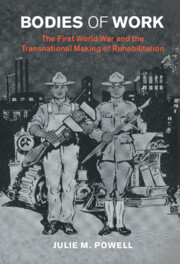
Bodies of Work examines the transnational development of large-scale national systems, international organizations, technologies, and cultural material aimed at rehabilitating Allied ex-servicemen, disabled in the First World War. When nations mobilised in August 1914, it was thought that casualties would be minimal and the war would be quickly over. Little consideration was given to what ought to be done for those men whose bodies would forever bear the marks of war's destruction. Julie M. Powell charts how rehabilitation emerged as the best means to deal with millions of disabled ex-servicemen. She considers the ways in which rehabilitation was shaped by both durable and discrete influences, including social reformism, paternalist philanthropy, the movement for workers' rights, patriotism, class tensions, cultural ideas about manliness and disability, nationalism, and internationalism. Powell sheds light on the ways in which rehabilitation systems became sites for the contestation and maintenance of boundaries of belonging.
This chapter introduces and contextualizes the book's focus on the Portuguese retornados or returnees and argues that by spotlighting their history, we illuminate the remaking of the Portuguese nation in a world after empire. Via Portugal’s returnees, we grasp how decolonization reshaped Western European societies – their demographic makeup, their laws and institutions, their notions of the national community, their political communication, and their public memories.
Having built much of their wealth, power, and identities on imperial expansion, how did the Portuguese and, by extension, Europeans deal with the end of empire? Postcolonial People explores the processes and consequences of decolonization through the histories of over half a million Portuguese settlers who 'returned' following the 1974 Carnation Revolution from Angola, Mozambique, and other parts of Portugal's crumbling empire to their country of origin and citizenship, itself undergoing significant upheaval. Looking comprehensively at the returnees' history and memory for the first time, this book contributes to debates about colonial racism and its afterlives. It studies migration, 'refugeeness,' and integration to expose an apparent paradox: The end of empire and the return migrations it triggered belong to a global history of the twentieth century and are shaped by transnational dynamics. However, they have done nothing to dethrone the primacy of the nation-state. If anything, they have reinforced it.
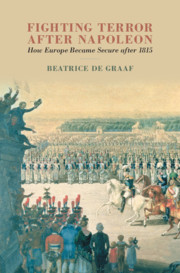
After twenty-six years of unprecedented revolutionary upheavals and endless fighting, the victorious powers craved stability after Napoleon's defeat in 1815. With the threat of war and revolutionary terror still looming large, the coalition launched an unprecedented experiment to re-establish European security. With over one million troops remaining in France, they established the Allied Council to mitigate the threat of war and terror and to design and consolidate a system of deterrence. The Council transformed the norm of interstate relations into the first, modern system of collective security in Europe. Drawing on the records of the Council and the correspondence of key figures such as Metternich, Castlereagh, Wellington and Alexander I, Beatrice de Graaf tells the story of Europe's transition from concluding a war to consolidating a new order. She reveals how, long before commercial interest and economic considerations on scale and productivity dictated and inspired the project of European integration, the common denominator behind this first impulse for a unification of Europe in norms and institutions was the collective fight against terror.