To save content items to your account,
please confirm that you agree to abide by our usage policies.
If this is the first time you use this feature, you will be asked to authorise Cambridge Core to connect with your account.
Find out more about saving content to .
To save content items to your Kindle, first ensure no-reply@cambridge.org
is added to your Approved Personal Document E-mail List under your Personal Document Settings
on the Manage Your Content and Devices page of your Amazon account. Then enter the ‘name’ part
of your Kindle email address below.
Find out more about saving to your Kindle.
Note you can select to save to either the @free.kindle.com or @kindle.com variations.
‘@free.kindle.com’ emails are free but can only be saved to your device when it is connected to wi-fi.
‘@kindle.com’ emails can be delivered even when you are not connected to wi-fi, but note that service fees apply.
The Macedonian dynasty, wonderfully rooted in murder, having been renewed by violence as a peaceful, orderly, administration, a soldier-emperor is installed: Constantine IX, the main subject of the Chronographia, and its potential stumbling block. To deal with his own self-division towards Constantine, Psellos creates an elaborate structure of genres and disciplines – panegyric and history, rhetoric and philosophy – and conflicting roles for himself, to dramatize an odi et amo in which the comic and the tragic infuse each other in continuously changing ways. The effect is exhilating, shocking, and ingeniously balanced, as Psellos sets the failure of an indirect rule by a philosopher (Kaldellis) and his own moral degeneration against the expansive power of panegyric vested in this emperor. For good artistic reasons, Psellos omits the patriarch Keroularios and his attack on Psellos’ orthodoxy, projecting his own displacement onto a highly fictional portrayal of another character. The reign of Theodora, however, is vitiated by his repressed anger with Keroularios, ranting against his proxies in her government. The two reigns exemplify the work’s uneven quality.
This chapter analyzes Lane’s clever use of combinations of geographical, temporal and formal markers in his titles, alternative titles and subtitles to indicate to borrowers and buyers what kind of story a volume contained and explains how this book’s chapters follow and explore the taxonomy he designed. The second section describes the construction of Lane’s principal genres and the sophisticated methods of imitative writing used to compose them. These overlaid romance with realism and made repetition-with-difference a primary mode of communication to engender the Press’s characteristically innovative, modular and debating texts. The chapter concludes by using Clara Reeve’s arguments in The Progress of Romance (1785) to contrast the Aesthetics of Originality which we have inherited from the Romantics with the Aesthetics of Reuse which had been used since the Renaissance to notice and evaluate the “beauties” of imitative writing, and which ordinary readers still use today.
Gothic Masculinities in the Victorian Age explores masculinity and the Gothic in the literature of the long nineteenth century. In recent criticism masculinity in the Gothic is most usually discussed as being fractured, unstable, and threatened. Gothic Masculinities examines this fragmentation of gendered identity, but it also considers other types of arguments and representations of men in Gothic literature. The Gothic (genre and mode) is multiple, shifting, changing, multifaceted, and intertextual, and there are significant differences in the types of masculinity depicted. This Element examines the myth and deconstruction of an idealised conception of one whole, unified, hegemonically powerful masculinity, but it also examines some of the many other identities available within the practices of masculinity. The Gothic has always allowed space for subversion and the unconventional and Gothic Masculinities explores and celebrates some unexpected representations of men and their many different and sometimes surprising forms of masculine identity.
The chapter examines the notion of genre in order to distinguish different kinds of translation that are made for different purposes. Genres examined include brochures, tourism texts, community information materials, instructions for use, legal texts, medical texts, official documents, scientific writing and news texts. Next, the chapter discusses the relationships between translators and those who pay translators for their services, and the merits of self-employment and full-time employment in organizations or translation bureaus. Finally, the need for translators to understand their projected readership’s culture and their likely background understanding of the matters related to a given text is highlighted.
In this chapter explore language usage and interaction in general and discuss the overlap of sociolinguistics with the fields of pragmatics and discourse analysis. We will investigate the conventional patterns used by speakers when they construct, participate in and evaluate discourse at large. The concept of face is an important one here, namely the self-image of speakers that they wish to maintain and protect via the sociolinguistic resources available to them: speech events in the form of narratives, telephone conversations, weblogs, university lectures, etc. Context effects on sociolinguistic interaction are discussed with examples of turn-taking, power, solidarity and cross-cultural communication, and also with a focus on social hierarchies and language practices in the workplace. We conclude with a discussion of crossing and translanguaging in multilingual contexts.
This chapter examines second language learning and teaching from a skills perspective, that is, reading, writing, listening, and speaking. The chapter first explains the differences among the four skills (e.g., receptive vs. productive; the necessity of formal instruction). Then, the chapter dissects each skill. As for reading and writing, the chapter discusses the necessity of formal instruction, and how the two skills are developed cognitively. The chapter also distinguishes writing-to-learn-language and learning-to-write. In terms of listening, the chapter explains different ways of processing incoming information (i.e., parsing). In relation to speaking, the chapter discusses differences between monologues or dialogues and the influence that time pressure has on second language production. By drawing on the previous chapters focusing on specific language components, the chapter ends with pedagogical recommendations for teaching the academic skills (e.g., how to target and sequence different skills).
Arguing its relevance in historiography, and its connection with the related concept of the classic, this chapter examines the place of the canon in history: its formation, key turning points, convenience, usefulness, and the desirability of its existence itself. In the first part of the chapter (‘Constructions’), I examine the five main turning points in the formation of the canon in history: Greco-Roman, Collingwood-Croce, narrative history of the 1970s, gender and postcolonial, and global canon. The second part of the chapter (‘Canonizing’) examines three case studies of the canon in history: Gibbon’s Decline and Fall of the Roman Empire, Macaulay’s History of England and White’s Metahistory. The third part (‘Resistances’) explores the rejection of the canon among historians, describes some of its manifestations and reflects on its motivations. The fourth part (‘Paradoxes’) details the main characteristics of the historical canon, points out the differences among other canons such as the literary and artistic, and explores the peculiar combination of art and science that every historical operation entails. The conclusive section (‘Inescapability’) argues for the great paradox of the canon: the impossibility of conducting cultural and intellectual exchanges without it.
This Element shows the basis for pragmatics/(im)politeness to become intergroup-oriented to be able to consider interactions in which social identities are salient or are essentially collective in nature, such as Cancel Culture (CC). CC is a form of ostracism involving the collective withdrawal of support and concomitant group exclusion of individuals perceived as having behaved in ways construed as immoral and thus displaying disdain for group normativity. To analyze this type of collective phenomenon, a three-layered model that tackles CC manifestations at the macro, meso, and micro levels is used. At the meso/micro levels, problematize extant conceptualizations of CC -mostly focused on the macro level and describe it as a Big C Conversation, whose meso-level practices need to be understood as genre-ecology, and where identity reduction, im/politeness, and moral emotions synergies are key to understand group entitativity and agency.
The Cambridge Companion to the American Graphic Novel explores the important role of the graphic novel in reflecting American society and in the shaping of the American imagination. Using key examples, this volume reviews the historical development of various subgenres within the graphic novel tradition and examines how graphic novelists have created multiple and different accounts of the American experience, including that of African American, Asian American, Jewish, Latinx, and LGBTQ+ communities. Reading the American graphic novel opens a debate on how major works have changed the idea of America from that once found in the quintessential action or superhero comics to show new, different, intimate accounts of historical change as well as social and individual, personal experience. It guides readers through the theoretical text-image scholarship to explain the meaning of the complex borderlines between graphic novels, comics, newspaper strips, caricature, literature, and art.
The aesthetics of comics is deeply linked to the history of media serialities. Modern comics were born in the newspaper and followed its periodic rhythms and exploited its logic of reader loyalty. The two historically dominant models of comics, the comic strip and the comic book, are each linked to a publication medium or format – the newspaper and the magazine, respectively – and to their logics of consumption. Many characteristics of the comic strip – the principle of gag variations, the importance of generic conventions, recurring characters, spin-off series, crossover logics – can be reinterpreted according to the industrial and media contexts in which they appear and which are aesthetically exploited by the authors. Reflection on the seriality of comics can therefore not be limited to analyses of plots or modes of graphic narration. It needs to consider media logics, including the industrial and commercial dynamics and modes of consumption they encourage. Ultimately, comics seriality engages with, on the one hand, the principles of generic seriality, which thematize these logics of production and consumption. On the other, diegetic seriality, of the recurrent character and the fictional universe, also determines the strategic choices of industrial and media players.
On and off the map of “the world republic of letters,” literary Beijing, from exotic configurations to multivalent self-portraits, has unfolded, historically and geopolitically, as an ancient capital of traditional China, a Republican city of new thoughts and everlasting memories, a fallen city under Japanese military control, a socialist capital of Maoist ideology, and a rejuvenated and cosmopolitan megacity in the post-Cold War era and the new millennium. This chapter situates Beijing writing in the intertwined contexts of Chinese literature and World Literature in terms of evidenced influences, implicit connections, and paralleled representations. The methods of imagining Beijing have formed in the multilayered city-texts by writers across different historical times, which entailed variegated genres, ideas and trends, places and spaces, emotions and materiality, and cultural chronotopes. Entangled with Beijing narratives created by authors across the globe, the city’s imageries in Chinese literature prompt intriguing dialogues, in both visible and invisible ways, with World Literature. Together, this tapestry of urban writing encodes and decodes Beijing as a real, imagined, mythical, metaphorical and semiotic city surviving barbarianism, exoticism, Orientalism, (mis)understanding, (over)interpretation, and (un)translatability.
From his first fifteen years in Chile, to his nine years in Mexico City from 1968 to 1977, to the quarter of a century he lived and worked in the Blanes-Barcelona area on the Costa Brava in Spain through his death in 2003, Roberto Bolaño developed into an astonishingly diverse, prolific writer. He is one of the most consequential and widely read of his generation in any language. Increasingly recognized not only in Latin America, but as a major figure in World Literature, Bolaño is an essential writer for the 21st century world. This volume provides a comprehensive mapping of the pivotal contexts, events, stages, and influences shaping Bolaño's writing. As the wide-ranging investigations of this volume's 30 distinguished scholars show, Bolaño's influence and impact will shape literary cultures worldwide for years to come.
Edited by
Mónica Szurmuk, Universidad Nacional de San Martín and National Scientific and Technical Research Council, Argentina,Debra A. Castillo, Cornell University, New York
The introduction begins by addressing the uses of studying cultural institutions. It provides a working definition of ‘institution’ and a historical overview of the emergence of the infrastructure of institutions in the period 1700 to 1900. The logic of choosing the period is addressed in relation to the uneven translation from cultural institutions based on the court and church to voluntary institutions that had an arms-length relationship to the state. It also discusses the historical irony that just as a ‘romantic’ definition of the literary individualism emerged that might seem to pit literature against Institutions, there was a proliferation of institutions of literature. The purview of the collection in relation to British national and imperial culture and identities is explained and the opportunities for further work in related areas discussed in the framework of the collection’s own historical moment at a time when the university-based discipline of Literature seems to be undergoing a fundamental change in its structure and purposes.
This collection provides students and researchers with a new and lively understanding of the role of institutions in the production, reception, and meaning of literature in the period 1700–1900. The period saw a fundamental transition from a patronage system to a marketplace in which institutions played an important mediating role between writers and readers, a shift with consequences that continue to resonate today. Often producers themselves, institutions processed and claimed authority over a variety of cultural domains that never simply tessellated into any unified system. The collection's primary concerns are British and imperial environments, with a comparative German case study, but it offers encouragement for its approaches to be taken up in a variety of other cultural contexts. From the Post Office to museums, from bricks and mortar to less tangible institutions like authorship and genre, this collection opens up a new field for literary studies.
Chapter 18 charts the history of medical translation and developments in the field. It introduces the main genres and target groups and discusses important challenges that medical translators face. The shift from the biomedical paradigm to patient-centredness and patient empowerment means that people want to understand information involving their own health, so that intralingual translation is often required for expert–lay medical translation. The chapter discusses the challenges that such intralingual translation presents, especially when coupled with interlingual translation. The importance of medical ethics in medical translation is also highlighted.
At present, Web 2.0 technologies are making traditional research genres evolve and form complex genre assemblage with other genres online. This book takes the perspective of genre analysis to provide a timely examination of professional and public communication of science. It gives an updated overview on the increasing diversification of genres for communicating scientific research today by reviewing relevant theories that contribute an understanding of genre evolution and innovation in Web 2.0. The book also offers a much-needed critical enquiry into the dynamics of languages for academic and research communication and reflects on current language-related issues such as academic Englishes, ELF lects, translanguaging, polylanguaging and the multilingualisation of science. Additionally, it complements the critical reflections with data from small-scale specialised corpora and exploratory survey research. The book also includes pedagogical orientations for teaching/training researchers in the STEMM disciplines and proposes several avenues for future enquiry into research genres across languages.
Huang and Mendoza’s introduction to the fourth volume of Asian American Literatures in Transition offers a refresher on Lisa Lowe’s formative critical work, Immigrant Acts (1996), published at the beginning of the time period covered in this volume. The authors reframe Lowe’s terms “heterogeneity,” “hybridity,” and “multiplicity” within several watershed moments affecting Asian Americans and other groups in the USA: including the Defense of Marriage Act (1996), the September 11 attacks, the decriminalization of sodomy (2003), the COVID pandemic, and the Black Lives Matter movement. While many of these events exacerbated the vulnerability and precarity of some Asian American groups, the turbulence of the time fueled the Asian American literary imagination as writers in this period drew on more representational strategies for their literary experimentations than in previous periods. This volume covers precisely these tensions: artistic proliferations in the face of injustice, recognition in the face of social erasures, innovation in the face of neoliberal white supremacy’s monopoly on wealth and violence.
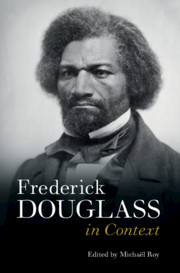
Frederick Douglass in Context provides an in-depth introduction to the multifaceted life and times of Frederick Douglass, the nineteenth-century's leading black activist and one of the most celebrated American writers. An international team of scholars sheds new light on the environments and communities that shaped Douglass's career. The book challenges the myth of Douglass as a heroic individualist who towered over family, friends, and colleagues, and reveals instead a man who relied on others and drew strength from a variety of personal and professional relations and networks. This volume offers both a comprehensive representation of Douglass and a series of concentrated studies of specific aspects of his work. It will be a key resource for students, scholars, teachers, and general readers interested in Douglass and his tireless fight for freedom, justice, and equality for all.
This article offers a comparative examination of the literary responses of four leading early modern Pashtun authors to an armed clash in the Momand tribe in 1711. The responses include a chronicle record in prose (Afżal Khān Khaṫak) and three poems – an elegy (ʿAbd al-Raḥmān Momand), a satire (ʿAbd al-Ḥamīd Momand), and a war ode (ʿAbd al-Qādir Khaṫak). Discussed as both authentic historical documents and creative writings linked to a local social discourse, these Pashto texts enable us to reassess the intensity of everyday literary communications in Pashtun tribal areas in early modern times and append new factual material to the study of ethno-cultural processes within the Persophone oecumene. The salient stylistic and rhetoric diversity of the texts not only highlights the authors’ individual mindsets and literary techniques, but also provides an insight into a variety of social moods, political attitudes and ethics in the Pashtun traditional society.