Refine search
Actions for selected content:
9 results
Dirty in Academia: Forty Years in a Misbehaving Body
- Part of
-
- Journal:
- Public Humanities / Volume 2 / 2026
- Published online by Cambridge University Press:
- 02 October 2026, e155
-
- Article
-
- You have access
- Open access
- HTML
- Export citation
Dirty Margins, Queer Vows: A Pathography of Cancer, Academia, and the Unfinished Work of Being
- Part of
-
- Journal:
- Public Humanities / Volume 2 / 2026
- Published online by Cambridge University Press:
- 31 July 2026, e101
-
- Article
-
- You have access
- Open access
- HTML
- Export citation
Tactical Choreographies: Queer Pedagogies on Cancer’s Dirty Margins
- Part of
-
- Journal:
- Public Humanities / Volume 2 / 2026
- Published online by Cambridge University Press:
- 08 July 2026, e98
-
- Article
-
- You have access
- Open access
- HTML
- Export citation
Mothers of Sierra Leone: Improving Maternal Health through Storytelling
- Part of
-
- Journal:
- Public Humanities / Volume 1 / 2025
- Published online by Cambridge University Press:
- 24 February 2025, e63
-
- Article
-
- You have access
- Open access
- HTML
- Export citation
Chapter 21 - Literature in Collaboration
- from Part III - Applications: Politics
-
-
- Book:
- Literature and Medicine
- Published online:
- 17 January 2024
- Print publication:
- 18 January 2024, pp 357-374
-
- Chapter
- Export citation
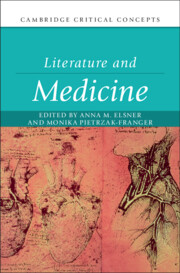
Literature and Medicine
-
- Published online:
- 17 January 2024
- Print publication:
- 18 January 2024
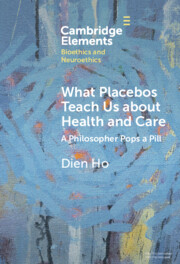
What Placebos Teach Us about Health and Care
- A Philosopher Pops a Pill
-
- Published online:
- 26 September 2023
- Print publication:
- 14 December 2023
-
- Element
- Export citation
Chapter 11 - New Poetry, Fresh Approaches
- from Part II - New Genres
-
-
- Book:
- Latin American Literature in Transition 1980–2018
- Published online:
- 24 November 2022
- Print publication:
- 08 December 2022, pp 166-182
-
- Chapter
- Export citation
Thinking About Difficulties: Using Poetry to Enhance Interpretative and Collaborative Skills in Healthcare Ethics Education
-
- Journal:
- Cambridge Quarterly of Healthcare Ethics / Volume 29 / Issue 3 / July 2020
- Published online by Cambridge University Press:
- 02 June 2020, pp. 459-469
-
- Article
-
- You have access
- HTML
- Export citation
