To save content items to your account,
please confirm that you agree to abide by our usage policies.
If this is the first time you use this feature, you will be asked to authorise Cambridge Core to connect with your account.
Find out more about saving content to .
To save content items to your Kindle, first ensure no-reply@cambridge.org
is added to your Approved Personal Document E-mail List under your Personal Document Settings
on the Manage Your Content and Devices page of your Amazon account. Then enter the ‘name’ part
of your Kindle email address below.
Find out more about saving to your Kindle.
Note you can select to save to either the @free.kindle.com or @kindle.com variations.
‘@free.kindle.com’ emails are free but can only be saved to your device when it is connected to wi-fi.
‘@kindle.com’ emails can be delivered even when you are not connected to wi-fi, but note that service fees apply.
The Prologue explores different kinds of context for the Ancient Greek section of the book. It starts by looking at comparative ancient contexts, before looking at Ancient Greek literary treatments of stasis which use antithesis. It includes some further methodological reflections.
This Element introduces the reader to the fascinating world of magical rituals performed in the ancient Near East and ancient Israel. It is designed for a diverse audience of professionals, students, and general readers. It surveys the definitions and history of research on magic in the ancient world, delineates the chronological and geographical boundaries of the ancient Near East, and details the pertinent sources of information. The Element distinguishes between different types of magical rituals and identifies their aims, beneficiaries, performers, and procedures. It sheds fresh light on the mechanics of ritual performance in the ancient Near East and explicates the rationales that guided it.
The relationship between the biblical representations of the past and the history of the second and early first millennia BCE is best comprehended by the concept of cultural memory. This volume investigates the dynamics of cultural memory in the Hebrew Bible, with case studies on the ancestors, the Exodus, the conquest, and Solomon and the Queen of Sheba. The texts create a monumental past by a mixture of memory, forgetting, revision, and re-actualization, motivated in various measures by religion, politics, the landscape, ethnic relationships, and cultural self-fashioning. The archaeology of the Levant illuminates the complicated pathways between history and biblical memory.
Through a close analysis of the diction used by medieval translators of the biblical narrative in which Adam names the non-human animals, this introduction presents the book’s scope and argument. The first human seems to have had no difficulty giving the other animals their names, his success implicitly communicating his dominance as a rational, speaking creature; exegetes like Augustine pressed this point, citing the naming narrative as evidence for humanity’s status as the only rational animal. However, the medieval translators who rendered the naming scene in words of their own seemed notably less confident than Adam, their texts differing from one another in ways that suggest the discovery of uncertainty and confusion, rather than intuitive transparency, where speech and species intersect. The difficulty reflects fundamental features of the medieval lexicon employed to articulate the relationship between speech, reason, and species identity: Crucial terms such as animal and beste were ambiguous and inconsistent in meaning, leaving the precise place of the rational-discursive faculty in a state of suspense.
Chapter 2 (The Biblical Portrayal of Transgressive Worship): In this chapter, I focus on the texts of the Hebrew Bible. I argue that these texts, when they picture the worship of other gods or the reverence of their icons, consistently assume that such worship is sincere (or, at the very least, do not question its sincerity).
How did Jews in the ancient world depict the practices of their pagan contemporaries? In this study, Jesse Mirotznik investigates the portrayal of pagan worship in the Hebrew Bible and ancient Jewish literature. Scholars have assumed that the portrayals in these corpora are consistent over time. Mirotznik, however, shows that there is a fundamental discontinuity between earlier and later depictions of pagan worship. In the Hebrew Bible, these forms of worship are, for the most part, simply assumed to be sincere. By contrast, in ancient Jewish texts from approximately the end of the third century BCE and onward, such worship is increasingly presented as insincere, performed only instrumentally in the service of an ulterior motive. While the worshipers of other gods seem genuine in their devotion, these texts contend, they too must recognize the folly of such worship.
The significance of the Old Testament for human history and culture is undeniable. Whatever our personal convictions regarding its content, the Old Testament contains the origins of nearly everything we think about God. Variously labeled as the Hebrew Bible, the Tanak, the First Testament, and the Old Testament, among others, this library of texts from ancient Israel has been preserved for more than two thousand years.
Emerging from the polytheistic context of the ancient world, the enduring significance of the Old Testament is to be found in the concept of monotheism. Indeed, Judaism, Christianity, and Islam share in this unique religious legacy. We will discover in this chapter what lies behind the terminology we use when we speak of monotheism, and how the Old Testament perceives and develops the understanding of a singular God. Known to ancient Israel as Yahweh, Israel’s God came to be understood as Creator, source of all, and sovereign over all. Only in time would Israel come to believe that Yahweh was not only its God, and the God Israelites were called to worship, but the one and only God.
What sort of thing are the narratives of the life of Jesus, literarily speaking? (History? Biography? Fiction? Myth?) And what bearing does their genre have on the manner of interpretation proper to them? This chapter attends to Origen’s account of the Gospels’ genre, literary precedents, and relationship to other forms of ancient literature in order to establish why he believes the Gospels cannot be read as transparently historical narratives. Here, I propose that the kind of narratives Origen believes the Evangelists compose is directly comparable to the stories one finds throughout the scriptures of Israel. Furthermore, Origen also relates the Gospels’ literary similarity to Jewish biblical narrative to the way they both share a similarly complex relationship to facticity. The Gospels, in sum, all narrate the deeds, sufferings, and words of Jesus “under the form of history”; these historical narratives are of a mixed character, interweaving things that happened with things that didn’t and even couldn’t, with an eye toward presenting the events recorded to have happened to Jesus figuratively.
Creation myths in the ancient Middle East served, among other things, as works of political economy, justifying and naturalizing materially intensive ritual practices and their entanglements with broader economic processes and institutions. These rituals were organized according to a common ideology of divine service, which portrayed the gods as an aristocratic leisure class whose material needs were provided by human beings. Resources for divine service were extracted from the productive sectors of society and channeled inward to the temple and palace institutions, where they served to satiate the gods and support their human servants. This Element examines various forms of the economics of divine service, and how they were supported in a selection of myths – Atraḫasis, Enki and Ninmaḫ, and Enūma Eliš from Mesopotamia and the story of the Garden of Eden from the southern Levant (Israel).
Biblical studies is currently seeing resurgent interest in comparing the Hebrew Bible and ancient Greek literature. However, classical philosophy has been underrepresented in this work. This article argues that this underrepresentation stems from historical-critical scholars’ suspicion of “Athens and Jerusalem,” the essentialization of classical philosophy and the Hebrew Bible as, respectively, “reason” and “revelation”—the “twin pillars of Western civilization.” Such essentialism violates the historical-critical principle of cultural continuity. Wariness of it is therefore justified. However, avoiding classical philosophy only exacerbates the problem. If Greek literature is a legitimate historical-critical comparandum for the Hebrew Bible, then classical philosophy should be as well. Through case studies in the biblical prophets and Plato, this article shows how this comparison may contribute on two levels: first-order comparison, in which classical philosophy provides new data for understanding the Hebrew Bible in its ancient context; and second-order comparison, in which scholarship on classical philosophy raises metacritical questions about biblical studies itself.
Exodus 2:1–10 has been thoroughly analyzed from a feminist perspective. This is appropriate because women play a significant role in the story. However, it is important to note that these female characters are not only defined by gender but also by ethnicity and social status. Combining analyses of ethnicity, gender, and class, this article demonstrates how the female figures in Exod 2:1–10 ignore, challenge, and subvert the polarizations established in Exod 1:8–22 by the Egyptian king. Exodus 2:1–10 can even be read as an example of cross-ethnic, cross-class, and cross-generational solidarity against a despotic regime that marginalizes and oppresses by using marks of differences. However, upon closer analysis it becomes evident that the female figures’ interactions are also determined by an unequal power dynamic. The article demonstrates how examining differences in gender, ethnicity, and class provides a nuanced understanding of power relations within biblical texts.
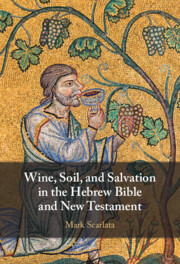
Biblical authors used wine as a potent symbol and metaphor of material blessing and salvation, as well as a sign of judgement. In this volume, Mark Scarlata provides a biblical theology of wine through exploration of texts in the Hebrew Bible, later Jewish writings, and the New Testament. He shows how, from the beginnings of creation and the story of Noah, wine is intimately connected to soil, humanity, and harmony between humans and the natural world. In the Prophets, wine functions both as a symbol of blessing and judgement through the metaphor of the cup of salvation and the cup of wrath. In other scriptures, wine is associated with wisdom, joy, love, celebration, and the expectations of the coming Messiah. In the New Testament wine becomes a critical sign for the presence of God's kingdom on earth and a symbol of Christian unity and life through the eucharistic cup. Scarlata's study also explores the connections between the biblical and modern worlds regarding ecology and technology, and why wine remains an important sign of salvation for humanity today.
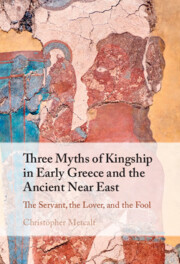
On the basis of recently discovered sources and original research, this book identifies and analyses three story-patterns associated with human kingship in early Greek and ancient Near Eastern myth. The first of these, the 'Myth of the Servant', was used to explain how an individual of non-royal lineage rose to power from obscure origins. The second myth, on the 'Goddess and the Herdsman', made the fundamental claim that the ruler engaged in a sexual relationship with a powerful female deity. Third, although kings are often central to the ancient literary evidence, the texts themselves were usually authored by others, such as poets, priests, prophets or scholars; like kings, these characters similarly tended to base their authority on their ability to articulate and enact the divine will. The stage was thus set for narratives of conflict between kings and other intermediaries of the gods.
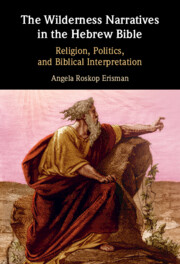
In this volume, Angela Erisman offers a new way to think about the Pentateuch/Torah and its relationship to history. She returns to the seventeenth-century origins of modern biblical scholarship and charts a new course – not through Julius Wellhausen and the Documentary Hypothesis, but through Herrman Gunkel. Erisman reimagines his vision of a literary history grounded in communal experience as a history of responses to political threat before, during, and after the demise of Judah in 586 BCE. She explores creative transformations of genre and offers groundbreaking new readings of key episodes in the wilderness narratives. Offering new answers to old questions about the nature of the exodus, the identity of Moses, and his death in the wilderness, Erisman's study draws from literary and historical criticism. Her synthesis of approaches enables us to situate the wilderness narratives historically, and to understand how and why they continue to be meaningful for readers today.
In the opening verses of the Book of Ezra-Nehemiah, King Cyrus exhorts the exiled Judeans to return to Jerusalem to restore worship in Jerusalem. It then narrates this restoration through the construction of the temple, the repair of the city walls, and the commitment to the written Torah. In this volume, Roger Nam offers a new and compelling argument regarding the theology of Ezra-Nehemiah: that the Judeans' return migration, which extended over several generations, had a totalizing effect on the people. Repatriation was not a single event, but rather a multi-generational process that oscillated between assimilation and preservation of culture. Consequently, Ezra-Nehemiah presents a unique theological perspective. Nam explores the book's prominent theological themes, including trauma, power, identity, community, worship, divine presence, justice, hope, and others – all of which take on a nuanced expression in diaspora. He also shows how and why Ezra-Nehemiah naturally found a rich reception among emerging early Christian and Jewish interpretive communities.
In this chapter, the subjection of the Israelites in Egypt and their later liberation from oppression is examined with extracts from the Hebrew Torah, and the Greek Septuagint. The vocabulary of servitude of both Hebrew and Greek is discussed through the account of Joseph’s service and disgrace in the house of Potiphar, followed by the suffering of the Israelites, the later descendants of Jacob. The oppression inflicted by the Egyptians and their pharaoh on the Israelites in Egypt is to be seen in their forced labour in making bricks and construction work. Liberation involved leaving the country together, under the leadership of Moses. A final section examines a few further literary texts dating from the Hellenistic and Roman periods that treat related Jewish subjects.
This chapter copes with the challenge of portraying a divinity which is supposed to be nameless and imageless, and evoked by ‘abstract’ notions such as the ‘God’, the ‘Lord’, the ‘Name’ or even the ‘Place’. The bans on pronouncing his name and depicting his image are two faces of the same coin: to explore in a new and unpredictable way his identity. Starting from the role played by names in ancient Near Eastern traditions and in the Hebrew Bible, this chapter explores the onomastic puzzle of the biblical god, who holds many names, but whose name YHWH is the only one regarded as a proper name and revealed by himself to Moses. Such a central and enigmatic name is interpreted as a promise of presence and assistance to the people god chose on earth (Israel). The onomastic connection between YHWH and the Jews never ceased to strike external observers and produced many misunderstandings, and even mystifications, in the history of the research of the biblical divine names.
The aggression of the biblical God is notorious. The phrase 'Old Testament God' conjures up images of jealousy and wrath, smiting and judging. But is it only an accident that this god became capital-G God, the unique creator and sustainer of three world religions? Or is there a more substantive connection between monotheism and divine aggression? This Element proposes exactly this causal connection. In three case studies, it showcases ways that literarily treating one god alone as god amplifies divine destructiveness. This happens according to two dynamics: God absorbs the destructive power of other divine beings-and God monopolizes divinity such that other beings, even special ones like God's beloved king or the people of God, are rendered vulnerable to divine aggression. The Element also attends to the literary contexts and counterbalances within which the Hebrew Bible imagines divine aggression.
The preeminent example of monotheism, the God of the Hebrew Bible, is the end product of a long process. The world from which this literature emerged was polytheistic. The nature and arrangement of the literature diminishes polytheistic realities and enhances the effort to portray a single divine being. The development of this divine character through the course of a sustained narrative with a sequential plot aided the move toward monotheism by allowing for the placement of diverse, even conflicting, portrayals of the deity at distant points along the plot line. Through the sequence of events the divine character becomes more withdrawn from the sphere of human activity, more aged in appearance and behavior, and increasingly disembodied. All these characteristics lend themselves to the presentation of disparate narrative portrayals as a singular subject in this Element.
The gospel promoted by Paul has for many generations stirred passionate debate. That gospel proclaimed equal salvific access to Jews and gentiles alike. But on what basis? In making sense of such a remarkable step forward in religious history, Jason Staples reexamines texts that have proven thoroughly resistant to easy comprehension. He traces Paul's inclusive theology to a hidden strand of thinking in the earlier story of Israel. Postexilic southern Judah, he argues, did not simply appropriate the identity of the fallen northern kingdom of Israel. Instead, Judah maintained a notion of 'Israel' as referring both to the north and the ongoing reality of a broad, pan-Israelite sensibility to which the descendants of both ancient kingdoms belonged. Paul's concomitant belief was that northern Israel's exile meant assimilation among the nations – effectively a people's death – and that its restoration paradoxically required gentile inclusion to resurrect a greater 'Israel' from the dead.