To save content items to your account,
please confirm that you agree to abide by our usage policies.
If this is the first time you use this feature, you will be asked to authorise Cambridge Core to connect with your account.
Find out more about saving content to .
To save content items to your Kindle, first ensure no-reply@cambridge.org
is added to your Approved Personal Document E-mail List under your Personal Document Settings
on the Manage Your Content and Devices page of your Amazon account. Then enter the ‘name’ part
of your Kindle email address below.
Find out more about saving to your Kindle.
Note you can select to save to either the @free.kindle.com or @kindle.com variations.
‘@free.kindle.com’ emails are free but can only be saved to your device when it is connected to wi-fi.
‘@kindle.com’ emails can be delivered even when you are not connected to wi-fi, but note that service fees apply.
Henry Adams highlights a historic shift to carbon culture and serves as the historiographic hinge of the book. This chapter focuses on Adams’s historiography. Provoked by the release of “mechanical energies” that transformed the world from his birth in 1838 to 1907 when he circulated a manuscript of The Education of Henry Adams, he claimed that “the historian’s business was to follow the track of energy.“ This chapter sketches Adams’s journey through Pittsburgh to the World’s Fair in 1904 to show the impact of new energy on Adams himself and on his own historical writing. His key terms are “energy” and “economy.” The chapter draws upon his “Dynamic Theory” and his account of the Paris Exposition Universelle of 1900 to advance a reading of human history in terms of energy crises and to question the opposition between humanistic and scientific knowledge.
This chapter focuses on Pater’s two novels: Marius the Epicurean (1885) and Gaston de Latour (1888, 1896), illustrating how they stand at the heart of his work as aesthetic writer and of new currents in nineteenth-century fiction. It shows that, together, these novels aimed to provide a personal overview of European history in epochs of transition: the transition from paganism to Christianity in the case of Marius, and the Reformation for the unfinished Gaston. The chapter positions these novels in the context of their contemporary debates around the future of the novel, including attention to Henry James’s ‘The Art of Fiction’ (1884) and Emile Zola’s naturalism. The discussion then focuses on Marius as a historical novel, which interweaves history with fiction and intellectual commentary, a decadent novel engaged in the core themes of contemporary French decadence, and a cosmopolitan novel engaged in acts of translation from Latin to English.
This chapter focuses on Pater’s short fiction, which took the form, to use Pater’s phrase, of ‘imaginary portraiture’. It positions these works in the context of Pater’s evolving imaginative writing, the publishing industry, and their influence on writers including Oscar Wilde and Arthur Symons. It illustrates how this concept of the imaginary portrait appears in works and titles of other contemporary authors published, like Pater, by Macmillan. It then explores the basis of Pater’s portrait stories, each of which focuses on an individual figure, usually a young male, destined for a tragic early death and set in Europe. In doing so, it provides examples from a range of works including ‘Duke Carl of Rosenmold’ and ‘The Child in the House’.
The newcomer to James will meet a philosopher whose language is bracingly lucid. For scholars of James however, this seeming virtue has presented itself as a kind of puzzle: In this context, James has often been faulted for his clarity – for a poetics that contradicts and even seems to undermine the key linguistic tenets of his own work. Those who admire James’s language may encounter a contrary problem: As teachers of James well know, despite his seeming legibility, his writing is apt to be misunderstood – easily reduced and simplified, his ideas taken in just the wrong way. This chapter recasts James’s stylistic choices in light of his early work on perceptual psychology, restoring his use of demonstration, diagram and self-experiment to an account of his rhetorical strategy – one that pertains across his long life of writing. Reading James at this angle resolves many of the seemingly difficult or even paradoxical parts of his thought: The assertion that “the world stands really malleable,” that the “absolute cannot be impossible,” that objects of experience may be taken “twice over,” and even the meaning of “conversion” itself. Understanding the ways in which James used the material at hand to reach his audience opens his work to more immediate, everyday use, while also modeling a mode of interpretation that makes “vague and inarticulate” effects in literature and art available to collective interrogation. Though James did not propose an overarching theory of the aesthetic, approaching James in this way shows the practice of interpretation to be central to the practice of pragmatism, as lived and experienced on a daily basis.
This chapter contributes to the rich vein of scholarly literature around the relationship between William and Henry James in his exploration of the latter’s presentation of consciousness – and attempts to probe it – in Washington Square. Drawing on William’s “conception of truth as matter of inductive fallibilism” as well as his psychology of religious belief, this essay uncovers the dynamic at the center of the novel: The struggle between the overbearing Dr. Sloper and his daughter Catherine, whose consciousness moves, through the course of the novel, out of the reach of his ability to probe and thus control it. Concluding with an articulation of the novel’s “ethics of opacity” – its refusal of our urge toward the fixation of belief – this reading of the Jameses provides a granular case study of the deep resonance between the brothers’ thinking and writing.
William James’s writings suggest a model of aesthetic education unbound by an aesthetic theory. This may at first appear paradoxical, but this essay will argue that the power and significance of the former is dependent on the insights by which he foreswore the latter. For James, art sometimes offers a kind of experience, but at other times it communicates a kind of knowledge about experience – and not always the same knowledge. Surveying the descriptions of art and literature across James’s work, we are left with the sense that what artworks communicate to us, and what they make us feel, cannot be specified in advance of the encounter with particular artworks. The idea of a Jamesian aesthetics somehow implied by or underlying his treatment of art therefore involves simplifying or distorting that treatment. Yet it is nonetheless possible to give an account of James’s concept of aesthetic education – in the sense of a process of perceptual, spiritual, intellectual, and psychological transformation and renewal through the study of works of art. By attending to James’s descriptions of such transformations, we find that many things we thought we knew about William James and art prove to be false.
This chapter explores Bloomsbury’s engagements with the United States of America between 1900 and 1960. It analyzes the personal and published writings of various members of the group about American art, politics, and culture. While there is no cohesive “Bloomsbury” position on the USA, it at once fascinated and appalled them, from their university days until late in their lives. From Roger Fry’s tenure at the Metropolitan Museum of Art, until his falling out with J. P. Morgan, through the widespread outrage in Britain at the execution of Sacco and Vanzetti in 1927, and on to J. M. Keynes’ role at the Bretton Woods Conference in 1944 and Clive Bell’s 1950s lecture tours, the USA is a constant presence in their lives. Some welcomed the income that writing for American periodicals provided, while privately disdaining their readers. Others engaged with American politicians on the world stage in the wake of two World Wars. None of those who are associated with “Bloomsbury” held static views about the USA. This chapter explores how they refined and revised their opinions about it throughout the course of their lives.
James’s modernism is based directly on the psychology he founded, and specifically on his recognition that the self is malleable (or “plastic”), aggregate, distributed, and capable of mental reform. Yet James’s outspoken critique of US imperialism and the lynching of African Americans reflected his understanding of the dangerous potential of conversion – namely, that revolutions in belief carry a measure of uncertainty and risk, not just to individual believers but to the very fabric of democratic thought. Jamesean conversion therefore dramatizes the processes by which consent is staged from within and from without. The self enacts the drama in the form of an internal dialogue in which one imagines one’s “self” inhabiting a particular temporo-spatial location, as if fulfilling the role of a protagonist in a work of fiction. Against that background, Henry James’s What Maisie Knew and Harold Frederic’s The Damnation of Theron Ware dramatize the processes through which individuals become plastically transformed under the manipulations of powerful “pattern-setters” of public opinion. By fracturing and fragmenting imperial forms of selfhood, these psychological Bildungsromane inaugurate a reform modernism that registers dissent from the imperial sway of groups, demonstrating the strenuous effort required by individuals to transform oppressive systems from within.
While the British or continental marriage plot generally culminates in a high-stakes social transaction involving fixed sums of old money, the story of American marriage in realist fiction is often less about inheritance than about the abstract, dynamic, and unpredictable force of new wealth. In both its new- and old-world settings, the marriage plot is fundamentally a money plot, but the kind of money at issue tends to differ in important respects, and the role of marriage in either reproducing or disrupting social conditions also differs as a result. Simply put, if the possibilities of heteronormative social reproduction signified by marriage were the things that chiefly struck the imaginations of Jane Austen and Elizabeth Gaskell, it seems that for William Dean Howells, Theodore Dreiser, Henry James, Mark Twain, Edith Wharton, and other writers of American realism, money itself was the romance of the realist moment in America. It follows that the American marriage plot often enters the period’s fiction less as the climactic mechanism of social reproduction than as a minor event in the story of money’s own reproductive capability.
The first chapter sets out the stakes of Auerbach’s understanding of Renaissance art by beginning with “The Philology of World Literature” and ending with Henry James’ sentimental tourist in Venice. To be a sentimental tourist is to live an aesthetic life in history, and this chapter uses this point to sketch out a portrait of Auerbach’s work that emerges from a stress on Renaissance.
The Epilogue draws together the book’s various concerns by examining James’s wartime fundraising efforts on behalf of the American Volunteer Motor-Ambulance Corps, a project that demonstrates his interest in the relational and testimonial uses for transport.
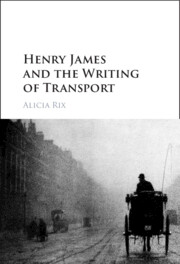
Few studies of Henry James and travel attend to the act of travelling itself: a formative experience for the author and for his invariably itinerant characters. This book explores the relationship between transport and representation in James's later fiction, examining the ineluctable significance of moving and being moved. Each chapter adopts a particular vehicle: by ship, cab, train, motorcar and bicycle, showing how James makes use of the cyclist's embroilment in media culture, the ocean-traveller's fascination with record, or the cabby's superior knowledge of geographical and sexual relations. Drawing on contemporary newspapers, fiction, and guidebooks, Henry James and the Writing of Transport demonstrates how transport is not only contextually crucial to James's fictions but inheres in his style and logic. In particular, it argues, transport ministers to James's complex preoccupation with relationality: a quality which ranges from the intense subjectivity of his fictional worlds to their series of transatlantic encounters.
In light of police raids and de facto forms of censorship, Shelley Streeby has powerfully pointed to what she aptly terms “the limits of print as an archive of radical memory,” and, so too, the limits within American literary studies in so far recognizing the various and voluminous genres of nineteenth-century radical print culture – from fiery speeches and satirical strike songs to political pamphlets, worker song-poems, insurgent novels, and experimental biography – as literature. This chapter explores the ways American literature nevertheless archives radical movements and the ways nineteenth-century radicals engaged with and rethought the canon of American literature. It also considers how nineteenth-century US radicalism shaped American literature more broadly by turning to Henry James’s 1886 novel The Bostonians as an unexpectedly rich archive of radical abolition and its legacies.
This chapter brings together literary responses to the ruins of Rome. Over the centuries after Petrarch, the ruins had acquired historical, cultural and aesthetic validation, all the outcome of the development of a sentiment favourable to ruination; in short, ruin-mindedness. For an emotional validation we must turn to writers, who put into plain words how they felt about the ruins. The feelings are surprisingly various: sometimes elation, sometimes moral disgust. Whatever the reaction, it is usually founded, as was Petrarch’s, on the fact that the ruins of Rome have a historical and cultural context, thanks to the survival of Latin literature. The physical remains of the ancient city are given meaning by the Roman literary heritage, and it is that above all which enables writers to record a varied range of nuanced responses to them that are not likely to be evoked by a ruin without a history. Reactions to the ruins are affected by shifts in sensibility, especially the influence of romanticism, which insisted upon recording impressions of the ruins in moonlight. The ruins of Rome are signs to be interpreted in endless ways. This cannot be said of any other ruins anywhere.
Gail Marshall reflects on the European roots of George Eliot’s formulation of realism, the way in which her European experiences in the 1850s coincided with those of a very young Henry James, and how both writers embrace the challenging difference of their experiences of Europe as a prelude to developing their respective practices of realism. ‘George Eliot, Henry James, Realism, and Europe’ examines the novelists’ travels in Europe in the 1850s, the availability of European culture in Britain, Thomas Cook’s first tours to Europe, a nostalgic interest in peasants, and the publication in 1859 of David Masson’s British Novelists and their Styles: Being a Critical Sketch of the History of British Prose Fiction. The chapter argues that the experience of European travel is intrinsic to both Eliot and James’s aesthetic, as well as to the ethical practice of realism.
This chapter turns its attention to the first years of the Great War. Commencing with a reading of James’s wartime correspondence, its first half charts how the aging author was tormented, in the latter stages of 1914, by the possibility that his life and works might be subjected to retroactive disavowal in light of the conflict he never saw coming. It then discusses two of James’s wartime works, The Middle Years (1917) and The Sense of the Past (1917), focusing on how these texts engage with and reflect upon the prospect of undoing and recasting formative experiences. In its second half, the chapter zooms out slightly and offers a broader investigation of the wartime critical climate within which James’s acts of creative self-interrogation took place. Noting that as the conflict raged on, authors and critics alike became caught up in debates about the purpose of reading in wartime, the chapter draws on Rebecca West’s reviews of James from 1915 and 1916 and analyses her Jamesian novel, The Return of the Solider (1918), to explore the psychological and ethical pressures that were placed on another form of counterfactual consolation: the world into which we can escape through fiction.
This chapter focuses on examples of Henry James’s post-1890 writings – including Notes of a Son and Brother (1914), the Prefaces to the New York Edition (1907–9), and ‘Maud-Evelyn’ (1900) – which engage with, or themselves embody, the challenge of commemorating lives cut short prematurely or traumatically. The first half addresses formal and stylistic features and explores how James’s commitment to conserving and commemorating the unspent experiential potential of the dead of the American Civil War manifests within his late aesthetics: informing syntax, notions of character, and the pressure placed on traditional narrative structures. The subsequent sections then trace a competing phenomenon, inspired in part by the author’s meditations on Civil War Monuments: the concern that several of James’s late works (both fictional and non-fictional) display about the wisdom of investing emotionally in the unlived lives of the untimely dead. Together, these sections argue that, during the last twenty-five years of his life, James produced writings at once enthralled by and wary of unfulfilled narrative potential, and attentive to how it might be used to bind epochs together.
This Introduction offers a survey of how criticism to date has conceived of the relationship between mass violence and the creative imagination, arguing that little has been done to destabilise the view that when literary works take the destruction of bodies, minds, and ideals in times of war seriously, they find their structures and surfaces warped. Identifying Jay Winter’s pioneering work in the field of cultural history as running counter to this trend, it positions this study as likewise animated by a belief that the wars of the last century not only sparked aesthetic experiments and the abandonment of traditional imaginative structures; they also impelled forms of creative counterfactual thinking whose aims were reparative, preservatory, and consolatory. The concepts of ‘unlived lives’ and ‘lives unlived’ (which will be used to explore various imaginative modes of resistance to violence, loss, and change) are defined. The book’s aims are situated relative to the ethos of the ‘new modernist studies’ and its place periodisation debate explained. The combination of historical, biographical, and close readings deployed in the six chapters to come are given careful justification – as is the selection of Henry James, Elizabeth Bowen, and Kazuo Ishiguro as the book’s central writers.
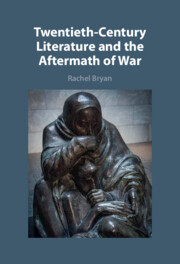
Students of twentieth-century literature are familiar with narratives that associate devastating wars with conceptual, societal, and aesthetic upheavals. What these accounts overlook, however, is a body of psychologically attuned modern writing that was less interested in this shattering of faith and form than in those counterfactual modes of resistance deployed by individuals and nations in response to mass violence and profound change. Twentieth-Century Literature and the Aftermath of War is an innovative study of the attention paid to such reparative, stabilising impulses in post-war writings from across the last century. Focusing on works by Henry James, Elizabeth Bowen, and Kazuo Ishiguro as case studies, it argues that to fully understand the relationship between modern warfare and literary art, we must learn to engage with texts whose modernity lies in their acknowledgement of the draw felt towards, and contested ethics of, consolatory counterfactuals.
A key feature of the novel of ideas is the prominent role of debates between characters that stage political, philosophical, and ideological differences. Often seen as an especially artificial feature of the genre, character-character dialogue is typically contrasted unfavorably with indirect speech and narratorial description of psychological states. This opposition plays into an implicitly modernism-valorizing view and, ultimately, a privileging of the representation and analysis of thought over the representation of speech. As such, it dovetails in an interesting way with a consequential divide within literary history between idea-driven narrative and an allegedly more nuanced psychological and moral realism. Refusing this opposition, this essay considers nineteenth-century novelistic approaches to moral and political ideas around equality and justice through a complex lens involving the interplay between ruminative states and moments of punctual character-character dialogue. Authors discussed include Henry James, Anthony Trollope, and George Eliot.