To save content items to your account,
please confirm that you agree to abide by our usage policies.
If this is the first time you use this feature, you will be asked to authorise Cambridge Core to connect with your account.
Find out more about saving content to .
To save content items to your Kindle, first ensure no-reply@cambridge.org
is added to your Approved Personal Document E-mail List under your Personal Document Settings
on the Manage Your Content and Devices page of your Amazon account. Then enter the ‘name’ part
of your Kindle email address below.
Find out more about saving to your Kindle.
Note you can select to save to either the @free.kindle.com or @kindle.com variations.
‘@free.kindle.com’ emails are free but can only be saved to your device when it is connected to wi-fi.
‘@kindle.com’ emails can be delivered even when you are not connected to wi-fi, but note that service fees apply.
This chapter examines several individuals and groups associated with the court of the Sasanian king Khusrō I (r. 531–79), detailing their respective religious and philosophical orientations, and the historical connections among them. The people in focus include, among others, Burzōy, author of the Vorlage for Ibn al-Muqaffaʿ’s Kalīla and Dimna, the Neoplatonists who supposedly left the Academy at Athens for the Sasanian court, and Khusrō I himself. While it is unlikely that the commonalities among these thinkers’ views are rooted in a shared debt or adherence to a specific tradition or school, they do attest to a broader philosophical and more specifically epistemological ferment in the later Sasanian empire, which continued into the time of Muslim rule.
This element is a study on Hegel's dialectic. One motivation for turning to dialectic is the idea that in order to understand the complex and dynamic structure of reality and of our thinking itself, we need a different way of thinking from that provided by standard logic and by traditional philosophy. The aim of the book is to present Hegel's basic idea of dialectic and to explain it through an interpretation of the text, an account of its reception, and a survey of themes in the secondary literature. The main theses discussed are that Hegel's dialectic is primarily a method of thinking and that he develops a unified theory of dialectic in his various writings.
This chapter asks what it was that marked the young Pater’s philosophy out as so radical and potentially dangerous in the 1870s. It addresses how his singular attitude to referencing, originality, and artistry in philosophy put him at odds with his contemporaries at Oxford. In its sections, it addresses (1) Pater’s reading of philosophy, and the importance of this reading to his intellectual development; (2) the ways in which Pater’s treatment of philosophy is part of his wider commitment to interdisciplinarity, and how his engagements with philosophers and their ideas shape diverse and perhaps unexpected aspects of his writings; and (3) the philosophical significance of Pater’s own aestheticism.
Blaise Pascal (1623–1662) made important contributions to mathematics, the theory of probability, and several scientific fields, was one of the inventors of the first mathematical calculator, and was also a deeply religious thinker who grappled with issues concerning the existence of God, the possibility of human salvation, and the sinfulness of human life. His famous Wager is often discussed, but there is much else of interest and relevance in his thought which remains undiscovered. This book provides an accessible yet detailed account of Pascal's philosophy and how it applies to important issues facing all of us today, as well as novel interpretations of Pascal's ideas. It will stimulate and challenge anyone who is interested in the role of the heart in rationality, human nature, our relation to reality and our individual and collective purpose, and the underexplored thoughts of one of history's greatest geniuses.
This introductory chapter provides a brief overview of Pascal’s legacy, his renown and neglect throughout the centuries, and his profound influence on philosophy, science, religion, and much else. The metholodgy of this book is then addressed: the aim is not primarily exegesis, though there will be plenty of that too. Rather, the aim of the book is to argue that there is much in Pascal’s work that is philosophically relevant to us today. Our cultural, social, political, and technological moment requires a deep look at our natures and aims, and this is what Pascal’s philosophy can offer, if we can get past the sometimes obscure theological disputes he was engaged in and the fragmentary nature of his writings. An overview of the book’s chapters is then provided.
This chapter sets the conceptual and methodological stage for the book by challenging conventional disciplinary boundaries in the history of philosophy. It argues for a broad understanding of philosophical inquiry that includes religion, literature, and lived practice. The chapter critiques the dominance of argument-based historiography, stemming from Descartes, Brucker, and the nineteenth-century research university model, which privileged metaphysics and epistemology over ethics and the art of living. It outlines a corrective vision that foregrounds genre, orality, and the performative dimensions of philosophy. Christianity is shown to be not only compatible with philosophy but also a key medium through which ancient philosophical ideas were preserved, transformed, and popularized. The chapter highlights neglected periods, especially late antiquity, and insists on the importance of reading ancient thinkers – Plato, Augustine, Paul – on their own terms and in their own genres. It advocates for a generous, contextually informed reading practice that sees philosophical ideas as part of a long conversation across centuries. Ultimately, this chapter positions the book as a work of retrieval that seeks to restore the breadth and spiritual seriousness of ancient and late ancient philosophical traditions.
The concept of concept plays a central role in philosophy, serving both as a subject of study in disciplines such as logic, epistemology, and philosophy of mind, and as a methodologically central notion for those who think that philosophy is essentially concerned with analysing, deconstructing, developing, or ameliorating concepts. But what exactly are concepts, and why have they become so significant in philosophy? The chapters of this volume explore critical moments in the history of the concept of concept, investigating why and how philosophers across different eras and cultures have addressed concepts' nature, acquisition, and relationship to the entities to which they apply. Spanning classical Greek to modern Western philosophies, and incorporating Chinese, Indian, and Islamic traditions, the volume examines concepts as means for categorizing the world – tracing their evolution from elements of thought to foundational components of reality, and the transformation of the concept into the key notion of philosophy.
This chapter focuses on the figures of Antonio Genovesi, Immanuel Kant, and Adam Smith. It begins by exploring the similarities and differences in their biographies and historical-intellectual contexts. Next, it examines the influence of Genovesi’s and Smith’s philosophies on Kant. Lastly, it provides a critical and selective review of the secondary literature regarding these authors’ perspectives on the morality of commercial life.
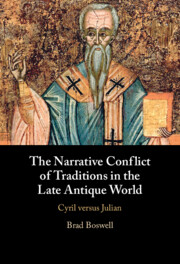
Intellectual conflict between Early Christians and pagans was not uncommon during the first centuries of the Christian era, as is amply reflected in writings from this period. In this study, Brad Boswell deepens our understanding of the nature and aims of such conflict through a study of two key texts: Against the Galileans, by Roman Emperor Julian 'the Apostate,' and Against Julian, by bishop Cyril of Alexandria written nearly a century later. Drawing from Alasdair MacIntyre's philosophy of conflict between traditions, he explores how both texts were an exercise in 'narrative conflict' whose aim was to demonstrate the superior explanatory power of their respective traditions' narrative. Acknowledging the shared cultural formation between a pagan like Julian and a Christian like Cyril, Boswell challenges interpretive models emphasizing the points of commonality between the traditions. He offers a fresh approach to Julian's anti-Christian writings, provides the foundational analysis of Cyril's little-studied treatise, and invites reconsideration of the emerging Christian tradition within its intellectual contexts.
Edited by
Marietta Auer, Max Planck Institute for Legal History and Legal Theory,Paul B. Miller, University of Notre Dame, Indiana,Henry E. Smith, Harvard Law School, Massachusetts,James Toomey, University of Iowa
This Introduction situates Reinach and the Foundations of Private Law, and Adolf Reinach, in contemporary currents in private law theory and philosophy.
This volume introduces the legal philosopher Adolf Reinach and his contributions to speech act theory, as well as his analysis of basic legal concepts and their relationship to positive law. Reinach's thorough analysis has recently garnered growing interest in private law theory, yet his 'phenomenological realist' philosophical approach is not in line with contemporary mainstream approaches. The essays in this volume resuscitate and interrogate Reinach's unique account of the foundations of private law, situating him in contemporary private law theory and broader philosophical currents. The work also makes Reinach's methods more accessible to those unfamiliar with early phenomenology. Together these contributions prove that while Reinach's perspective on private law shares similarities and points of departure with trends in today's legal theory, many of his insights remain singular and illuminating in their own right. This title is also available as Open Access on Cambridge Core.
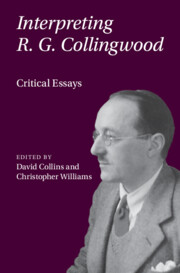
An indisputably prominent figure in twentieth-century philosophy, R. G. Collingwood often remains elusive even to those who admire his achievements. This volume of new essays aims to reintroduce Collingwood to twenty-first-century philosophical readers and to show why, and how, his achievements matter. Each essay offers an original contribution to the understanding of some aspect of Collingwood's thought, including new interpretations of several of his central ideas, re-examinations of his place in twentieth-century philosophy, and an extended consideration of a previously undiscussed manuscript. The essays span the wide range of Collingwood's interests, including metaphysics, epistemology, logic, philosophy of mind, aesthetics, and political philosophy, as well as Roman British history and the history of art. Emphasis is placed on Collingwood's connections to traditions with which his name is not typically linked, including pragmatism, analytic philosophy, and phenomenology. This rich volume will stimulate further examination of Collingwood and his legacy.
There is a difference between being a philosopher and mastering the technical aspects of philosophy. The technician is at home with axioms and abstract problems. Although the philosopher can weave his way through apparently pathless conundra, the conundra are not the philosopher’s home; his home is reality: the τὸ τί ἐστι (being of things) that tend toward ὁ ἀγαθός (the good) and ἡ ἀλήθεια (the truth). When Boethius was unjustly condemned to death, he was a blind man when it came to reality: despite his technical prowess, he was stumped by the problem of evil. The Consolatio is an account of the ascent of the mind of a technician imprisoned by the painful experience of injustice to the mind of the philosopher who can see Providence at work in creation.
Boethius’ Consolation of Philosophy, a philosophical dialogue in the “prosimetric” or mixed form (prose and poetry), has attracted broad literary and philosophical readerships in both the Latin West and Greek East from the ninth century on. The two readerships, however, have not regularly overlapped or engaged with one another in their respective efforts to interpret the work. The purposes of this study are to enable a more informed appreciation of the philosophical implications of its more “literary” books (I–II) and the literary significance of its more transparently philosophical ones (III–V), and to bring its overall architecture into clearer focus. To these ends, a case is made at the outset for the complete state of the transmitted text of the work.
Boethius’ Consolation of Philosophy was one of the most influential texts in medieval Europe. Yet it does not receive enough attention in contemporary scholarship on medieval philosophy. This is in part explained by the content and literary form of the Consolation. The direct influence of Plato and late antique Neoplatonism, the dialogue form, the alternating prose and poetry sections, and the wealth of references to classical literature and mythology contrast sharply with the sort of texts most contemporary scholars of medieval philosophy focus on. The essays in this volume tackle these interpretive challenges and reveal some of the rich philosophical insights the Consolation offers. Chapters 1–3 directly address its literary features and their philosophical significance. Chapters 4 and 5 consider the relationship between the Consolation and Boethius’ Christianity. Chapters 6–8 offer three different takes on the philosophy of selfhood, or philosophical anthropology, so central to the Consolation. Chapters 9–13 deal with the more standard metaphysical and theological issues, such as Boethius’ accounts of goodness, being, God, time, eternity, and human freedom.
Boethius' Consolation of Philosophy was one of the most widely read and influential texts in medieval Europe, considering questions such as How can evil exist in a world governed by God? And how is happiness still attainable despite the vicissitudes of fortune? Written as a dialogue between Boethius and Lady Philosophy, and alternating between poetry and prose, the Consolation is of interest not only to philosophers but to students of classics and literature as well. In this Critical Guide, the first collection of philosophical essays devoted exclusively to the Consolation, thirteen new essays demonstrate its ongoing vitality and break open its riches for a new generation of readers. The essays reflect the diverse array of approaches in contemporary scholarship and attend to both the literary features and the philosophical content of the Consolation. The volume will be invaluable for scholars of medieval philosophy, medieval literature, and the history of ideas.
Nietzsche’s late text, Thus Spoke Zarathustra, has an important formal aim: to release images from the demands of reason. It also has a moral aim – to release the human will from its enslavement to preordained images, including from the image of itself. What would an image be for which its viewer still had to be invented? for which its viewer was being invented – in the image itself? This is the adventure of Nietzsche’s major work, which, like some literary works, is drunk with images, but they take a certain path of development, from knowing images to willing images. Instead of an image that presents knowledge for a knower, Nietzsche, through trial and error, develops a “willing image,” which first has a negative task, to liberate the will from its tie to established knowledge. But across the momentous book he also gradually sets aside images that stimulate an already existing will. The aim of Thus Spoke Zarathustra is thus like the aim of some literature, to give desire, wishing, wanting, hoping, and loving a new landscape in which it can change its genre and its objects, where it can learn to self-determine.
This chapter places Carnap in the history of twentieth-century philosophy by pointing out different tensions in canon formation of philosophy. It also introduces key concepts and notions of the volume, along with chapter summaries.
Since the beginning of the 21st century, globalization has become a central theme in the humanities. The increasing globalization of discourses in the humanities can already be observed in the 20th century. Within philosophy, the globalization of the thematic framework has been promoted in particular by the World Congresses of Philosophy since 1900. Stimulated by these developments, histories of different philosophies have emerged worldwide in many different languages. In addition, global histories of philosophy have increasingly been written since the beginning of the 21st century. This paper concludes by presenting the approach of a transformative phenomenology as a way of dealing with this thematic diversity in philosophy today.