To save content items to your account,
please confirm that you agree to abide by our usage policies.
If this is the first time you use this feature, you will be asked to authorise Cambridge Core to connect with your account.
Find out more about saving content to .
To save content items to your Kindle, first ensure no-reply@cambridge.org
is added to your Approved Personal Document E-mail List under your Personal Document Settings
on the Manage Your Content and Devices page of your Amazon account. Then enter the ‘name’ part
of your Kindle email address below.
Find out more about saving to your Kindle.
Note you can select to save to either the @free.kindle.com or @kindle.com variations.
‘@free.kindle.com’ emails are free but can only be saved to your device when it is connected to wi-fi.
‘@kindle.com’ emails can be delivered even when you are not connected to wi-fi, but note that service fees apply.
This chapter explores post-conflict diplomacy in the Iraq War by introducing the idea of “inter-conflict diplomacy,” or how the United States interacted and negotiated with different Iraqi power brokers while building an Iraqi state from the ground up and participating in ongoing military conflict. In contrast to claims that the United States “imposed” democracy there, it argues that US concerns over Iraqi sovereignty, as well as Iraqis’ assertions of their national sovereignty, limited the United States’ ability to reshape Iraqi politics and society. It provides case studies on the making of the Iraqi Constitution from 2003 to 2005 and the negotiations over the continued US role in Iraq after 2008 to illustrate this argument. Finally, it examines how the concept of “intra-conflict diplomacy” might usefully illuminate other US interventions where the boundaries of war, peace, sovereignty, and legitimate authority are disputed and fluid.
This paper focuses on the bottom-up process of nation formation in multiethnic empires. The key idea is that nations emerge from a conflict over economic, political, and other resources. Under specific conditions, these conflicts give rise to coalitions based on shared ethnicity. The nation emerges if the number of ethnic-based coalitions is sufficiently large. We identify the following conditions for nations to emerge: the existence of conflict, a locally heterogeneous population, and the salience of shared ethnicity. We apply this model to account for the emergence of the Czech nation in the late Habsburg Empire and Austria-Hungary.
Since the late 1980s, post-colonial discourse based on anti-Japanese imperialism has influenced the place-making of national facilities in South Korea. This study examines the spatial transformation and post-colonial discursive shift through the changing place identity of Cheongwadae (the Blue House), analysing the 1989 master plan for its reconstruction and the contentious debate over its reuse following its public opening in 2022. The research reveals distinctive aspects of South Korea’s post-colonial discourse, showing how the 1989 master plan created a symbolic national space by reproducing traditional architectural styles and introducing new urban axes that reconnected Seoul’s historical landmarks to Cheongwadae as a project of nation-building. The 2022 opening exposed conflicting ideas about Cheongwadae’s place and identity, both as a historical site of the lost kingdom and as a national symbol of modern authority. Specifically, the naming politics surrounding Cheongwadae revealed that preserving this political site in South Korea has become more significant than restoring the rear garden of Gyeongbokgung Palace, reflecting South Korea’s shifting post-colonial discourse. This suggests that the restoration of Joseon Dynasty heritage – once driven by anti-Japanese sentiment and symbolised by the “Correcting the Past” movement – is no longer a singularly dominant strategy for representing national identity.
Why did some stateless nationalist movements at the turn of the twentieth century manage to build broad support while others remained marginal? This article’s argument is that literacy conditioned the prospects for minority nationalisms not only through its spread but also through the content of the curriculum that accompanied it. Where schooling expanded literacy without a cohesive, state-driven nationalist curriculum, it created an “open” reading public that minority-nationalist entrepreneurs could mobilize through the printed public sphere. By contrast, where schooling embedded a strong state identity, rising literacy primarily socialized readers into the state nationalism, narrowing the informational space available to rival claims. Comparing substate regions in Spain and France around 1900, the analysis shows that neither literacy nor economic development alone can account for the opportunity structure of minority nationalisms. Accounting for the type of state-sponsored education is crucial to understanding the political terrain in this formative period for nationalist ideologies.
In the years following independence, history-writing increasingly became a strategic instrument of nation-building and a means of constructing a “usable past.” Using the South African writer Bloke Modisane’s research on the Maji Maji War in Tanzania as its point of departure, this article examines how newly independent African states navigated the politics of historical production in the early postindependence period. Although deeply invested in African history, Modisane was not a formally trained historian and remained on the margins of the emerging Dar es Salaam School of History. His uneasy reception in Tanzania not only underscores the tension between Pan-African ideals and national imperatives, but the challenges faced by intellectuals working outside official or institutional structures. While he never completed his research to the point of publication, revisiting his experience reminds us that the history of African history was also shaped by incomplete, interrupted, and forgotten efforts to write the past.
The Banat, like all territories lost after the First World War, was part of Hungarian irredentist plans. On the eve of the German occupation of Serbia, Hitler promised both the Bačka and the Banat to Hungary. Romania, the other ally of Nazi Germany, also had interest in the Banat as compensation for its territorial losses and as fulfillment of its First World War goals. To avoid a possible conflict between its two allies, Germany decided to occupy the Banat and appointed an ethnic German administration to the region. This article explores how the Banat Hungarian cultural elite navigated this new situation in the shadow of the Reich German occupation and the ethnic German administration. The failed and indefinitely postponed return of the region to Hungary raised self-doubt in the Banat Hungarian minority elites, causing them to rethink their position in the region and in the Hungarian nation. In the hopes of strengthening their positions, these elites discussed their ideas in the only Hungarian-language daily in the Banat during the period. The texts published in the Torontál repositioned the historical borderland of the Banat as a core part of the Hungarian nation-state and reinforced the border only towards the Balkan peninsula.
Chapter 2 provides the historical context of the Ghana–Togo borderland region. I show how the border communities I have visited manifested both plurality and unity, showing strong remnants of Ewe unity despite the border but also dissensions reaffirming the border as a separation. I then delve deeper into the roots of the historical in-betweenness of the border region explaining the multiplicity of political communities layered on top of each other from the precolonial period to the 1956 plebiscite. Finally, I analyse the scholarship’s approach to nation-building projects arising from the border region in the 1950s. While the literature on political activism in the border region concludes on the failure of the diverse political projects that arose, the persistence of these projects today is not fully explained. I argue that the palimpsestic and interconnected nature of political communities in the borderlands contributes to explain this phenomenon – which suggests that other frameworks smaller than the Westphalian conception of nation-state are at work.
This chapter details the vital role of Indigenous trade and investment in promoting sustainable development. Firstly, it discusses the prerequisite for Indigenous trade, emphasizing a nation-building approach centred on the significance of robust tribal infrastructure. The chapter then addresses the barriers hindering Indigenous inter-tribal trade, including state, or provincial interference in tribal jurisdiction, poor tribal governance, Canada’s failure to honour its Jay Treaty obligations, the lack of Indigenous foreign trade zones, the exclusion of Indigenous traditional knowledge (TK) from intellectual property (IP) regimes, and historical challenges in trade financing. Additionally, the chapter explores Indigenous trade and commerce engagements with non-Indigenous enterprises, both with and without federal permission, highlighting the implications, challenges, and opportunities involved. By examining these aspects, the chapter advocates for empowering Indigenous nations through trade and investment, fostering economic opportunities while preserving cultural heritage, and working towards sustainable development by creating a strong economic baseline.
This article examines the identities of three sub-ethnic and ethnographic groups in Georgia – Adjarians, Megrelians, and Tushetians – and their relationship to the Georgian nation in political and ethnic terms. Drawing on fieldwork conducted between 2022 and 2023, the study explores how these groups navigate their distinct cultural markers, such as religion, language, and traditions, while engaging with the broader national identity. Using the theoretical framework of nationalization, the analysis explores four key themes: the salience of ethno-cultural differences, the transformation of sub-ethnic identities, the politicization of ethno-cultural markers, and the groups’ historical narratives emphasizing their contributions to Georgian-ness. The findings highlight the link between local identities and national integration. The findings contribute to broader theoretical debates on nationalization by demonstrating that the integration of sub-ethnic groups is not a unidirectional process of homogenization, but a dynamic negotiation of diversity and unity.
This article examines recent developments in three key areas of nationalism research that integrate emotions into theoretical frameworks and empirical analysis. First, it explores studies that revisit historical nation-building through the lens of the history of emotions. Second, it discusses how the “affective nationalism” literature has shifted the focus of banal nationhood reproduction from mental representations to emotions. Third, it reviews efforts to theorize the emergence of intense national emotions in certain periods and their role in political mobilization and change. The article highlights critical advancements across these areas, particularly in linking emotions to meaning through narratives, expanding research from national centers to the frontiers, and challenging the illusion of national harmony by emphasizing power dynamics and dialectical change. The conclusion suggests future research directions, including investigations of national emotions within diasporic communities and digital networks.
This introduction presents the historical and social context of Argentina in the nineteenth century, as it relates to the local Afro-descendant population. It explains the building-nation conceived by the dominant groups toward the end of the century. The project sought to create a national imaginary founded on the notion of a culturally and racially homogeneous country of white European descent. This project necessarily entailed the disappearance of the population of African (and Indigenous) descent as part of the nation. The strategies used to achieve this project (census, cultural appropriation, official history) are mentioned. In this sense, it is proposed that the construction and recurrent use of visual stereotypes throughout the nineteenth century (concentrated in specific iconographic nuclei) was one of the strategies used in the process of invisibilization of the descendants of enslaved Africans in Argentina. It also explains the state of the art on the subject, the theoretical framework, and the methodology used in the research.
The final and concluding chapter reflects on diasporic state-building, drawing out the implications for how this transforms our understanding of state-building under military intervention. It critiques the limitations of diasporic state-building when approached through Western military and developmental interventions and their Euro-centric positionality. The chapter discusses how the optic of diasporic state-building allows us to witness transformations in how we conceive the nation-state and transnational civil society, since diasporas are constitutive actors transforming homelands states and societies in significant and contradictory ways, which can simultaneously bolster and undermine the state. Diasporic state-building also sheds light on transformations in our understanding of concepts such as citizenship, belonging, and nationhood in a globalised world when the nation-state is unshackled from state boundaries and occupies a transnational space. Finally, the chapter ends with the significance of diasporic state-building, when we consider the persistence of conflicts and migrations and the emergence of new diasporas. It offers probing questions for future research for exploring diasporic state-building of other global diasporas in other non-Western contexts.
Small linguistic tricks can have big footprints. This book examines how India's current Hindu nationalist government uses language as a weapon against its Muslim citizens. Each chapter provides a discursive history of matters that have been a source of conflict between Hindus and Muslims in India, highlighting the potent relationship between language and politics. The book explores four issues, Ramajanmbhoomi temple, Muslim Personal Law as it pertains to Indian Muslim women, Kashmir and revocation of Article 370, and Citizenship (Amendment) Act/National Registry of Citizens, whose histories in courts and legislative bodies are written in linguistic trickery. Offering novel ways of understanding why the Hindu right has claimed victories on these legislative and judicial matters that impact the lives of minority citizens, it is essential reading for key insights for academic researchers and students in sociolinguistics, as well as South Asia studies, gender studies and Indian politics and culture.
This chapter delineates Eastern, East Central, and Southeastern Europe, highlights its shifting geographies for the study of cities, and argues for the need to see the region ‘between the Baltic and the Adriatic’ as one whole. Whereas the imperial capitals Vienna, St Petersburg and Istanbul tend to be considered either not representative or beyond the delineated borders of the region, the chapter pays closer attention to other cities, especially ‘second capitals’, regional and provincial centres, ports and border towns. In the imperial context of the late nineteenth and early twentieth centuries, major urban planning and improvement projects are analysed as the responses to the perceived backwardness of the region as compared to their counterparts in Western and German-speaking Central Europe, where the latter served as useful models. When addressing various attempts at ‘modernisation’, cities emerge as a group that displayed similar urbanisation patterns and chronology, as well as persistent ethnic and religious diversity. Their twentieth-century experiences were also shaped by the ‘long’ First World War and the accompanying revolts and revolutions. Many became sites of nation-building in the inter-war period, they also shared similar pathways during and after the Second World War, when they became sites of urban programmes of state socialism and post-socialist transformation
Liberal and Conservative federal governments engage in nation-building within official languages governance, seeking to align social and political norms with partisan principles. This article compares the Chrétien, Harper and Justin Trudeau governments’ instrumentalization of Canadian identity in the five action plans and roadmaps for official languages developed since 2003. These documents are comprehensive five-year outlines of the governments’ approach to official languages, interspersed with priorities, funding commitments and minister statements. This analysis is facilitated by a novel interpretive framework, drawing attention to the use of a national narrative, values and affect. Our analysis reveals the Chrétien government to have translated the Liberal, civics-based depiction of Canadian identity to suit an international focus. The Harper government portrayed Canadian identity as true to settler roots, rebuking the Liberal model. Finally, the Trudeau government established a pluralist Canadian narrative to justify Liberal civics as a means for protecting and promoting equity and diversity.
Diverse Americans have appropriated the Revolution to justify wideranging causes and visions of the American nation. Over the two centuries following the Revolution, Americans’ memories of the founding tended to conform to one of two broad patterns. The first, “monumentalism,” seeks to create a single, unified civic culture around an understanding of the Revolution that is associated with the state, conservatism, tradition, and cultural homogeneity. The second, or the “fulfillment narrative,” argues that the Revolution was motivated by certain ideals (freedom, equality, self-determination) that are worth pursuing but have not yet been achieved. Despite their differences, monumentalism and the fulfillment narrative share the assumption that the legacy of the American Revolution is fundamentally positive. But, on occasion, some Americans have instead questioned or outright rejected the American Revolution’s legacy, and such dissenting memories can highlight perspectives that are obscured by a near-universal embrace of the Revolution.
How do people form durable cognitive and affective bonds to state territories? How do these place attachments become rigid? I argue that territorial attachments rest on what social epistemologists call structural ignorance — background knowledge and cognitive mechanisms that filter out discomforting narratives to preserve a dominant view. As the state structures ignorance and as people reproduce it, certain knowledges — the nation’s artificialness and the past presence/ongoing oppression of non-core groups inhabiting the state’s territory — cannot be known, lest people’s cognitive environment and sense of self be disrupted. As structured ignorance becomes entrenched, territorial attachments rigidify. I shed light on the territorializing practices-structured ignorance-rigid attachments mechanism through the case of Azerbaijan and Nagorno-Karabakh. Through discourse analysis and practice tracing, I find that as the Azerbaijani state structured ignorance during the Soviet era about the symbolic significance of Nagorno-Karabakh and the erasure of ethnic Armenians, territorial attachments grew. I then show how the 1988–1994 war over Nagorno-Karabakh and practices leading to the 2020 War entrenched the structure and rigidified attachments. Uncovering the structure of ignorance and the attachments it prescribes reveals new ramifications of nation-building and one of the facets of intractable conflicts.
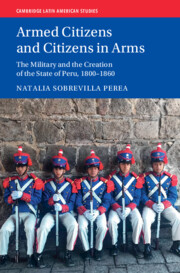
In this book, Natalia Sobrevilla Perea reconstructs the history of the armed forces in nineteenth-century Peru and reveals what it meant to be a member. By centering the experiences of individuals, it demonstrates how the armed forces were an institution that created social provision, including social care for surviving family members, pensions for the elderly, and assistance for the infirm. Colonial militias transitioned into professional armies during the wars of independence to become the institution underpinning and sustaining the organization of the republic. To understand the emergence and weaknesses of nineteenth-century Peru, it is imperative to interrogate how men of the sword dominated post-independence politics.
In States Against Nations, Nicholas Kuipers questions the virtues of meritocratic recruitment as the ideal method of bureaucratic selection. Kuipers argues that while civil service reform is often seen as an admirable act of state-building, it can actually undermine nation-building. Throughout the book, he shows that in countries with high levels of group-based inequality, privileged groups tend to outperform marginalized groups on entrance exams, leading to disproportionate representation in government positions. This dynamic exacerbates intergroup tensions and undermines efforts towards nation-building. Drawing on large-scale surveys, experiments, and archival documents, States Against Nations provides a thought-provoking perspective on the challenges of bureaucratic recruitment and unearths an overlooked tension between state- and nation-building.