To save content items to your account,
please confirm that you agree to abide by our usage policies.
If this is the first time you use this feature, you will be asked to authorise Cambridge Core to connect with your account.
Find out more about saving content to .
To save content items to your Kindle, first ensure no-reply@cambridge.org
is added to your Approved Personal Document E-mail List under your Personal Document Settings
on the Manage Your Content and Devices page of your Amazon account. Then enter the ‘name’ part
of your Kindle email address below.
Find out more about saving to your Kindle.
Note you can select to save to either the @free.kindle.com or @kindle.com variations.
‘@free.kindle.com’ emails are free but can only be saved to your device when it is connected to wi-fi.
‘@kindle.com’ emails can be delivered even when you are not connected to wi-fi, but note that service fees apply.
Why was Britain the first country in Europe to experience economic growth, with sustained technical change and the invention of machines that cut costs by taking over tasks previously done by hand? Cotton spinning is a striking example. In the 1700s, the world’s best spinners in India put in 50,000 hours to spin 100 pounds of cotton. By 1835, workers with machines took only 135. Technical change also generated new products and affected far more than the textile industry. Examples from 1700s would include the steam engine and new ways of making iron. One explanation for why Britain took the lead here was that its high wages boosted the demand for inventions of machines that could substitute for expensive labor. But closer inspection fails to support this argument. Rather, Britain had a more abundant supply of the skills and ideas that made technical change possible. We can see how they favored Britain by comparing two likely candidates for early industrialization: Lancashire in Britain and Normandy in France. The comparison highlights other advantages that benefited Britain as well, from agglomeration effects to the greater toll that land war took in Continental Europe.
Chapter 2 explores the regional context and significance of Tivinat’s capture and imprisonment in the strategic port of Dieppe in the province of Normandy. Establishes the importance of Normandy’s connections with the Huguenot diaspora in England and cross-Channel connections and conflicts. Focuses on the development of the Reformation in Dieppe and its connections with Beauvais, the Huguenot leadership and local nobility, its progress during the first religious war (1562–63) and ongoing conflict with local Catholics. In particular, relations with regional and town governors were fraught, resulting in heated confessional clashes during the second and third wars of 1567–1570. The link between these events and the role of the governors in enabling Tivinat’s interrogation is established, too, as Norman connections with the cardinal of Châtillon’s exile in England. Examines the career of Tivinat’s interrogator, Michel Vialar, president of the parlement of Rouen, and his contribution to confessional tensions in the region through prosecution and fiscal exactions as well as interpersonal clashes with fellow judges. Discussion through detailed examples of the contemporary challenges of crossing the Channel by boat provides further context for the experience of Tivinat and other couriers.
This chapter takes the province of Normandy, a pays détat with its own provincial estates and bailiwick assemblies, to demonstrate how political language and vocabulary evolved in the sixteenth century from an emphasis on the common good (le bien public) to a more royalist language of the good of the state (bien dÉtat). The crown had given the province a Charter outlining its rights and privileges in the fourteenth century. The crown also gave the provinces principal city, Rouen, a charter. Becasue of customary law, however, consenting to taxation by the Estates of Normandy had become established custom in the province by the sixteenth century even though it ws not mentioned specifically in the Norman Charter. Thus, royal efforts to emphasize the nation State in its vocabulary challenged the custom of consent to taxation.
This contribution provides a chronological overview which is the result of a research programme carried out over the last few years in Normandy and which is based, among other things, on recent discoveries made in this region during developer-funded excavations. The overview looks phase by phase at the different characteristics of the Middle Neolithic in Normandy, and sets them against the wider context of the Neolithic transition of north-west France. The geographical area covered by this study encompasses the margin of the Armorican Massif in the west and the sedimentary basins between the Armorican Massif and the Seine Valley in the east. The chronology used in this study largely refers to the sequence established in France and is discussed on the basis of absolute dates (in cal BC) for the sake of transparency. The main objective of this publication is to connect the recent advances made on either side of the Channel, in particular with regard to the chronology of the various Neolithic groups. By presenting our British colleagues with the current state of research in our area of study we want to spark discussion and develop new collaboration.
This work written in honour of Queen Emma, wife of Æthelred the Unready and then of king Cnut, and mother of king Edward the Confessor, contains much information about royal life and intrigue at the beginning of the eleventh century. Here an account of the murder of her younger son Alfred on his return to England is excerpted.
The fateful days and weeks surrounding 6 June 1944 have been extensively documented in histories of the Second World War, but less attention has been paid to the tremendous impact of these events on the populations nearby. The Lost Paratroopers of Normandy tells the inspiring yet heartbreaking story of ordinary people who did extraordinary things in defense of liberty and freedom. On D-Day, when transport planes dropped paratroopers from the 82nd and 101st Airborne Divisions hopelessly off-target into marshy waters in northwestern France, the 900 villagers of Graignes welcomed them with open arms. These villagers – predominantly women – provided food, gathered intelligence, and navigated the floods to retrieve the paratroopers' equipment at great risk to themselves. When the attack by German forces on 11 June forced the overwhelmed paratroopers to withdraw, many made it to safety thanks to the help and resistance of the villagers. In this moving book, historian Stephen G. Rabe, son of one of the paratroopers, meticulously documents the forgotten lives of those who participated in this integral part of D-Day history.
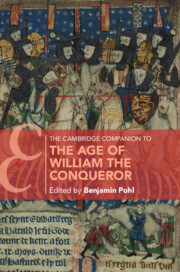
This Cambridge Companion offers readers a comparative cultural history of north-western Europe in the crucial period of the eleventh century: the age of William the Conqueror. Besides England, Normandy, and northern France, the volume also explores Scandinavia, the North Sea world, the insular world beyond the English Channel, and various parts of Continental Europe. This Companion features essays designed specifically for those wishing to advance their knowledge and understanding of this important period of European history using a holistic and contextual perspective, deliberately shifting the focus away from William the man and onto the rich and fascinating culture of the world in which he lived and ruled. This was not the age created by William, but the age that created him. With contributions by leading international experts, this volume provides an inclusive and innovative study companion that is both authoritative and timely.
Introducing the volume’s fourth and final thematic strand (Cultural Perspectives), this chapter offers a study of warfare and violence in the age of William the Conqueror. Following a general introduction, it scrutinises the justifications of William’s wars and the history of hostilities and their limitations in Normandy. This is followed by a discussion of rebellion against ducal and royal rule contextualised within contemporary cultures of warfare and violence in northern France. The chapter concludes with studies of castles, conquests, and conduct in the Anglo-Norman world of the eleventh century.
This chapter opens the volume’s third thematic strand (Individuals and Institutions) with an investigation into family and kinship in the age of William the Conqueror. It starts with France and the Capetian dynasty, before shifting its focus to England and the Scandinavian kingdoms of Denmark and Norway. Particular attention is paid to the period after the death of Cnut, the extended kin of Edith and Edward, and the various changes and continuities between notions of kinship in the pre-Conquest period and those in Anglo-Norman England post-1066.
The third chapter in the volume’s third thematic strand (Individuals and Institutions) is dedicated to kingship and consensus in the age of William the Conqueror. After exploring the scholarly status quo and the historical and Biblical foundations of medieval kingship models prevalent in the Anglo-Norman world of the eleventh century, the chapter turns to a discussion of the writings of William of Poitiers and his contemporaries, before scrutinising the application of these kingship models to the everyday realities of the Conqueror’s cross-Channel realm.
This chapter concludes the volume’s third thematic strand (Individuals and Institutions) with a study of law and justice in the age of William the Conqueror. It begins by discussing the law of persons, before moving on to the law of property and the law of wrongs. The chapter’s final section is dedicated to courts and procedure and gives a sense of the practical application of these laws in Anglo-Norman society. Throughout the entire chapter, notions of continuity are contextualised with moments of change, and important attention is drawn to the socio-political dimension of the law.
This chapter introduces the volume’s first thematic strand (Home and Away) with a study of Normandy and the Continent in the age of William the Conqueror. It commences with a consideration of terminology, followed by an analysis of Normandy’s developing boundaries and the Normans’ adjustment to Christianity. The chapter then takes a comparative view of Normandy’s neighbours (Brittany, Flanders, Maine, Blois, and France) before studying the duchy’s rise as a major player in eleventh-century north-western Europe. It concludes with discussions of knightly culture, Church reform, and the influence of popes and emperors.
This chapter concludes the volume’s fourth thematic strand (Cultural Perspectives) with a study of schools and education in the age of William the Conqueror. Utilising the perspective of the long eleventh century, it scrutinises different cultures of schooling in Normandy and England and the relationships that existed between them. This is followed by a discussion on the memory of pre-Conquest English learning in post-Conquest England and a concluding case study of King Harold’s Waltham.
The third chapter in the volume’s final thematic strand (Cultural Perspectives) concerns language and literacy in the age of William the Conqueror. Following an introduction explaining the languages and linguistic developments in the cross-Channel Anglo-Norman state, the chapter casts its view broadly across Britain and beyond, before offering some considerations of the important subjects of literacy, Latinity, and genre. Detailed attention is given to questions concerning the persistence of Old English and the advent of Anglo-Norman, as well as to book production.
This chapter concludes the volume’s second thematic strand (Space and Society) with an analysis of travel and trade in the age of William the Conqueror. Focusing on dynamics of commerce and communication, it traces the movement of goods and people across eleventh-century north-western Europe. The chapter begins with an introductory discussion of trade and commerce, before turning its attention to different kinds of landscapes and road networks. This is followed by a study of inland navigation and maritime travel that ranges broadly across the north-western European landscape.
Continuing the volume’s second thematic strand (Space and Society), this chapter addresses the topic of Church and society in the age of William the Conqueror. It commences with a discussion of the Church in Normandy, before considering the corresponding situation across the Channel in England. It then develops a comparative perspective that draws attention to some fundamental issues surrounding the Anglo-Norman Church and its legacy, including William the Conqueror’s relationship with the episcopate and the Anglo-Norman monastic landscape, the importance of stability and authority, and the use of violence by and against members of the clergy.
Continuing the volume’s third thematic strand (Individuals and Institutions), this chapter studies the nobility and aristocracy in the age of William the Conqueror. The discussion begins by pointing out the importance of hierarchy and status before drawing attention to the subjects of ancestry, culture, and education amongst the elites of the cross-Channel Anglo-Norman world and their neighbours on the Continent. Following investigations of aristocratic splendour and largesse, as well as of violence and competition, it closes by taking stock of the situation on the eve of William’s conquest of England.
Continuing the volume’s fourth thematic strand (Cultural Perspectives), this chapter studies the writing of history and memory in the age of William the Conqueror. After a discussion of Normandy’s first dynastic chronicle composed by Dudo of Saint-Quentin, it directs its focus onto monastic historical narratives produced in Normandy, England, and their neighbouring territories, before turning to a range of contemporary secular narratives. The chapter is rounded off with considerations of Anglo-Norman historical writing in the broader context of north-western Europe and its transmission in manuscripts.
Twenty-one new charter texts, or references to such texts now lost, add significantly to the corpus of materials that Marjorie Chibnall gathered for the biography of the Empress Matilda. In particular, this new evidence throws light upon the circumstances in which Matilda and Geoffrey Plantagenet brokered their alliance with Robert of Gloucester, for the first time properly identifying the role played here by Miles of Gloucester, subsequently promoted as earl of Hereford.
The relative scarcity of matrimonial proceedings in England (and perhaps Normandy) resulted from administrative arrangements. It does not highlight differences separating the area from the rest of the North. English diocesan officials did not exercise exclusive rights of first instance jurisdiction over matrimony. Diocesan officials operated in a distinct environment because they had to compete with countless tribunals for rights of adjudication. Commissaries and exempt judges went on rounds of supervision, setting up vetting stations, especially for allegations that did not attain legal levels of proof. Unilateral marriage claims were normally decided on the spot and before they could reach central locations. If records from visited and permanent seats of English church justice are read in conjunction, on the other hand, they yield quantities of marriage cases resembling those from Paris or Cambrai. The treatment of cases was again exceptional in that multiple proceedings on account of identical charges were often staged in the same diocese. The rules of canonical jurisprudence envisioned three tiers of appellate hierarchy at a maximum. In Anglo-Norman practice, the revision of prior rulings could pass many more times between commissaries, deans, and higher dignitaries.