To save content items to your account,
please confirm that you agree to abide by our usage policies.
If this is the first time you use this feature, you will be asked to authorise Cambridge Core to connect with your account.
Find out more about saving content to .
To save content items to your Kindle, first ensure no-reply@cambridge.org
is added to your Approved Personal Document E-mail List under your Personal Document Settings
on the Manage Your Content and Devices page of your Amazon account. Then enter the ‘name’ part
of your Kindle email address below.
Find out more about saving to your Kindle.
Note you can select to save to either the @free.kindle.com or @kindle.com variations.
‘@free.kindle.com’ emails are free but can only be saved to your device when it is connected to wi-fi.
‘@kindle.com’ emails can be delivered even when you are not connected to wi-fi, but note that service fees apply.
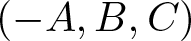
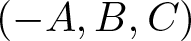
Let $(-A,B,C)$ be a linear system in continuous time $t \gt 0$ with input and output space ${\mathbb C}$ and state space $H$. The scattering (or impulse response) functions $\phi_{(x)}(t)=Ce^{-(t+2x)A}B$ determines a Hankel integral operator $\Gamma_{\phi_{(x)}}$; if $\Gamma_{\phi_{(x)}}$ is trace class, then the Fredholm determinant $\tau (x)=\det (I+\Gamma_{\phi_{(x)}})$ determines the tau function of $(-A,B,C)$. The paper establishes properties of algebras including $R_x = \int_x^\infty e^{-tA}BCe^{-tA}\,dt$ on $H$, and obtains solutions of the Kadomtsev–Petviashvili PDE. Pöppe’s semi-additive operators are identified with orbits of a shift action on integral kernels, and Pöppe’s bracket operation is expressed in terms of the Fedosov product. The paper shows that the Fredholm determinant $\det (I+R_x)$ gives an effective method for numerical computation of solutions of $KP$.




Fully revised and updated, the new edition of Engineering Dynamics provides a comprehensive, self-contained and accessible treatment of classical dynamics. All chapters have been reworked to enhance student understanding, and new features include a stronger emphasis on computational methods, including rich examples using both Matlab and Python; new capstone computational examples extend student understanding, including modelling the flight of a rocket and the unsteady rolling of a disk. The coverage of Lagrange's equations is improved, spanning simple systems and systems relevant to engineers. It provides students with clear, systematic methods for solving problems in dynamics, demonstrates how to solve equations of motion numerically, and explains all mathematical operators. Including over 150 real-world examples to motivate student learning, over 400 homework problems, and accompanied online by Matlab and Python repositories and supplemental material, the new edition of this classic is ideal for senior undergraduate and graduate students in engineering.
Some of the key messages of this book are reviewed here in the format of ’reminders’ to clarify the concerns of past misunderstandings and to emphasize solutions to perceived challenges. The importance of basic fundamentals, such as visual assessment, awareness of assumptions and potential numerical solutions is described and then the complementarity of the many statistics and their bases is reviewed. The exciting potential of ongoing developments is summarized, featuring hierarchical Bayesian analysis, spatial causal inference, applications of artificial intelligence (AI), knowledge graphs (KG), literature-based discovery (LBD) and geometric algebra. A quick review of future directions concludes this chapter and the book.
The lessons from the previous chapters are here applied to a very brief discussion of numerical techniques. First we show how to calculate the capacitance of three-dimensional structures; we then follow this with similar calculations of inductance. Both of these are well defined in the long wavelength approximation. We then describe how a full wave numerical solutions can be implemented using the popular method-of-moments. We follow this by discussing how to implement excitations or wave ports and how to implement boundary conditions between different dielectric layers.
The present analysis has been developed to investigate the heat transfer phenomenon in peristaltic flow of Carreau fluid in a curved channel with rhythmic contraction and expansion of waves along the walls (similar to blood flow in tubes). Magnetic field is imposed in radial direction. The heat transfer aspect is further studied with viscous dissipation effect. The curved channel walls are influenced by flow and thermal partial slip. In addition the flow stream comprised porous medium. The system of relevant non-linear PDEs have been reduced to ODEs by utilizing the long wavelength approximation. The striking features of flow and temperature characteristics under the involved parameters are examined by plotting graphs. The generation of fluid temperature and velocity due to viscous dissipation and gravitational efforts are recorded respectively. Moreover indicated results signify activation of velocity, temperature and heat transfer rate with Darcy number.
In order to solve general kinematics modeling problems and numerical stability problems of numerical methods for spatial parallel linkage mechanisms, a general modeling method and its numerical solving algorithm is proposed. According to the need for avoiding direct singular configurations, valid joint variable space and valid forward kinematics solutions (VKSs) are defined. Taking numerical convergence near singular points into account, the pseudo-arc length homotopy continuation algorithm is given to solve the kinematics model. Finally as an example, the joint variable space of the general Stewart platform mechanism is analyzed, which is proved to be divided into subspaces by direct singular surfaces. And then, forward kinematics solutions of 200 testing points are solved separately using the pseudo-arc length homotopy continuation algorithm, the Newton homotopy continuation algorithm and the Newton–Raphson algorithm (NRA). Comparison of the results shows that the proposed method is convergent to the same solution branch with the initial configuration on all the testing points, while the other two algorithms skip to other solution branches on some near singular testing points.
In this study, Liénard equations in their general form are treated using the Adomian decomposition method. The special structure of the Liénard equation is exploited to obtain a numerically efficient algorithm suitable for solution by a computer program.
We investigate the economic importance of modeling nonlinearities in the dynamics of exogenous processes on the implied moments of endogenous variables in the context of the consumption-based asset pricing model. For this purpose, we model the endowment process alternatively as a linear autoregression and as a nonlinear threshold autoregression. The asset pricing model with nonlinear endowment is solved using quadrature techniques. A comparison of the moments of the model-implied rates of return in the two cases suggests that the economic impact of modeling nonlinearities is small.
Recommend this
Email your librarian or administrator to recommend adding this to your organisation's collection.
