To save content items to your account,
please confirm that you agree to abide by our usage policies.
If this is the first time you use this feature, you will be asked to authorise Cambridge Core to connect with your account.
Find out more about saving content to .
To save content items to your Kindle, first ensure no-reply@cambridge.org
is added to your Approved Personal Document E-mail List under your Personal Document Settings
on the Manage Your Content and Devices page of your Amazon account. Then enter the ‘name’ part
of your Kindle email address below.
Find out more about saving to your Kindle.
Note you can select to save to either the @free.kindle.com or @kindle.com variations.
‘@free.kindle.com’ emails are free but can only be saved to your device when it is connected to wi-fi.
‘@kindle.com’ emails can be delivered even when you are not connected to wi-fi, but note that service fees apply.
We review the role of electromagnetic modes in laser cavities. We introduce some ideas that are preliminary to describe the glassy behavior of light. We analyze laser fluctuations and the thermodynamic description in multimode systems. The Fokker–Planck equation for lasers is discussed.
We treat the crystalline structure as a vibrating ensemble. The energy is expressed as a Taylor series, whose different terms correspond to various physical properties. The solution is provided using perturbation theory.
This chapter considers a general form of the Wick’s theorem, which leads to a perturbation expansion of the (contour) single- and two-particle Green’s functions, which are expressed in terms of the contour time-ordering operator. The strategy for proving the Wick’s theorem is similar to that adopted within the Matsubara formalism for the Green’s functions at finite temperature and relies on the Gibbs form of the statistical operator in the interaction picture. An extension to superfluid Bose and Fermi systems is also considered.
In the Schrödinger and Heisenberg representations, the time-evolution operator depends on the full time-dependent Hamiltonian, which includes an external time-dependent potential. Out of this full-time dependence, it is useful to isolate the time dependences due to either the full system Hamiltonian or its noninteracting part. These two cases, referred to as the Heisenberg and interaction pictures, respectively, are considered separately.
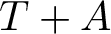
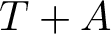
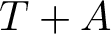
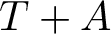
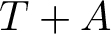
We consider a normal operator $T$ on a Hilbert space $H$. Under various assumptions on the spectrum of $T$, we give bounds for the spectrum of $T+A$ where $A$ is $T$-bounded with relative bound less than 1 but we do not assume that $A$ is symmetric or normal. If the imaginary part of the spectrum of $T$ is bounded, then the spectrum of $T+A$ is contained in the region between two hyperbolas whose asymptotic slope depends on the $T$-bound of $A$. If the spectrum of $T$ is contained in a bisector, then the spectrum of $T+A$ is contained in the area between certain rotated hyperbolas. The case of infinitely many gaps in the spectrum of $T$ is studied. Moreover, we prove a stability result for the essential spectrum of $T+A$. If $A$ is even $p$-subordinate to $T$, then we obtain stronger results for the localisation of the spectrum of $T+A$.
Chapter 13 is devoted to two important approximation methods used to solve time-independent problems, namely stationary perturbation theory and the variational method. Perturbation theory is developed for both non-degenerate states and degenerate states, with illustrative examples. The Stark effect is considered separately. The dielectric constant of a transparent medium as a function of frequency is shown to result from the modification of the wave function due to the perturbation of the radiation field. Two complementary topics are presented: the canonical transformation method and the Feynman-Hellman method. Finally, the possibilities of the variational method are illustrated by using it first to determine an upper bound for the energy of the stationary states of a quantum system, and then to study more complicated cases, including the partially shielded Coulomb potential produced by a neutral atom.
We find necessary and sufficient conditions for high-order persistence of resonant caustics in perturbed circular billiards. The main tool is a perturbation theory based on the Bialy–Mironov generating function for convex billiards. All resonant caustics with period q persist up to order $\lceil q/n \rceil -1$ under any polynomial deformation of the circle of degree n.
Physicists have a dirty secret: we’re not very good at solving equations. More precisely, humans aren’t very good at solving equations. We know this because we have computers and they’re much better at solving things than we are. This means that we must develop a toolbox of methods so that, when confronted by a problem, we have some options on how to go about understanding whats going on. The purpose of this chapter is to develop this toolbox in the guise of various approximation schemes.
The harmonic oscillator is, by some margin, the most important system in physics. This is partly because its easy and we can solve it. And partly because, under the right circumstances, pretty much anything else can be made to look like a bunch of coupled harmonic oscillators. In this chapter, we look at what happens when a bunch of harmonic oscillators – or springs – are connected to each other.
This chapter discusses perturbation theory, applied to the λϕ4 model, with a focus ondimensional regularization. It characterizes different types of Feynman diagrams. Weexplain the meaning of renormalization and discuss the conditions forrenormalizability.
The impact of a wide range of post-Keplerian perturbing accelerations, of whatever physical origin, on different types of observation-related quantities (Keplerian orbital elements, anomalistic, draconitic, and sidereal orbital periods, two-body range and range rate, radial velocity curve and radial velocity semiamplitude of spectroscopic binaries, astrometric angles RA and dec., times of arrival of binary pulsars, characteristic timescales of transiting exoplanets along with their sky-projected spin-orbit angle) is analytically calculated with standard perturbative techniques in a unified and consistent framework. Both instantaneous and averaged orbital shifts are worked out to the first and second order in the perturbing acceleration. Also, mixed effects, due to the simultaneous action of at least two perturbing accelerations, are treated.
The closing chapter aims to sum up some of the experiences, albeit in a rather overarching way. It is emphasized that, while the book spans rather widely, much of what has been presented is a bit like scratching the surface. Still, the tools developed should form a good basis for further work within quantum sciences. And, hopefully, the book has worked as a way of getting to know a bit of the quantum nature of the micro cosmos. In the preceding chapters, questions related to quantum foundations have, to a large extent, been evaded. Addressing the measurement problem and alternative interpretations attempts to mitigate this. A few topics are listed which are essential to quantum physics but are not properly addressed in this book. This includes quantum field theory, perturbation theory, density functional theory and quantum statistics. Finally, there are provide suggestions for further reading.
A comparison theorem for state-dependent regime-switching diffusion processes is established, which enables us to pathwise-control the evolution of the state-dependent switching component simply by Markov chains. Moreover, a sharp estimate on the stability of Markovian regime-switching processes under the perturbation of transition rate matrices is provided. Our approach is based on elaborate constructions of switching processes in the spirit of Skorokhod’s representation theorem varying according to the problem being dealt with. In particular, this method can cope with switching processes in an infinite state space and not necessarily of birth–death type. As an application, some known results on the ergodicity and stability of state-dependent regime-switching processes can be improved.
Exact solutions to the Schrödinger equation for realistic nanoscale systems are beyond reach, hence, different strategies for approximating the solutions are necessary. Perturbation theory relies on a “zero-order Hamiltonian” to express the desired eigenvalues and eigenvectors of “the full Hamiltonian.” We derive working equations for the Rayleigh–Schrödinger perturbation theory, and the validity of the approach is analyzed for a generic two-level system. Applications are given to atoms perturbed by point charges or static fields, and for electrons in quantum wells. An alternative strategy is the variation method, which replaces exact solutions by their projection on a reduced space of “trial functions,” varied to minimize the associated error. Particularly important is the method of linear variation, which can potentially converge to the exact Hamiltonian eigenstates. The mean-field approximation, commonly used for many-particle systems, is derived by optimizing a trial function in the form of product of single-particle functions.
This popular undergraduate quantum mechanics textbook is now available in a more affordable printing from Cambridge University Press. Unlike many other books on quantum mechanics, this text begins by examining experimental quantum phenomena such as the Stern-Gerlach experiment and spin measurements, using them as the basis for developing the theoretical principles of quantum mechanics. Dirac notation is developed from the outset, offering an intuitive and powerful mathematical toolset for calculation, and familiarizing students with this important notational system. This non-traditional approach is designed to deepen students' conceptual understanding of the subject, and has been extensively class tested. Suitable for undergraduate physics students, worked examples are included throughout and end of chapter problems act to reinforce and extend important concepts. Additional activities for students are provided online, including interactive simulations of Stern-Gerlach experiments, and a fully worked solutions manual is available for instructors.
In this work, the secular evolution of exoplanetary systems is investigated, when the variability of the masses of celestial bodies is the leading factor of dynamical evolution. The masses of the parent star and the planets change due to the particles leaving the bodies and falling on them. At the same time, bodies masses are assumed to change isotropically at different rates. The law of mass change is considered to be known and given function of time. The relative motions of the planets are investigated by the methods of the canonical perturbation theory in the absence of resonances. It is assumed that the orbits of the planets do not intersect. Evolutionary equations in analogues of Poincaré variables (Λi, λi, ξi, ηi, pi, qi) are obtained and used to study the K2-3 exoplanetary system. All analytical and numerical calculations are performed with the aid of the Wolfram Mathematica.
Basic concepts of quantum mechanics: Schroedinger equation; Dirac notation; the energy representation; expectation value; Hermite operators; coherent superposition of states and motion in the quantum world; perturbation Hamiltonian. Time-dependent perturbation theory: harmonic perturbation. Transition rate: Fermi’s golden rule. The density matrix; pure and mixed states. Temporal dependence of the density operator: von Neuman equation. Randomizing Hamiltonian. Longitudinal and transverse relaxation times. Density matrix and entropy.
This appendix collects a series of analytical methods that are needed in various parts of the book. All the tools are oriented toward the diagonalization of Hamiltonian, including some cases that allow a complete analytical diagonalization (e.g., coupled resonators) as well as perturbation theory methods for cases where the fully interacting model is too complex for an exact solution.
In the first few sections we examine how we might define Hamiltonians which make physical sense, and we observe that the interaction picture, on which the entire approach is built, is fraught with mathematical inconsistencies. Nonetheless we proceed using it to compute the S-matrix in some of the simplest possible models. This is the heart of the theory. In a very progressive fashion we introduce the main tools, Wick’s theorem and the Feynman propagator, a very special tempered distribution. We then introduce Feynman’s diagrams. Each diagram encodes a term of a complicated calculation, and we give an algorithm to compute the value of such a diagram by a complicated integral. We pay great attention to clarify the nature and the role of the so-called symmetry factors. We then receive the bad news. As soon as the diagrams contain loops the integral giving its value has an irresistible tendency to diverge, a consequence of having attempted an ill-defined multiplication of distributions. We then show how to get a sensible physical prediction out of these infinite integrals, first in the relatively easy case of diagrams with one loop, and then in the much deeper case of diagrams with two loops, which involves a remarkable “cancellation of infinities”. We also introduce the physicist’s counter-term method to produce such cancellations.
This chapter is devoted to basic aspects of quantum field theory, ranging from the foundations to perturbation theory and renormalization, and is limited to the canonical formalism (functional methods are treated in Chapter 2) and to the traditional workflow (Lagrangian --> Feynman rules --> time-ordered products of fields --> scattering amplitudes) for the calculation of scattering amplitudes (the spinor-helicity formalism and on-shell recursion are considered in Chapter 4).The problems of this chapter deal with questions in scalar field theory and quantum electrodynamics, while non-Abelian gauge theories are discussed in Chapter 3.