To save content items to your account,
please confirm that you agree to abide by our usage policies.
If this is the first time you use this feature, you will be asked to authorise Cambridge Core to connect with your account.
Find out more about saving content to .
To save content items to your Kindle, first ensure no-reply@cambridge.org
is added to your Approved Personal Document E-mail List under your Personal Document Settings
on the Manage Your Content and Devices page of your Amazon account. Then enter the ‘name’ part
of your Kindle email address below.
Find out more about saving to your Kindle.
Note you can select to save to either the @free.kindle.com or @kindle.com variations.
‘@free.kindle.com’ emails are free but can only be saved to your device when it is connected to wi-fi.
‘@kindle.com’ emails can be delivered even when you are not connected to wi-fi, but note that service fees apply.
The parchment copy of the Declaration of Independence, enshrined in the National Archives, is not the most relevant text of the document. The correct text is the text distributed to the American people – the Dunlap Broadside, which was printed on the night of July 4, 1776. The parchment copy was not created until later, for ceremonial purposes, and its eccentric handwriting should not be taken as definitive, a mistake that many historians have made.
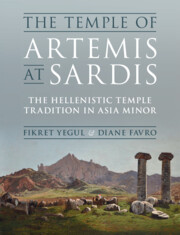
Nestled beneath the 'pointed peaks' of the legendary Tmolos Mountains, the temple and sanctuary of Artemis at Sardis is one of the most impressive monuments of classical antiquity. Dating to the Hellenistic period, it was undertaken, not by a king, but by Stratonike, a 'fiery' Hellenistic queen, and redesigned under the Roman emperor Hadrian, when it became the center of an imperial cult. In this volume, Fikret Yegül and Diane Favro explore the Temple of Sardis from multiple perspectives. Offering a close archaeological analysis of the temple, they also provides new insights into its unique design; the changing nature of religious and cult practices at the temple; the relationship to its setting; and its benefactors. Attention is paid to place this extraordinary temple in the larger context of Greek and Roman religious architecture in Asia Minor. Richly illustrated with over 200 color images, including historical paintings and drawings, it also includes digital reconstructions of the temple are published here for the first time.
Recommend this
Email your librarian or administrator to recommend adding this to your organisation's collection.