To save content items to your account,
please confirm that you agree to abide by our usage policies.
If this is the first time you use this feature, you will be asked to authorise Cambridge Core to connect with your account.
Find out more about saving content to .
To save content items to your Kindle, first ensure no-reply@cambridge.org
is added to your Approved Personal Document E-mail List under your Personal Document Settings
on the Manage Your Content and Devices page of your Amazon account. Then enter the ‘name’ part
of your Kindle email address below.
Find out more about saving to your Kindle.
Note you can select to save to either the @free.kindle.com or @kindle.com variations.
‘@free.kindle.com’ emails are free but can only be saved to your device when it is connected to wi-fi.
‘@kindle.com’ emails can be delivered even when you are not connected to wi-fi, but note that service fees apply.
Spontaneous symmetry breaking lies at the heart of modern physics, shaping our understanding of matter, forces, and even the universe itself. From condensed matter physics to particle physics and cosmology, spontaneous symmetry breaking unifies phenomena that at first seem worlds apart. This graduate-level text offers a comprehensive yet accessible guide to the conceptual theory and practical consequences of spontaneous symmetry breaking. It introduces topics ranging from Noether's theorem, thermodynamic limits, and gauge freedoms to Nambu–Goldstone modes, topological defects, effective field theory, the Mermin–Wagner–Hohenberg–Coleman theorem, and the Anderson–Higgs mechanism within the Standard Model. Packed with exercises, with solutions available online, in-depth projects, and a myth-busting FAQ section addressing common pitfalls, this book equips readers to master both the fundamentals and modern frontiers of spontaneous symmetry breaking, making it an indispensable resource for students, teachers, and researchers.
This graduate-level book is a coherent and self-contained introduction to quantum field theory (QFT), with a distinctive focus on geometric and nonperturbative aspects. The opening part covers quantum fields and the Euclidean path integral, Yang–Mills field theories, and Wilsonian renormalization. Wilson's notion of the effective field theory and its heavy implication for the QFT framework itself are given particular attention. Next, geometric and topological aspects are thoroughly treated, accompanied by a healthy dose of underlying mathematics. Anomalies—quantum failures of classical symmetries—follow as crucial litmus tests for self-consistency, which are delineated in unprecedented detail, spanning decades of development. In the final part, the book asks how relativistic gravity, known to resist standard quantization schemes, may be reconciled with the quantum world. This question is approached by invoking the d = 2 Weyl anomaly, Hawking effects, black hole partition functions, and the renormalization of fundamental strings, with a view toward superstring theory.
We explore several foundational facts about quantum field theories, starting with the well-known conversion of Schrödinger mechanics to a path integral formulation. Path integral accommodates the natural time-ordering of the operator formulation without any tweak, which leads to how the causal Green’s function replaces its classical counterpart and motivates the Wick rotation of the path integral into Euclidean time, setting the stage for the rest of the volume. Along the way, we pay some attention to the real-space version of various Green’s functions. After a brief exploration of fermionic mechanics and the following spinor fields, we turn to the symmetries and the conservation laws. Although we initially follow the standard treatise of the material, with emphasis on the role of gauging either as part of the dynamics or as an auxiliary handle, we point out how a common confusion over Noether’s energy-momentum tensor stems from an ill-conceived implementation of translations. When properly equipped with the Lie derivative, we show how the Noether procedure always reproduces the symmetric energy-momentum tensor from the metric variation and obviates the "improvement" terms.
This chapter introduces the mathematical description of symmetries in physical systems. It highlights the difference between gauge freedom and symmetry and gives a derivation of the conserved currents that result from a symmetry being present.
This Element explores the conceptual complexity of time reversal in the philosophy of physics. It aims to show that time reversal, as a symmetry transformation, should not be regarded as a mere mathematical artifice applied to physical equations. It is rather a conceptually rich and multifaceted notion, one whose meaning and implementation are shaped by a combination of metaphysical commitments and heuristic-methodological strategies. Far from being a neutral tool, the way we define and apply time reversal encodes assumptions about the nature of time itself, its relation to motion, about the role of symmetries in physical theories, and about the relation between mathematical symmetries and the world they purport to describe. Such conceptual complexity also has implication for related debates, such as that of the direction of time.
Causes must occur before effects. So causal relations are irreflexive and asymmetric. Causes are also transitive-along-causal-pathways in that along a given causal pathway, to causally contribute to something that causally contributes to an effect is to causally contribute to that effect. This may generate counterintuitive judgement where a feature causally contributes both to an effect occurring and to it not occurring along different pathways. But these results should be accepted, we argue, because it is often important to know both are occurring (even though at the cost of complicating relations between causal contributions and legal or moral responsibility). Notational conventions are outlined.
Counting the number of isomers of a chemical molecule is one of the formative problems of graph theory. However, recent progress has been slow, and the problem has largely been ignored in modern network science. Here we provide an introduction to the mathematics of counting network structures and then use it to derive results for two new classes of molecules. In contrast to previously studied examples, these classes take additional chemical complexity into account and thus require the use of multivariate generating functions. The results illustrate the elegance of counting theory, highlighting it as an important tool that should receive more attention in network science.
This chapter explores the folk and traditional music of Scotland, Ireland, and Wales – the so-called Celtic regions of the British Isles – in terms of the concepts and processes through which such music is made, representing both the everyday and the elite, past and present; modalities, in short, that I feel represent a timeless importance to our aesthetic understanding and a foundation for negotiating traditional music’s social and historical value today. Threading loosely through my exploration of these modalities is what ethnomusicologist Constantin Brăiloiu called ‘the problem of creation’, which serves as a useful lens through which I remark on the making of traditional music as a complex interplay of function, acquisition, structure, symmetry, orality, improvisation, variation, literacy, and memory. I present these modalities chiefly through the prism of Scottish music owing to its significance in the historical discourse surrounding our very concept of the folk.
In recent years linguists have gained new insight into human language capacities on the basis of results from linguistics and biology. The so-called biolinguistic enterprise aims to fill in the explanatory gap between language and biology, on both theoretical and experimental grounds, hoping to reach a deeper understanding of language as a phenomenon rooted in biology. This research program is taking its first steps, and it has already given rise to new insights on the human language capacity, as well as to controversies, echoing debates that go back to the earlier days of generative grammar. The present discussion piece provides a high-level characterization of biolinguistics. It highlights the main articulation of this research program and points to recent studies linking language and biology. It also compares the biolinguistic program, as defined in Chomsky 2005 and Di Sciullo & Boeckx 2011, to the view of the human language faculty presented in Jackendoff 2002 and Culicover & Jackendoff 2005, and to the discussion in Jackendoff 2011.
The coda draws out the implications of modernist physiognomy for our contemporary moment. As we move from nineteenth-century physiognomy to modernist physiognomy, we encounter more minimalist descriptions of faces – facial sketches, outlines. We encounter faces reduced to a minimalist form. This form is taken up by contemporary facial recognition technologies. Across the scholarly literature on facial recognition technologies, there is a growing awareness of bias: technology is biased because training sets are biased. As Cathy O’Neil writes, “data embeds the dark past.” At the conclusion of this book, the coda frames its contribution to the call issued by Soshana Zuboff in Surveillance Capitalism: “If the digital future is to be our home, then it is we who must make it so.” This book will have aimed to give historicized substance to a fragment of this past: algorithmic data embeds the long history of the face, including elements of modernist physiognomy.
While syntactic rules are clearly conditioned by constituent structure, it is less clear whether such rules refer to linear order. In this chapter, I explore several apparently syntactic phenomena in which linear order appears to play a role and discuss to what extent the data warrant a syntactic or an extra-syntactic account. The phenomena in question are (i) mirror-image effects in word order variation, (ii) left–right asymmetries in syntactic dependencies like movement, (iii) harmony within extended projections (the tendency for dependents to appear on the same side of a lexical head), (iv) harmony between extended projections (the tendency for extended projections to share left- or right-headedness), and (v) compactness (the tendency for the verb and the object to be linearly adjacent in SVO languages but not in SOV ones ). At least some of the data may allow an extra-grammatical account, in terms of acquisition (harmony) or parsing (compactness and left–right asymmetries in dependencies). However, whether such an account merely motivates grammatical constraints that refer to linear order or makes such constraint superfluous is hard to determine.
This chapter follows on from the previous chapter in quantum statistical mechanics but specialising on systems with identical particles. Using Gibbs prescritpion on generic states from Chapter 3, the occupation number representation is introduced. Constraints imposed on statistics by irreducible representations of the permutation group are discussed. These group-theoretic considerations are used to justify the use of Gentile’s parastatistics. Fermions and bosons are introduced as special cases of Gentile’s statistics, corresponding to the trivial representation of the permutation group for bosons, and the sign representation of the permutation group for fermions. Basic applications to fermions and bosons is given, including the Fermi–Dirac and Bose–Einstein statistics. A detailed expose of why photons are said to have zero chemical potential is also proposed.
This chapter provides a framework for the reader to describe abnormalities of the electrographic background and foreground. The electrographic background may be described based on symmetry, continuity, voltage, organization, reactivity, and sleep architecture. A waveform or potential abnormality may be described based on its location, occurrence (sporadic or repetitive – rhythmic or periodic), and morphology (slow or sharp wave). Further, this description can be qualified based on modifiers such as prevalence, frequency, duration, and amplitude. When reporting waveforms, the modifiers should precede the key features in your description. [88 words/557 characters]
One of life’s most fundamental revelations is change. Presenting the fascinating view that pattern is the manifestation of change, this unique book explores the science, mathematics, and philosophy of change and the ways in which they have come to inform our understanding of the world. Through discussions on chance and determinism, symmetry and invariance, information and entropy, quantum theory and paradox, the authors trace the history of science and bridge the gaps between mathematical, physical, and philosophical perspectives. Change as a foundational concept is deeply rooted in ancient Chinese thought, and this perspective is integrated into the narrative throughout, providing philosophical counterpoints to customary Western thought. Ultimately, this is a book about ideas. Intended for a wide audience, not so much as a book of answers, but rather an introduction to new ways of viewing the world.
Symmetries are a key idea in physics. In the classical world, they are associated to conservation laws, courtesy of Emmy Noether. The same, and more, is true in the quantum world. In this chapter we explore how symmetries manifest themselves in quantum mechanics. Special attention will be given to time evolution and the role of SU(2) and angular momentum
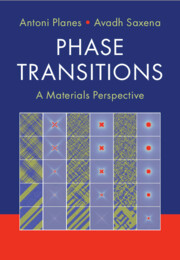
This accessible text is an introduction to the theory of phase transitions and its application to real materials. Assuming some familiarity with thermodynamics and statistical mechanics, the book begins with a primer on the thermodynamics of equilibrium phase transitions, including the mean-field and Ginzburg-Landau approaches. The general kinetic features and dynamics of phase transitions are explained, ensuring that readers are familiar with the key physical concepts. With the foundations established, the general theory is applied to the study of phase transitions in a wide range of materials including ferroic materials, caloric materials, liquid crystals and glasses. Non-equilibrium phase transitions, superconductors and quantum phase transitions are also covered. Including exercises throughout and solutions available online, this text is suitable for graduate courses as well as researchers in physics and materials science seeking a primer on popular and emerging research topics.
This appendix gives some examples of presentations of 2-categories by 3-polygraphs. In many examples, the presented 2-categories are in fact monoidal categories and, actually, PROs.
The principle of equality of belligerents mandates that the rules of international humanitarian law (IHL) apply equally to each party in an armed conflict, regardless of the legality of their use of force under jus ad bellum. This principle has been extensively analyzed in academic literature; its importance is universally recognized and its legal foundations and effects are well defined. However, this is primarily true with respect to its application in international armed conflicts (IACs) – in contrast, the principle does not receive equivalent recognition in situations of non-international armed conflict (NIAC), where at least one party is a non-State armed group. The issue arises from the lack of an accepted definition of the principle in NIACs, given the absence of any applicable international jus ad bellum in such conflicts. The present paper will try to remedy this issue by proposing that the principle is composed of two elements: symmetry of application and symmetry of substance. It will introduce this definition as it applies to IACs and NIACs and argue that the principle in NIACs is primarily defined by its symmetry of substance component. It will also evaluate the principle’s nature as a general principle of IHL and explore some of its concrete effects on IHL rules.
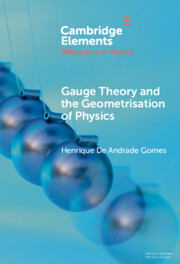
This Element is broadly about the geometrization of physics, but mostly it is about gauge theories. Gauge theories lie at the heart of modern physics: in particular, they constitute the Standard Model of particle physics. At its simplest, the idea of gauge is that nature is best described using a descriptively redundant language; the different descriptions are said to be related by a gauge symmetry. The over-arching question this Element aims to answer is: why is descriptive redundancy fruitful for physics? I will provide three inter-related answers to the question: ``Why gauge theory?'', that is: why introduce redundancies in our models of nature in the first place? The first is pragmatic, or methodological; the second is based on geometrical considerations, and the third is broadly relational.
Some anatomical structures vary greatly in number among species, a phenomenon that often remains unexplained. We investigate interspecific variation in the number of collar spines among trematodes from the superfamily Echinostomatoidea, using a dataset comprising hundreds of species. These trematodes possess a ring of spines around their anterior sucker; in some families, they form 2 arcs on either side of the sucker, with a central gap, whereas in other families, they form a continuous collar with no gap. First, we confirm that even numbers of spines are the norm among species in which they are arranged as 2 arcs with a central gap, while odd numbers (mainly prime numbers) predominate among species in which spines form a continuous collar. Second, we tested whether variation among species in the number of spines might reflect selective pressures. The spines serve to attach the worm to the inside lining of the host gut. Our analysis confirms that spine numbers correlate positively with worm body size among echinostomes, supporting the hypothesis that larger worms require more spines for stronger attachment. Finally, we tested whether phylogenetic conservatism may explain interspecific variation in the number of collar spines, i.e. whether closely related species have more similar numbers of spines than expected by chance due to shared ancestry. Our analysis confirms that spine numbers show strong phylogenetic conservatism across species. Overall, our findings indicate that the number of collar spines, a hallmark of echinostomes, is the product of conserved phylogenetic inheritance overlaid by adaptive functional adjustments.