To save content items to your account,
please confirm that you agree to abide by our usage policies.
If this is the first time you use this feature, you will be asked to authorise Cambridge Core to connect with your account.
Find out more about saving content to .
To save content items to your Kindle, first ensure no-reply@cambridge.org
is added to your Approved Personal Document E-mail List under your Personal Document Settings
on the Manage Your Content and Devices page of your Amazon account. Then enter the ‘name’ part
of your Kindle email address below.
Find out more about saving to your Kindle.
Note you can select to save to either the @free.kindle.com or @kindle.com variations.
‘@free.kindle.com’ emails are free but can only be saved to your device when it is connected to wi-fi.
‘@kindle.com’ emails can be delivered even when you are not connected to wi-fi, but note that service fees apply.
We undertook a qualitative descriptive study to explore participants’ perceptions of whether marital status shapes how functional social support (FSS) relates to memory. Semi-structured interviews were conducted with 18 community-dwelling middle-aged and older people representing various marital status categories. Each interview was audio-recorded, transcribed verbatim, and thematically analyzed. Participants did not perceive marital status to shape the FSS–memory relationship. Three themes emerged to explain this view: learning to cope – participants used alternatives besides a spouse to deal with memory challenges; context matters – factors such as marital satisfaction must be considered; and doing more harm than good – some spouses may provide excessive support, reducing participants’ autonomy to stimulate their own cognitive processes. These themes highlight that marital relationships are complex and that contextual factors such as marital quality and support adequacy should be considered to provide a comprehensive understanding of how social and marital dynamics shape cognitive trajectories in aging populations.
Relationships involving asymmetric vulnerability have an ambiguous normative status. On the one hand, such relationships often strike us as problematic because they involve asymmetric vulnerability. On the other hand, asymmetric vulnerability is a condition of many relationships that we value. This generates a dilemma: it seems that relational egalitarians must either claim that we should eliminate asymmetric vulnerability – but this would be to foreclose valuable social relationships – or maintain that relating as equals is possible despite asymmetric vulnerability – but this threatens to undermine relational egalitarianism’s political bite. This paper explores how relational egalitarians should address the tension between vulnerability and equality. While the tension might not be fully resolvable, I argue that egalitarians have a range of strategies to reduce it and grappling with the ambiguous status of human vulnerability may help us to better understand the nature of relational egalitarianism.
This study aimed to investigate the mediating role of perceived stigma in the relationship between cancer-related symptoms and social relationships among cancer patients.
Methods
This cross-sectional descriptive study was conducted with 250 cancer patients undergoing chemotherapy in an oncology hospital in Ankara, Türkiye. Data were collected using a sociodemographic form, the Nightingale Symptom Assessment Scale, the Cataldo Lung Cancer Stigma Scale, and the Social Relationship Scale. Descriptive analyses, group comparisons, Pearson correlation, and mediation analysis were performed with SPSS v27.0 and DataTab web-based analysis platform.
Results
The findings revealed significant positive correlations between cancer-related symptoms and perceived stigma (r = 0.51, p < .001), and negative correlations between both cancer-related symptoms and social relationships (r = −0.24, p < .001) and stigma and social relationships (r = −0.54, p < .001). The mediation analysis suggested that perceived stigma may play a mediating role in the relationship between cancer–related symptoms and social relationships, as indicated by a non–significant direct effect and a significant indirect effect. Cancer-related symptoms significantly predicted perceived stigma (B = 0.58, p < .001), and stigma was a significant predictor of decreased social relationship quality (B = −0.72, p < .001). The indirect effect of cancer-related symptoms on social relationships via stigma was statistically significant (B = −0.42, p < .001), while the direct effect was not (B = −0.27, p = .182).
Conclusions
Perceived stigma is a critical psychosocial factor that may mediate the adverse impact of cancer-related symptoms on social relationships in this study. Therefore, addressing stigma may play a crucial role in maintaining social functioning in cancer care.
Social relationships are not only linked to emotional well-being, but also significantly associated with physical health. Reviewing the epidemiological and experimental body of research reveals evidence of directional and potentially causal associations between social connection and health and longevity. This is consistent with theoretical approaches to social relationships including attachment, social baseline, social network, and social support theory, all of which identify social relationships as vital to health and well-being. Theoretical models further conceptualize how it is that social relationships influence health. The growing scientific evidence documents some of the biological and behavioral pathways involved. While the evidence on the associations between social relationships and health is robust, the literature is uneven pointing to the need for further research on the complex nature of relationship quality and tech-based social connection.
Abstract: In this chapter, Garchar applies Dewey’s pragmatist philosophy to the concept of dying well, shifting the focus from death as a passive event to dying as an active, process-oriented experience. As Garchar argues, Dewey’s framework emphasizes the continuity of life and death, embedding dying within social, environmental, and communal relationships. Dewey sees life as a process of interruption and recovery, where individuals grow through interactions with their environments. Garchar shows that this model extends to dying, which is not an isolated event but a communal process shaped by relationships and social structures. Recognizing this continuity allows for the cultivation of environments that support both living and dying well. Habits, often unquestioned, structure human experience. In end-of-life care, rigid habits – such as aggressive medical interventions – can prevent meaningful engagement with dying. Dewey’s emphasis on deliberation and imagination invites critical reflection on these habits, encouraging more humane and flexible approaches to end-of-life experiences. Garchar concludes that dying well requires active participation, including open discussions about death and structural changes in healthcare and social norms. Rather than seeing death as a battle, Dewey’s pragmatism reframes dying as an opportunity for reflection, growth, and intentionality – aligning with Epicurus’ insight that “living well and dying well are one.”
Older adults hold various social roles that are assumed to change over time due to life transitions. The (relative) importance assigned to these roles is proposed as a distinct and relevant component of later-life social functioning, yet longitudinal research is lacking. This exploratory study examined the stability and change in the (relative) importance of various social roles, as well as potential predictors of individual differences in change. It used three waves (2019, 2020, 2023) of the Health, Aging, and Retirement Transitions in Sweden (HEARTS) study and comprised 3,935 older adults (mean age 66.9 years, 54% female) who rated the importance of nine social roles across the three waves, along with baseline questions on demographics, social support and personality. Latent growth curve models showed that, over time, older adults had fewer roles, fewer important roles and rated their roles as less important, although effects were generally small. While family roles remained consistently highly valued, the relative importance of friend roles increased, whereas the importance of care-giving and work-related roles declined. Generally, individuals with characteristics facilitating role accumulation and maintenance (i.e. supportive network, good health and higher levels of extraversion, agreeableness and conscientiousness) identified more (important) roles. No predictors explained individual differences in the change in role importance over time. These findings provide a comprehensive view of the stability and slight change in the personal centrality of social roles early in older adulthood, offering a foundation for future confirmatory research on the impact of social roles on later-life social functioning and wellbeing.
The four fundamental forms of sociality structure our relationships. By comparing hundreds of cultures across more than 5,000 years, this book builds on relational models theory to reveal how each of the four basic types of relationship is conceived in their own distinctive cognitive medium. The text demonstrates how people use their food and bodies to foster affiliation, spatial dimensions to form hierarchy, concrete operations of one-to-one matching to create equality, and employ arbitrary, conventional symbols for proportion-based relationships. Originating from the author's ethnographic fieldwork in a West African village, this innovative social theory integrates findings from social, cognitive, and developmental psychology, linguistics and semiotics, anthropology, archeology, art history, religious studies, and ancient texts. The chapters offer compelling insights into readers' everyday social relations by showing what humans think their social relationships actually are.
This chapter explores the personal letter in the history of English through textual and material conventions of letter-writing, community aspects of letter-writing and language, and the role of editors and the reliability of edited epistolary sources. Community context is viewed as contemporary letter-writing practices, the involvement and influence of social networks and social relationships in letter-writing and language use, and the human factor and community aspects inherent in editing letters and compiling corpora.
This chapter explores aspects of individual visions and visionaries that increase the traction to create social change. It begins by examining epistemic gaps – knowledge deficits that inspire visionary ideas – and the role of imagination in addressing these gaps. The chapter then focuses on compelling narratives, discussing the importance of storytelling, relatable characters and moral alignment in crafting transformative visions. It continues by discussing the factors that enable a vision to be spread, such as social identity and network positions that bridge social divides. The chapter also considers how visionary ideas interact with group dynamics and system attributes that facilitate or hinder change. Case studies of William Shakespeare, Martin Luther, and Karl Marx are presented: transformative visions arise from unmet needs; are effective when they offer innovative social relationships; are marked by clear, moral narratives; are more likely to emerge in societies with diverse, autonomous subgroups; and spread via networks of higher trust.
Four themes regarding the nature of meaning making are proposed: (1) That humans are inherently motivated to seek and find meaning, from cradle to grave; (2) Meaning making is an active process, always involving an interaction between person and event; (3) There is a dynamic, transactional relationship between meaning and experience, with past meanings impacting what is experienced and new experiences altering meaning systems; and (4) The developmental process underlying meaning making is inextricably social.
Humans spend a lot of time in social interaction compared to other animals. The reasons may be various: the need to service social relationships, to detect ‘free riders’, or to handle rapid changes in fluid social arrangements. Actual conversational usage though suggests the prime job is to navigate changing social relationships in a sea of micropolitics. One difficulty is the delicacy of social relationships, and the care that is usually taken to avoid potential loss of ‘face’ or social esteem, as shown by the danger of teases. Social relationships are constructed through three key modes of exchange: reciprocal exchanges of intimacies, reciprocal exchanges of respect, and asymmetrical exchanges of intimacy to juniors and respect to seniors. Even the most complex societies are constructed partly through these three modes, which have some parallels to primate grooming patterns.
‘Living well’ is an important concept across national dementia strategies. Qualitative research has contributed to understanding of living well for people with dementia. Longitudinal qualitative approaches, though fewer, can explore potential changes in accounts of living well, psychological coping and adapting to dementia, and if/how people with dementia maintain continuity in their lives. This longitudinal qualitative study aims to gauge what is important for ‘living well’ with mild-to-moderate dementia and whether this changes over time in a group of older people with mild-to-moderate dementia living at home. Semi-structured, qualitative interviews with 20 people with dementia from the IDEAL cohort study were conducted in 2017 and again one year later then thematically analysed. The overarching narrative was largely that of continuity and adaptation, with incremental not disruptive change. Continuing participation and meaningful occupation were important to maintaining living well over time; individuals pursued new as well as previous interests. As a key psychological coping strategy to support continuity in their lives, individuals emphasised their capabilities to maintain activities in spite of dementia, compartmentalising areas that had become more challenging. Maintaining social networks and accommodating changes in social relationships were also central to living well, including managing the psychological impacts of changes in spousal relationships. People in the earlier stages of dementia emphasise continuity and their capabilities, reporting change over time only in certain aspects of their lives. However, small, incremental changes in their social relationships and opportunities for meaningful occupation may still afford key areas for supporting capability to ‘live well’.
Humans are characterised as cooperative breeders, as not only the parents but also other members of the social group take part in raising offspring. The individuals who invest most in childrearing are usually the more closely related individuals. However, most studies have concentrated on close kin and the effects of more distant kin remain unknown. Here, we investigated the associations of child mortality (<5 years, n = 32,000 children) with the presence of 36 different types of relatives, divided by lineage and sex, in a historical Finnish population. We found that the presence and greater number of several paternal relatives were associated with an increase in child mortality and many of these associations were seen among the wealthiest families, due to inheritance practices and shared resources. The presence of the maternal grandmother was associated with a decrease in child mortality and the most among poorer families, who probably needed the grandmother’s contribution more than the wealthy. Our results bring new insights into the importance of kin and suggest that relatives can provide support or other resources but also compete for limited resources and care. The results give a broader perspective of human family life and increase understanding of the evolution of cooperative breeding.
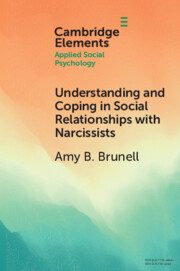
Narcissism is a trait that comes in different forms (agentic, communal, and vulnerable), which are all marked by characteristics such as entitlement, self-centeredness, and little empathy for others. One reason narcissism has gained attention among scholars and laypeople alike is because of its implications for social relationships. Narcissists' behaviors frequently have negative consequences for others. Whether their relationships are with coworkers or close relationship partners, interactions with narcissists can be challenging and emotionally taxing. Despite this, there is a sparse amount of research that addresses how to cope with difficult narcissistic relationships. This Element includes an overview of the trait forms of narcissism and discusses its implications for their social relationships. It provides a background about the development of narcissism and offers some research-informed suggestions for how to cope in narcissistic relationships. Future directions for research are also discussed.
In this paper, I use findings from infant psychology to propose that humans have core knowledge of social relationships. I propose that these representations allow even infants to categorize relationships into a model (following relational models theory, i.e., communal sharing, authority ranking, or equality matching) and compute their strength (based on factors like expectation of future interaction, obligations, and commitment). Throughout the paper, I review evidence in support of this proposal and consider alternative explanations.
Different aspects of social relationships (e.g., social network size or loneliness) have been associated with dementia risk, while their overlap and potentially underlying pathways remain largely unexplored. This study therefore aimed to (1) discriminate between different facets of social relationships by means of factor analysis, (2) examine their associations with dementia risk, and (3) assess mediation by depressive symptoms.
Methods
Thirty-six items from questionnaires on social relationships administered in Wave 2 (2004/2005) of the English Longitudinal Study of Ageing (n = 7536) were used for exploratory and confirmatory factor analysis. Factors were then used as predictors in Cox proportional hazard models with dementia until Wave 9 as outcome, adjusted for demographics and cardiovascular risk factors. Structural equation modeling tested mediation by depressive symptoms through effect decomposition.
Results
Factor analyses identified six social factors. Across a median follow-up time of 11.8 years (IQR = 5.9–13.9 years), 501 people developed dementia. Higher factor scores for frequency and quality of contact with children (HR = 0.88; p = 0.021) and more frequent social activity engagement (HR = 0.84; p < 0.001) were associated with lower dementia risk. Likewise, higher factor scores for loneliness (HR = 1.13; p = 0.011) and negative experiences of social support (HR = 1.10; p = 0.047) were associated with higher dementia risk. Mediation analyses showed a significant partial effect mediation by depressive symptoms for all four factors. Additional analyses provided little evidence for reverse causation.
Conclusions
Frequency and quality of social contacts, social activity engagement, and feelings of loneliness are associated with dementia risk and might be suitable targets for dementia prevention programs, partly by lowering depressive symptoms.
Edited by
David Kingdon, University of Southampton,Paul Rowlands, Derbyshire Healthcare NHS foundation Trust,George Stein, Emeritus of the Princess Royal University Hospital
Depression is a leading cause of disability in high- and middle-income countries and is of increasing relative burden in low-income countries. The Global Burden of Disease study illustrates how depression is increasing as a proportion of all the disabilities resulting from illness. This is because we know how to prevent other major causes of disability such as cardiovascular disease and infection and so their incidence is on the decline. Meanwhile, there is evidence that rates of depression are rising slightly. In order to have an impact on this major public health burden, we will need to devise preventative strategies to reduce the incidence. As depression is a continuum, much of the disability is experienced by the larger numbers of those with mild and moderate levels of depression who might not seek treatment for themselves. Therefore, effective preventative strategies applied to the whole population will have more widespread benefits than interventions simply targeted towards those at high risk. In order to develop preventative interventions, we need to know what causes depression.
Epidemiology tends to be primarily concerned with causes outside the individual or with genetic causes.
An example of another way of working with perspectivism is developed in Chapter 6, in which specific principles from the theory are adapted to specific problems based on geo-ethnographic affinity with current native ontologies. How far can one go with an interpretation of the archaeological record from that starting point? Two more examples are presented. First are the relationships between people and material culture in central Argentina’s pre-colonial societies (ca. 1200–1500 CE). In a characteristically perspectivist fashion, the use of referential fields on different media highlights a way of being in the world that was experienced as inherently unstable. The second example focuses on the relationship between people and landscape in the initial peopling of the same region at the beginning of the Holocene. What would the relationship with the landscape have been for a perspectivist people populating a space absent of humans but with other entities that had the capacity to be subjects? The relationship turns out to have been more social than ecological, established prior to any given interaction, which comes into conflict with the conventional idea of archaeological landscape as empty space.
This 19-year prospective study applied a social development lens to the challenge of identifying long-term predictors of adult negative affectivity. A diverse community sample of 169 individuals was repeatedly assessed from age 13 to age 32 using self-, parent-, and peer-reports. As hypothesized, lack of competence establishing and maintaining close friendships in adolescence had a substantial long-term predictive relation to negative affectivity at ages 27–32, even after accounting for prior depressive, anxious, and externalizing symptoms. Predictions also remained robust after accounting for concurrent levels of depressive symptoms, indicating that findings were not simply an artifact of previously established links between relationship quality and depressive symptoms. Predictions also emerged from poor peer relationships within young adulthood to future relative increases in negative affectivity by ages 27–32. Implications for early identification of risk as well as for potential preventive interventions are discussed.
One of the ways for immigrants to speed up the process of integration was by expanding their social and business networks. The fact that they arrived as a large group with similar backgrounds (e.g. textile workers, exiles with families) provided them with the basis to form a network of family and friends that would reduce the economic and psychological risk of migration. The evidence confirms this pattern, as the immigrants from the Low Countries maintained closer relationships with their compatriots. They inevitably mixed with the native population; however, as we will see later, their relationships with the English were largely based on business . But what were the strategies the new arrivals used to strengthen their position in the new environment? How did the Flemings create and expand their social and business networks? The present chapter is concerned with exploring the integration process of the immigrant community, and how it reflected on both their daily life and the organization of their trade. It will examine the social and business networks of the Flemish immigrants as evidenced in the surviving testamentary records and through the judicial documents.