To save content items to your account,
please confirm that you agree to abide by our usage policies.
If this is the first time you use this feature, you will be asked to authorise Cambridge Core to connect with your account.
Find out more about saving content to .
To save content items to your Kindle, first ensure no-reply@cambridge.org
is added to your Approved Personal Document E-mail List under your Personal Document Settings
on the Manage Your Content and Devices page of your Amazon account. Then enter the ‘name’ part
of your Kindle email address below.
Find out more about saving to your Kindle.
Note you can select to save to either the @free.kindle.com or @kindle.com variations.
‘@free.kindle.com’ emails are free but can only be saved to your device when it is connected to wi-fi.
‘@kindle.com’ emails can be delivered even when you are not connected to wi-fi, but note that service fees apply.
This chapter examines the relationship between music and right-wing authoritarianism in the early years of the dictatorships of Salazar and Franco in Iberia, without seeking to resolve the historiographical debate over their fascist nature. Instead, it analyses musical production—works, discourses, and institutions—within the broader ideological and cultural policy frameworks of both regimes. The chapter explores four key areas: the musical thought of interwar authoritarian movements; the role of hymns and marches in political mobilization and propaganda; the construction of cultural “consensus” through state policies; and the dynamics of Iberian musical exchange. It shows how both regimes mobilized music to promote nationalism, discipline, and social cohesion, while also accommodating competing ideological currents. Through institutions, commissions, and censorship, musical life was integrated into authoritarian systems of control, yet not fully homogenized. The chapter highlights both convergences and tensions, emphasizing the centrality of music in shaping political culture in mid-twentieth-century Iberia.
This chapter discusses recent developments in the “undoing” of the Valley of the Fallen, Francisco Franco’s most important memorial. After a brief introduction to the complex making of the monument and its multiple frictions with emerging cultures of memory in twenty-first-century Spain, the text focuses on the dismantling of its necropolitical layout. This funerary unmaking is part of a refashioning of the monument in the context of what in Spain is currently called “democratic memory.” Major achievements have already been made: dictator Francisco Franco was exhumed in 2019 and the founder of the Spanish Fascist Party in 2023. In June 2023, after a complicated legal, political, and technical process, an exhumation began in the crypts to search for 180 bodies claimed by relatives, revealing all the contradictions and shadows that still linger in the monument. At the time of writing, sixteen bodies of Republican civilians have already been identified and returned to their families. The chapter is based on a twenty-year multisite ethnography of mass grave exhumations dating back the Spanish Civil War (1936–9). Over time, my research project branched out to include analysis of the memorial conflicts emerging around the Valley of the Fallen.
When municipal elections favored republican candidates in 1931, King Alfonso XIII went into exile, and politicians declared a republic, polarizing Spanish society further. Republican programs included ambitious social, economic, and cultural initiatives to improve lives, but the government was faction-ridden from the start. Increasing street violence and several revolts persuaded a cadre of army officers to launch a coup in April 1936 that became a civil war when the government refused to yield. The Spanish Civil War, marked by atrocities on both sides, pitted right-wing Nationalists, led by General Francisco Franco, against an increasingly left-wing Republic. It ended after hundreds of thousands of deaths with Franco in power, tens of thousands of Spaniards in exile, and Spain isolated during the Second World War, supposedly neutral but sending troops to fight Soviet Russia in support of Nazi Germany. The postwar period brought misery, widespread hunger, and continued isolation that was only eased during the anti-Soviet Cold War of the 1950s. The following decade brought an economic boom and the relaxation of certain aspects of the dictatorship. By the time of Franco’s death in 1975, Spaniards were poised to enter a new epoch but wary about what it might bring.
This chapter examines Spanish music during the interwar period (1918−39), a stage that coincides with the final two decades of the so-called Silver Age. It highlights the plurality of musical languages used to represent Spain’s evolving – and never fully agreed upon – national identity, with stylistic approaches ranging from late Romanticism to Neopopularism and Neoclassicism as predominant trends. Additionally, this chapter considers the extent to which the tense political climate and the debates between tradition and modernity also influenced repertoire programming, the activities of musical institutions, and the work of performers. Finally, the study explores the roles and spaces occupied by music during the Spanish Civil War and offers a perspective on Republican exile, aiming to reconstruct the trajectories of those musicians who were persecuted under Franco’s regime.
This chapter explores underlying links between Carpentier’s life and works. It points out that because of his asthma, the boy did not receive a systematic education but read a lot. The phases of his longer apprenticeship can be divided in two, his years in Cuba, and then the years spent in Paris. While Carpentier distanced himself from socialist realism at the time, he committed himself to the defense of the Spanish Republic during the Spanish Civil War. There is no doubt that as the youngest member of the Minorista generation of Cuban intellectuals, Carpentier worked consistently towards artistic, social, linguistic and political transformation.
The classical doctrine of civil war had a second coming in the scholarly writings of international lawyers. This began in the 1890s around the time of the Chilean and Brazilian naval revolts and the Spanish-American War of 1898. Members of the new cosmopolitan profession of international lawyers sought to formulate a branch of international law to manage the phenomenon of civil war, combining the elements of belligerent recognition, recognition of insurgency, the laws of war, intervention, and state responsibility. Doing so, they produced something of a francophone synthesis of the classical doctrine of civil war at the turn of the century. This chapter explores the gradual process of this synthesis, from the writings of Carlos Wiesse and Antoine Rougier to the work of the Institut de droit international. However, it then concludes with an overview of the great disillusionment of the 1930s and shows how the legal debates during the Spanish Civil War laid bare the bankruptcy of the classical doctrine.
In 1934, Pablo Neruda arrived in Barcelona as a Chilean diplomat, and in February 1935, he became the Chilean consul in Madrid. Living in Spain during the Second Republic and the Spanish Civil War marked a turning point in Neruda’s poetry. The Spanish Civil War provoked a historical awakening in Neruda’s poetics – as exemplified in España en el corazón – that paved the way to his ambitious poetic project of Canto general, as he aimed to historicize and politicize his portrayal of Latin American ruins. This essay on how the Spanish Civil War marks Neruda’s poetics examines how the use of the apostrophe throughout España en el corazón reveals the dialogic nature of his poetic project, which intends both to speak to a Republican Spain, with its dead soldiers and poets, and to defy the fascist leaders of the war.
As one of the most prolific poets of twentieth-century Hispanic literature, Pablo Neruda’s influence affected diverse cultural and sociopolitical environments. His literary creation and participation in the public sphere led to the poet receiving prizes and awards of both modest and spectacular prestige. While some of Neruda’s awards prompted political controversies that revealed the peculiarities of his character, all of these honors extended his prominence as Chile’s chief poet in the World Republic of Letters. The acquisition of coveted international recognition was, however, of secondary importance to Neruda: His greatest achievement was his own people’s understanding and emotional identification with his poetry.
In 1967 Pablo Neruda wrote his only play, Fulgor y muerte de Joaquín Murieta, which recreated the popular legend of the Chilean emigrant in “gold rush” California, who ended up becoming a bandit, pursued, and killed by the rangers. With the data collected during his trip to the United States, Neruda wrote his piece with the collaboration of the director Pedro Orthous, a member of the Chilean National Theater and one of the best representatives of political theater in Latin America. Both in the staging and in the text, the influence of Bertolt Brecht, whose work began to be known throughout the world, is discernible, but also that of the political theater written in Spain before and during the Civil War, especially of Fermín Galán, the drama of another communist poet friend of Neruda, Rafael Alberti.
This chapter explores the place of empire and imperialism in the British literature of the Popular Front period (1934–40). During this period, left-aligned writers responded to the Communist International’s call for broad antifascist alliances built on national cultural traditions with an outpouring of works of fiction, poetry, and drama, as well as critical reevaluations of literary history. These contributions are characterized by an evocation of “the people” as a diverse, progressive, antifascist subject, but one always national in character and therefore fraught with ambiguities and contradictions. The chapter considers the ways that writers based in Britain negotiated the connections between antifascism, anticolonialism, and anti-imperialism in this late interwar moment. It focuses first on the literary milieu around the influential journal Left Review, and second on the interlinked work of Ralph Fox, Mulk Raj Anand, and Sajjad Zaheer. In concludes by suggesting that the Spanish Civil War provided the occasion for some leftist writers from Scotland and Wales to imagine the continuities between working-class history, anticolonialism, and antifascism in their work.
Both in Italy and abroad, the construction of memorial shrines to honour those who fell for the Fascist cause stemmed from Benito Mussolini’s desire to create symbolic spaces to celebrate Italian greatness. Moreover, their construction reinforced a specific vision of the nation – one rooted in the ideal of sacrifice, unquestioning loyalty to Mussolini’s commands, and the exaltation of violence as a legitimate tool of political struggle. This article analyses the tower-ossuary of the Italians in Zaragoza, a monument commemorating the legionaries of the Corpo Truppe Volontarie, who died fighting alongside Francisco Franco’s Nationalist forces against Republican troops during the Spanish Civil War. Despite its limited recognition, this monument – the largest Italian shrine abroad after that in El Alamein – constitutes an object of significant scholarly interest, since it preserves the memory of Fascist Italy’s intervention on behalf of the Caudillo according to a particular narrative, which Mussolini’s regime sought to immortalise for posterity in stone and concrete. Meanwhile, the attempt to re-signify this shrine after the fall of the Fascist dictatorship makes it a compelling case study for reflecting on the processes through which a society can rethink its history and engage with the legacy of its authoritarian past.
Chapter 1 offers a historical introduction as well as an overview of existing research in the field. It argues that by mapping out the trajectories of former volunteer soldiers, it is possible to see the many ways in which the Spanish Civil War and the broader anti-fascist engagement of the inter-war period could constitute a transformative experience and event; an event that expanded volunteers’ political horizons and gradually opened up possibilities for border-crossing political engagement in the post-war era. Thus, it sets the stage for the case studies constituting the main part of the book, showing that the political and military influence of the volunteers in Spain did not necessarily come to an end in 1938/1939 or even in 1945. In a few yet significant cases, it stretched across the globe far into the Cold War period.
Chapter 2 examines the history of Leo Kari and other Scandinavian volunteers in the International Brigades. It takes issue with the long-standing depiction of the voluntary army in Spain as ’Comintern mercenaries’ or as essentially the sole invention of international communism. In addition, the chapter follows the trajectories of different members of the resistance movements in Denmark and Norway and examines why historians have typically overlooked the fact that the core of World War II sabotage groups were nearly all former volunteers of the civil war who used their military expertise from Spain to position themselves as leaders of the resistance. Most former war volunteers were completely marginalised in the Cold War climate emerging after 1947–1948, yet some of them still insisted on a third military adventure. The anti-colonial struggles were seen as a new opening, as is evident from Leo Kari’s renewed efforts to mobilise a voluntary army for the Algerian war of liberation in the early 1960s.
Chapter 3 highlights the centrality of Spain in the development of a particular kind of ‘professional revolutionary’ deployed by the Comintern in the late 1930s and 1940s. It focuses on the life of the Italian communist Ilio Barontini and follows his long militancy within the anti-fascist front. Barontini, unlike most Europeans of his generation, had been confronted with violent fascism since the early 1920s. Nevertheless, the Spanish Civil War marks a watershed in his life, as it was in Spain that he refined his skills as a fighter. But Spain influenced Barontini’s trajectory in a political sense, too, as it was during the period of intense fighting at Guadalajara in early 1937 that fellow volunteers in the Italian brigade began to discuss the need to bring the anti-fascist fight to the colonial front as well. In the following years, Barontini went both to fight and to train new recruits in Ethiopia, France, and Italy. In this way, the chapter offers a glimpse of one way in which anti-fascism and anti-imperialism connected in this period.
The chapter provides an overview of Hemingway’s life from his birth in Oak Park, Illinois, to his death in Idaho. Key episodes include his experience, including his wounding, during the First World War, his emergence as a writer in Paris in the 1920s, his travels in Europe and Africa, including as a war correspondent during the Spanish Civil War and the Second World War, and his receipt of the Nobel Prize for literature.
This chapter sketches the contexts, both broadly historical and more narrowly cultural, for Hemingway’s life and work from the 1910s through the 1950s, including the wars he experienced and the literary scenes that his work both shaped and was shaped by.
The civil war in Spain provoked deeper political thinking and involvement for Hemingway, and his political engagement shaped his writing about that war. Hemingway returned to his journalistic roots in the war reportage he wrote on the conflict, and experimented with dramatic form in his only play, The Fifth Column. In For Whom the Bell Tolls he absorbs, adapts, and rejects a romanticized view of the Spanish Civil War that had been developed and promulgated by European and American writers sympathetic (as Hemingway was) to the Spanish Republican cause, stripping from the realities of internecine conflict any potentially consoling significance of political commitment. The Second World War also drew Hemingway as a war correspondent (initially reluctant, he became an enthusiastic witness to, and even participant in, combat in France and Germany). On the basis of his wartime experience, he explored themes of forgiveness and grace in Across the River and into the Trees, a flawed novel whose purgatorial narrative is nevertheless an interesting experiment in fictional form.
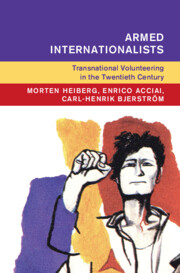
This unique transnational history explores the extraordinary lives of left-wing volunteers who fought in not just one, but multiple conflicts across the globe during the mid-twentieth century. Utilising previously unpublished archival material, Heiberg, Acciai and Bjerström follow these individual soldiers through military conflicts that were, in most cases, geographically centred on individual countries but nonetheless evinced a crucial transnational dimension. From the Spanish Civil war of 1936 to the Nicaraguan Revolution of 1979, the authors marshall these diverse case studies to create a conceptual framework through which to better understand the networks and recruitment patterns of transnational volunteering. They argue that the Spanish Civil War created a model for this transnational left-wing military volunteering and that this experience shaped the global left responses to a range of conflicts throughout the twentieth century.
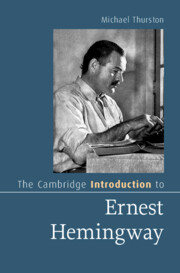
One hundred years after the publication of his first major work, Ernest Hemingway remains an important author. His work addressed the search for meaning in the wake of a 'Great War' and amid the challenges of rapidly changing social conventions, and his prose style has influenced generations of journalists and writers. Hemingway was wounded on the battlefield and caught up throughout his life in conflicting desires. He was also a deeply committed artist, a restless experimenter with the elements of narrative form and prose style. This book's detailed discussions, informed both by close formal analysis and by contemporary critical frameworks, tease out the complexity with which Hemingway depicted disabled characters and romantic relationships in changing historical and cultural contexts. This introduction is especially useful for students and teachers in literary studies and modernism.
The chapter delves into the significant collaboration of Spanish, Argentine, and Chilean fascists and traditionalists in the 1950s, particularly within the confines of the Institute of Hispanic Culture. This collaboration, despite its ultimate failure, marked a critical transitional phase between interwar fascism and the technocratic ideologies of the 1960s, laying the mythological foundations and networks that would later shape the book’s protagonists.