To save content items to your account,
please confirm that you agree to abide by our usage policies.
If this is the first time you use this feature, you will be asked to authorise Cambridge Core to connect with your account.
Find out more about saving content to .
To save content items to your Kindle, first ensure no-reply@cambridge.org
is added to your Approved Personal Document E-mail List under your Personal Document Settings
on the Manage Your Content and Devices page of your Amazon account. Then enter the ‘name’ part
of your Kindle email address below.
Find out more about saving to your Kindle.
Note you can select to save to either the @free.kindle.com or @kindle.com variations.
‘@free.kindle.com’ emails are free but can only be saved to your device when it is connected to wi-fi.
‘@kindle.com’ emails can be delivered even when you are not connected to wi-fi, but note that service fees apply.
In a paper by Parisi, Petronzio, and myself (MPP, 1978), it was explored the possibility that the couplings of the Standard Model may diverge at the Planck mass, the energy scale of the onset of Gravity. As shown by MPP, this condition requires N = 8 quark and lepton generations and predicts successfully the values of the low-energy couplings of the Standard Model. A successive study extended to low-energy supersymmetry by Cabibbo and Farrar (CF, 1982) leads to N = 5 generations and similarly good values of the low-energy couplings. In the absence of a positive observation of proton’s decay, MPP and CF provide an alternative to Grand Unification and anticipate a direct unification of the Standard Model with Quantum Gravity, Superstrings still to be studied. I will also discuss a second line of research, initiated by Cabibbo, Parisi, Petronzio, and myself (CMPP, 1979), concerning the bounds to the Higgs boson and the top quark masses arising from the requirement of a stable electroweak vacuum up to the Grand Unification scale. The observed Higgs boson and top quark masses are inside, and very close to, the borders of the stability region. Successive studies by Altarelli and Isidori (1994) and by Degrassi et al. (2012) have shown that stability extends up to the Planck Mass, suggesting again a direct unification of the Standard Model to Quantum Gravity.
In this chapter, we introduce the symmetries of spacetime and the symmetry-breaking phase transitions underlying the standard model. These include chiral and electroweak symmetry breaking, the existence of gauge confinement, and the violation of C, P, and T symmetries.
Research in nuclear physics is very active, from the fundamental physics of the most ’elementary’ objects to the vast applications of radioactivity. The aim of this chapter is to discuss some elements of the physics of atomic nuclei and their constituents. We first present some general and historical features of atomic nuclei, before going into detail about the nuclear structure. One peculiarity is that the cohesion of the nucleus is maintained by its own internal interactions (nuclear and electromagnetic). This study finds a natural extension in that of the most fundamental constituents of our universe. We give some basic elements concerning nuclear interactions and ’particles’. We introduce isospin to explain what a nucleon is, and we extend this model to other hadrons. The last section is devoted to clusters, collections of atoms in a cohesive structure. Although clusters belong to the realm of nanoscience, they share with nuclei the property that their integrity is due to internal interactions, hence a somewhat similar treatment. Cluster physics is also very broad, so we restrict the discussion to metallic and semiconductor clusters.
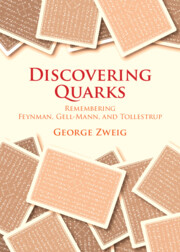
This book describes the development of our understanding of the strong interactions in particle physics, through its competing ideas and personalities, its false starts, blind alleys, and moments of glory – culminating with the author's discovery of quarks, real particles living in a deeper layer of reality. How were quarks discovered, what did physicists think they were, and what did they turn out to be? These questions are answered through a collection of personal remembrances. The focus is on the reality of quarks, and why that reality made them so difficult to accept. How Feynman and Gell-Mann practiced physics, with their contrasting styles and motivations, presented different obstacles to accepting this reality. And how was the author, as a graduate student, able to imagine their existence, and act on it? Science buffs, students, and experts alike will find much here to pique their interest and learn about quarks along the way.
We outline the main concepts of the Standard Model, illustratively describing itscentral features and some open questions, as a preparation for the following chapters.
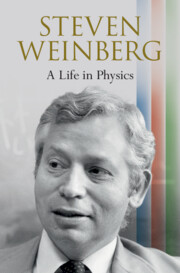
Steven Weinberg shares his candid thoughts, in his own words, on theoretical physics and cosmology, along with personal anecdotes and recollections of the people who helped shape his career. These memoirs of his life as a scientist and public figure cover his student days and early career, through the golden age of particle physics in the 1970s, his being awarded the Nobel prize, through to the end of the twentieth century. In addition to his research insights, Weinberg provides glimpses into his life in academia more broadly: dealing with the 'two-body problem', tenure, international conference travel, his book-writing, advisory work with JASON, and his advocacy for the Superconducting Super Collider. Physicists, historians of science and interested readers will find the presentation engaging and often witty, as Weinberg reflects on his life in physics.
We start by reviewing the Standard Model, its spectrum, symmetries, representations, and Lagrangian. Then, we consider the Grand Unified Theories extensions, in particular the SU(5) GUT, the SO(10) GUT, and other (bigger) groups. Then, we consider the Minimal Supersymmetric Standard Model (MSSM) and Minimal Supergravity, and new low-energy string (supergravity) constructions.
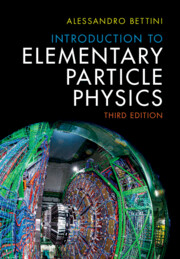
The third edition of this successful textbook has been redesigned to reflect the progress of the field in the last decade, including the latest studies of the Higgs boson, quark–gluon plasma, progress in flavour and neutrino physics and the discovery of gravitational waves. It provides undergraduate students with complete coverage of the basic elements of the Standard Model of particle physics, assuming only introductory courses in nuclear physics, special relativity and quantum mechanics. Examples of fundamental experiments are highlighted before discussions of the theory, giving students an appreciation of how experiment and theory interplay in the development of physics. The author examines leptons, hadrons and quarks, before presenting the dynamics and the surprising properties of the charges of the different forces, concluding with a discussion on neutrino properties beyond the Standard Model. This title is also available as open access on Higher Education from Cambridge University Press.
A Mori fibre space of relative dimension two is a del Pezzo fibration. We address the problem of finding a good representative in each equivalence class of threefold del Pezzo fibrations. In the case of degree at least three, Corti realised a standard model embedded anti-canonically into a projective space bundle. We explain the construction by Kollár for degree three as a semistable model. The stability theory completes the existence of standard models for degree two and one. Mori and Prokhorov proved that the multiplicity of a fibre is bounded by six. We also discuss the rationality problem of del Pezzo fibrations to a rational curve. The total space is always rational when the degree is at least five. We exhibit Alexeev's work for degree four. He established a criterion for rationality in terms of topological Euler characteristic. The lower degree case is treated from the point of view of birational rigidity. Pukhlikov proposed the K2-condition and proved that it is sufficient for birational rigidity. We compare it with Grinenko's K-condition. For a fibration of degree one from a smooth threefold, the K-condition turns out to be equivalent to the birational superrigidity.
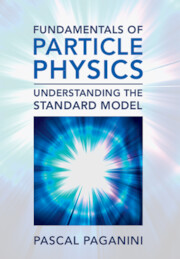
This text is a modern introduction to the Standard Model of particle physics for graduate students and advanced undergraduate students. Assuming only prior knowledge of special relativity and non-relativistic quantum mechanics, it presents all aspects of the field, including step-by-step explanations of the theory and the most recent experimental results. Taking a pedagogical, first-principles approach, it demonstrates the essential tools for students to process and analyse experimental particle physics data for themselves. While relatively short compared to other texts, it provides enough material to be covered comfortably in a two-semester course. Some of the more technical details are given in optional supplementary boxes, while problems are provided at the end of each chapter. Written as a bridge between basic descriptive books and purely theoretical works, this text offers instructors ample flexibility to meet the needs of their courses.
This chapter scans the range of possibilities now open for emergency operations planning. The embedded case study describes use of the cloud, artificial intelligence, and the “internet of things.”
Before the industrial revolution, most of the world's manufacturing production took place in China and India. While the traditional manufacturing centers declined in the nineteenth century, other centers developed and, indeed, joined Britain to form the "industrial West". On the eve of the industrial revolution, British GDP per head was considerably above the world average. Economic growth was driven by the expansion of international trade, but the policies of the British state were at some variance with the prescriptions of Adam Smith. This chapter discusses colonialism, economic development, and standard model in Europe, Mexico, Russia, Latin America, Egypt and Japan. It then focuses on Big Push industrialization in Japan, China and Soviet Union. By the middle of the nineteenth century, the Standard Model was bearing fruit in the United States and Western Europe. China was not successful in building its own fertilizer plants in the 1960s, and in 1973-1974 the country contracted with foreign firms to build thirteen ammonia factories.
This paper analyses the impact of using different correlation assumptions between lines of business when estimating the risk-based capital reserve, the solvency capital requirement (SCR), under Solvency II regulations. A case study is presented and the SCR is calculated according to the standard model approach. Alternatively, the requirement is then calculated using an internal model based on a Monte Carlo simulation of the net underwriting result at a one-year horizon, with copulas being used to model the dependence between lines of business. To address the impact of these model assumptions on the SCR, we conduct a sensitivity analysis. We examine changes in the correlation matrix between lines of business and address the choice of copulas. Drawing on aggregate historical data from the Spanish non-life insurance market between 2000 and 2009, we conclude that modifications of the correlation and dependence assumptions have a significant impact on SCR estimation.
Recommend this
Email your librarian or administrator to recommend adding this to your organisation's collection.