To save content items to your account,
please confirm that you agree to abide by our usage policies.
If this is the first time you use this feature, you will be asked to authorise Cambridge Core to connect with your account.
Find out more about saving content to .
To save content items to your Kindle, first ensure no-reply@cambridge.org
is added to your Approved Personal Document E-mail List under your Personal Document Settings
on the Manage Your Content and Devices page of your Amazon account. Then enter the ‘name’ part
of your Kindle email address below.
Find out more about saving to your Kindle.
Note you can select to save to either the @free.kindle.com or @kindle.com variations.
‘@free.kindle.com’ emails are free but can only be saved to your device when it is connected to wi-fi.
‘@kindle.com’ emails can be delivered even when you are not connected to wi-fi, but note that service fees apply.
Most asymptotic series arising in singularly perturbed problems diverge. How reliable, therefore, are predictions based on them, even if we generally focus on the first few terms? What do these divergences tell us? In the asymptotic context, divergence is the sign that exponentially small phenomena are hidden. An introductory example demonstrates this point in detail. Borel summation is introduced as a way to associate an objective and robust meaning of typical divergent series. A connection is made with the OGF and EGF of Chapter 6, which are indeed related to a Borel transform. An alternative technique to Borel summation, to which most of the chapter is devoted, is to truncate the series near its smallest term and study the remainder. With this technique, an original derivation of the – exponentially small – Stokes phenomenon associated with turning points with the WKB method is presented. A similar treatment is made on a third-order generalisation of Airy’s equation. Finally, the Stokes phenomenon is revealed in a multiple-scale problem. The interdependence between slow and fast scales is seen to be restored beyond all orders of the calculation.
The WKB method is the resolution method of choice for singularly perturbed linear ordinary differential equations. It is introduced by the historical example of its first user, Francesco Carlini, in his treatment of Kepler’s two-body problem in 1817. At that stage, the presentation of the method is not yet complete, but one is already capable of solving boundary layer problems and wave and vibrations problems and discussing Berry’s phase in quantum mechanics. Then, the presence of singularities, known as turning points, is explained and treated in a number of applications ranging from quantum mechanics to fluid instabilities. On either side of a turning point, some constants of integration change value, a mathematical behaviour called the Stokes phenomenon. We discuss it in detail and relate this effect to the divergence of the asymptotic series generated by the WKB method. This prepares the reader for Chapter 7 of the book. Second-order turning points and an alternative implementation of the method based on the Airy function are also presented.
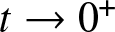
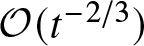
While real-valued solutions of the Korteweg–de Vries (KdV) equation have been studied extensively over the past 50 years, much less attention has been devoted to solution behaviour in the complex plane. Here we consider the analytic continuation of real solutions of KdV and investigate the role that complex-plane singularities play in early time solutions on the real line. We apply techniques of exponential asymptotics to derive the small-time behaviour for dispersive waves that propagate in one direction, and demonstrate how the amplitude, wavelength and speed of these waves depend on the strength and location of double-pole singularities of the initial condition in the complex plane. Using matched asymptotic expansions in the limit $t\rightarrow 0^+$, we show how complex singularities of the time-dependent solution of the KdV equation emerge from these double-pole singularities. Generically, their speed as they move from their initial position is of $\mathcal{O}(t^{-2/3})$, while the direction in which these singularities propagate initially is dictated by a Painlevé II (P$_{\mathrm{II}}$) problem with decreasing tritronquée solutions. The well-known $N$-soliton solutions of KdV correspond to rational solutions of P$_{\mathrm{II}}$ with a finite number of singularities; otherwise, we postulate that infinitely many complex-plane singularities of KdV solutions are born at each double-pole singularity of the initial condition. We also provide asymptotic results for some non-generic cases in which singularities propagate more slowly than in the generic case. Our study makes progress towards the goal of providing a complete description of KdV solutions in the complex plane and, in turn, of relating this behaviour to the solution on the real line.
Recommend this
Email your librarian or administrator to recommend adding this to your organisation's collection.
