To save content items to your account,
please confirm that you agree to abide by our usage policies.
If this is the first time you use this feature, you will be asked to authorise Cambridge Core to connect with your account.
Find out more about saving content to .
To save content items to your Kindle, first ensure no-reply@cambridge.org
is added to your Approved Personal Document E-mail List under your Personal Document Settings
on the Manage Your Content and Devices page of your Amazon account. Then enter the ‘name’ part
of your Kindle email address below.
Find out more about saving to your Kindle.
Note you can select to save to either the @free.kindle.com or @kindle.com variations.
‘@free.kindle.com’ emails are free but can only be saved to your device when it is connected to wi-fi.
‘@kindle.com’ emails can be delivered even when you are not connected to wi-fi, but note that service fees apply.
The image of the Persian Gulf prior to 1820 was one of temporal inertia, in which the inherence of piracy had existed from ‘time immemorial’. This was, the argument ran, determined by the harsh geography of the region—its extreme climate, poor soil and so on. Scarcity had impoverished the region as well as the Arab character, and only by coming into the fold of Britain’s empire could there ever be a lasting peace. As the Marathas were being defeated and dismantled, and the Company’s territories in India consolidated, Bombay was looking westwards across the Arabian Sea. A strategic partnership with Oman drew the British into an intractable geopolitical struggle in the Gulf; caught between Persia and Oman, disaffected Arab tribes united in confederacy, challenging British interests in the region while loosely aligning with the fledgling power of the First Saudi State. Bringing Crown and Company forces together, the two major expeditions that pacified the so-called ‘pirate coast’ by 1821 together bookend a pivotal decade in Gulf history, in which the Arab states were incorporated into an informal empire that effectively abolished the right to exercise sovereign violence at sea.
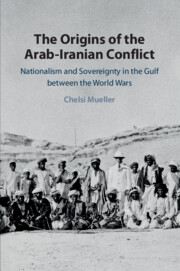
The interwar period marked a transition from a Gulf society characterized by symbiosis and interdependency to a sub-region characterized by national divisions, sectarian suspicions, rivalries and political tension. In this study, Chelsi Mueller tells the story of a formative period in the Gulf, examining the triangular relationship between Iran, Britain and the Gulf Arab shaykhdoms. By doing so Mueller reveals how the revival of Iranian national ambitions in the Gulf had a significant effect on the dense web of Arab-Iranian relations during the interwar period. Shedding new light on our current understanding of the present-day Arab-Iranian conflict, this study, which pays particular attention to Bahrain and the Trucial states (United Arab Emirates), fills a significant gap in the literature on the history of Arab-Iranian relations in the Gulf and Iran's Persian Gulf policy during the Reza Shah period.
Recommend this
Email your librarian or administrator to recommend adding this to your organisation's collection.