To save content items to your account,
please confirm that you agree to abide by our usage policies.
If this is the first time you use this feature, you will be asked to authorise Cambridge Core to connect with your account.
Find out more about saving content to .
To save content items to your Kindle, first ensure no-reply@cambridge.org
is added to your Approved Personal Document E-mail List under your Personal Document Settings
on the Manage Your Content and Devices page of your Amazon account. Then enter the ‘name’ part
of your Kindle email address below.
Find out more about saving to your Kindle.
Note you can select to save to either the @free.kindle.com or @kindle.com variations.
‘@free.kindle.com’ emails are free but can only be saved to your device when it is connected to wi-fi.
‘@kindle.com’ emails can be delivered even when you are not connected to wi-fi, but note that service fees apply.
Chapter 1 grounds this study in larger policy and theoretical debates, including literature on US-China competition, China’s authoritarian diffusion, South–South communication flows, and China–Africa relations. It further introduces the analytical and conceptual framework of this study: China’s uneven image-making in Africa, which includes its ambitious image promotion mechanisms, as well as disjointed implementation and reception on the ground. The chapter also explains the methodological choices, including the focus on Ethiopia and Global China ethnographic approach.
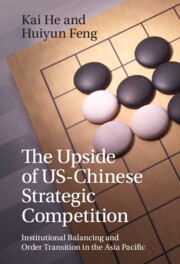
US–Chinese strategic competition is a defining factor in world politics. The prevailing narrative on US–China relations predicts inevitable conflicts between these two giants, potentially leading to a self-fulfilling prophecy. While fully acknowledging the inherent dangers of potential wars or military conflicts between the two powers, this book shows that competition is not necessarily detrimental. By systematically examining US–China institutional balancing across security, economic and political domains, particularly in the aftermath of the 2008 global financial crisis, this book highlights three positive externalities or unintended consequences: the revitalisation of regional institutions to address emerging challenges, unexpected collaborations between great powers (the US and China) and regional actors, and the provision of public goods by both nations. The book argues that constructive and institutionalised competition between the US and China, if managed with strategic foresight and restraint, could inadvertently lead to positive outcomes – institutional peace – in the Asia-Pacific region.
The chapter examines the onset of great-power competition between the rising power, China and the dominant power, the United States. It first discusses how Xi Jinping consolidated central control of foreign policy, the economy, and the military. The next section sketches out the main ideas and initiatives in Xi’s major-power diplomacy. The following section discusses how the long standing US engagement policy came to an abrupt end, ushering in a new phase of US-China peer competition. A further section teases out the key beliefs held by the Chinese leadership and policy elites on the emerging great-power struggle. The conclusion highlights how China mobilized and adjusted its diplomacy amid the Sino-US rivalry to secure its long-term strategic opportunity.
Recommend this
Email your librarian or administrator to recommend adding this to your organisation's collection.