To save content items to your account,
please confirm that you agree to abide by our usage policies.
If this is the first time you use this feature, you will be asked to authorise Cambridge Core to connect with your account.
Find out more about saving content to .
To save content items to your Kindle, first ensure no-reply@cambridge.org
is added to your Approved Personal Document E-mail List under your Personal Document Settings
on the Manage Your Content and Devices page of your Amazon account. Then enter the ‘name’ part
of your Kindle email address below.
Find out more about saving to your Kindle.
Note you can select to save to either the @free.kindle.com or @kindle.com variations.
‘@free.kindle.com’ emails are free but can only be saved to your device when it is connected to wi-fi.
‘@kindle.com’ emails can be delivered even when you are not connected to wi-fi, but note that service fees apply.
This chapter examines Monday, the first day of meditation, which presents the text’s precepts and goals. Centered on Mary’s childhood and the events of the Annunciation, the Visitation, the Nativity, the Circumcision, and the Presentation at the Temple, the text and image program invites the reader-viewer to reflect on the notion of conceiving Christ both physically, in the Virgin’s body as part of the divine plan, and mentally, as a truth to be recognized and internalized by the fourteenth-century nun. The Meditations on the Life of Christ stages Mary as a particularly apt exemplum for the female reader: a model contemplative who strives to keep Christ always with her by conceiving him in her soul, seeing glory in his abasement, and striving to transcend the temporal in pursuit of spiritual understanding.
The Virgin Mary was a multifaceted figure in Byzantine theology. She played a central role in the incarnation of Christ since she provided him with his human nature. Her virginity, before, during, and after the birth bore witness to his ongoing divinity. Although Mariological doctrine did not receive systematic treatment in the Byzantine theological tradition, it was elaborated in liturgical texts. The Theotokos was described with the help of metaphorical and typological language, which associated her symbolically with creation, humanity, and a transfigured paradise, that is, spaces that were potentially receptive to God’s presence. As recent scholarship has shown, however, Byzantine Christians also encountered Mary as a female human person. Her maternal qualities, which came to be celebrated especially during and after the period of Iconoclasm (ca. 730–843), included tenderness, mercy, and sorrow – as displayed at the foot of the cross during Christ’s crucifixion. Historical accounts and miracle stories provide evidence of individual Christians’ visions of the Virgin Mary at shrines and churches in Constantinople. At both symbolic and personal levels, Mary, the Theotokos, remained accessible to Christians while representing the ideal model of the deified human person.
This article discusses the formational qualities of Byzantine church decoration, especially icons. It proposes that the iconographic programs of Byzantine churches had a profound effect on the viewers by offering them models for faithfulness and virtue and facilitating their transformation into ideal Christian subjects. My intention is to show that icons in the church do not simply interact with the viewers, but also form and transform them. I explore how iconic subjects worked in Byzantine churches in light of Ivan Drpić’s important insight about the Byzantine self as fundamentally relational and as ‘a replicable likeness’. I wish to show how mosaics and frescoes in Byzantine churches could provoke transformational experiences for their viewers by inviting identification with models of faithfulness and virtue.
This chapter explores the degree to which Vasari designed his Pieve altars to integrate, alter, or reproduce the liturgical and artistic precedents in the Romanesque church. It evinces a surprising level of stylistic, iconographical, and functional harmony between them and other works in the Pieve—an early sixteenth-century Madonna of Mercy altarpiece in particular. The conception and creation of Vasari’s altars for the Pieve was nowhere near as carefully orchestrated as it was for his better known Medici-sponsored church renovations in Florence, but this chapter shows that his gradual transformation of the Pieve’s interior constituted an important precedent and counterpart to those better-known Florentine projects.
The Introduction presents the topic of feminine imagery for the Church and the book’s method for examining this imagery in both expository and literary sources and across the traditional medieval and early modern periodization divide. It presents Lady Church both as a theological person with a transcendent ontological status not identical to the ecclesiastical institution and as a literary figure developed through drama, poetry, and literary techniques used in other genres.
How did Lady Church become a theological person and literary figure in patristic, medieval, and early modern texts? In this study, Lora Walsh recovers a feminine figure whose historical prominence has been overlooked. She traces the development of Lady Church in medieval and early modern England, providing new information and interpretations of works by well-known authors, including John Wyclif, William Langland, John Foxe, and John Donne, among others. She also identifies significant changes and previously unrecognized continuities in religious culture from the medieval era into early modernity. Walsh incorporates literary texts into the field of historical theology, exploring their theological background and identifying the unique contributions of literature to ecclesiological thought. She demonstrates that the feminine image of the Church was not simply a rhetorical convention. Rather, it forms part of a rich tradition that many authors conceptually refined and vividly reimagined over more than a millenium of religious history.
The cult of the Virgin Mary went global during the early modern period, as Catholics embraced her with renewed fervor in the wake of Protestant attacks. Using one of Mary’s most famous advocations as a case study, this chapter investigates the origins, spread, and reinvention of the cult of the Virgin of Guadalupe in Extremadura, Mexico, and in the Philippines, demonstrating both the causes and limitations of her success across different parts of the Spanish empire.
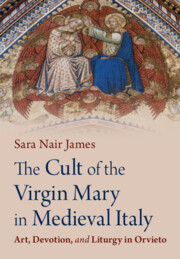
Late medieval Italy witnessed the widespread rise of the cult of the Virgin, as reflected in the profusion of paintings, sculptures, and fresco cycles created in her honor during this period. The cathedral of papal Orvieto especially reflects the strong Marian tradition through its fresco and stained-glass window narrative cycles. In this study, Sara James explores its complex narrative programs. She demonstrates how a papal plan for the cathedral to emulate the basilica of S. Maria Maggiore in Rome, together with Dominican and Franciscan texts, determined the choices and arrangement of scenes. The result is a tour de force of Marian devotion, superior artistry, and compelling story-telling. James also shows how the narratives promoted agendas tied to the city's history and principal religious feasts. Not only are these works more interesting, sophisticated, and theologically rich than previously realized, but, as James argues, each represents the acme in their respective media of their generation in central Italy.
O’Casey was born into a Protestant family and his father worked as a clerk for the Irish Church Missions, an evangelical society that aimed to convert Catholics. This chapter argues that O’Casey radically reimagined Christianity, depicting characters that inadvertently travesty or re-enact Christianity’s meanings. More broadly, however, he treats the love of the divine as parallel to the love of freedom and country; rather than a strict code, such love is a life-affirming source of inspiration akin to art and poetry. O’Casey’s sophisticated understanding of the value of Christianity has little to do with sectarian differences or superstition, but inheres in caring actions, love of life, and a determination to feed the spirit along with the body.
The Introduction begins with a fax which Seamus Heaney sent to Professor Eamon Duffy (Cambridge University) in 2001. The fax was a response to Duffy’s book The Voices of Morebath, in which he tells the story of the desacralising of a small Catholic community during the English Reformation. Heaney’s response to the book draws parallels between the medieval world of Morebath and the world of Mossbawn, where he grew up and which was foundational to his experience of Catholicism and his growth as a poet. I draw attention, in particular, to the centrality of Marian devotion for the parishioners of Morebath and for Heaney as a child. What Heaney’s fax shows is the emotional purchase which Catholicism continued to exert upon him long after he had moved away from adherence to religious orthodoxy or practice. By placing Heaney’s engagement with Catholicism in a broader historical context than has been the case up until now, I show how it operates in ways other than social and political, concluding that Catholicism remains foundational to Heaney’s work at the level of what I call a felt sense.
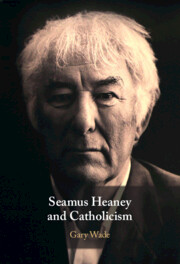
Seamus Heaney and Catholicism makes extensive use of unpublished material to offer fresh insights into Heaney's complex engagement with Catholicism. Gary Wade explores how Catholicism operates in ways other than social and political, which have largely been the focus of critics up until now. Using extensive unpublished material, including early drafts of some familiar poems, it offers close readings which explore how Catholicism operates at the level of feeling, and how it continued to have an emotional purchase on Heaney long after he had left behind orthodox practice. It also engages with Heaney's increasing concern, in his later work, with the loss of a metaphysical sensibility, and his turning to the Roman poet Virgil to deal with questions of death and post-mortem existence. The book concludes by arguing that Heaney's Catholicism is displaced rather than rejected, and that his vision expands to accommodate both the Christian and the Classical worlds.
Before his conversion to Roman Catholicism, Hopkins acquired a copy of the Vulgate Latin Bible for future use and returned his copy of the King James Bible to his unhappy father. From a Bible-centred Protestant perspective, much of the doctrine on which he was to meditate as a Jesuit poet is non-scriptural, and could be described as Catholic accretions. This chapter reveals that Catholic versions of the Bible underwent revision down the centuries, as Protestant versions did, and that Victorian Catholics were not forbidden to read the Bible. A new Holy Catholic Bible is adorned with an image of the Blessed Virgin Mary in glory. The doctrine of the Immaculate Conception of the Blessed Virgin Mary was promulated in 1854, further widening the gap between Protestant and Catholic teaching. But for Hopkins, the unpublished laureate of the Blessed Virgin, the (unscriptural) Immaculate Conception lay at the heart of his faith.
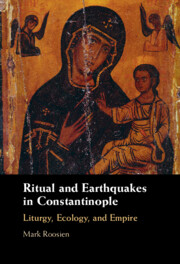
Located on the North Anatolian Fault, Constantinople was frequently shaken by earthquakes over the course of its history. This book discusses religious responses to these events between the fourth and the tenth century AD. The church in Constantinople commemorated several earthquakes that struck the city, prescribing an elaborate liturgical rite celebrated annually for each occasion. These rituals were means by which city-dwellers created meaning from disaster and renegotiated their relationships to God and the land around them in the face of its most destabilizing ecological characteristic: seismicity. Mark Roosien argues that ritual and theological responses to earthquakes shaped Byzantine conceptions of God and the environment and transformed Constantinople's self-understanding as the capital of the oikoumene and center of divine action in history. The book enhances our understanding of Byzantine Christian religion and culture, and provides a new, interdisciplinary framework for understanding Byzantine views of the natural world.
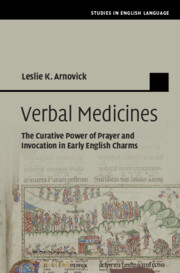
Religious texts played a central role in Early English, and this innovative book looks in particular at how medieval Christians used prayers and psalms in healing the sick. At first glance, the variety and multiplicity of utterances, prayers, exorcistic formulas, and other incantations found in a single charm may seem to be random and eclectic. However, this book shows that charms had distinct, logical linguistic characteristics, as well performative aspects that were shaped by their usage and cultural significance. Together, these qualities gave the texts a unique role in the early development of English, in particular its use in ritual and folklore. Arnovick identifies four forms of incantations and a full chapter is devoted to each form, arranged to reflect the lived experiences of medieval Christians, from their baptism in infancy, to daily prayer and attendance at Church celebrations, and to their Confession and anointing during grave illness.
This chapter locates a shift in beginning in the seventh century in which the power to halt quakes began to move away from collective repentance and toward saintly intercession. First, it examines the seventh-century Life of St. Symeon Stylites the Younger, a Syrian pillar saint with ties to Constantinople. It focuses in particular on hymns recorded in the Life for earthquakes that purportedly caused them to cease when sung by the holy man. The chapter shows how seventh-century Byzantines could have constructed the role of the saintly intercessor when faced with natural disasters. Next, it analyzes changes in Constantinople’s earthquake commemoration rite in the eighth century, specifically the introduction of the Theotokos as the city’s chief protection against earthquakes. Eighth-century liturgical editors borrowed from the rites commemorating the enemy invasions of Constantinople in 623, 626, and 717–18, in which the Theotokos was remembered to play a prominent role in protecting the city. It shows how the earthquake commemoration liturgy no longer saw earthquakes as divine judgment against the sin of the city, but as outside threats to the city for which powerful heavenly intercessions were needed.
Chapter 3, “Invoking the Name of Mary,” reconstructs the resonance of Marian invocation for charm participants of the late-Saxon period. While the elaborate monastic cult of the Virgin had not yet spread into popular devotion at this time, the Church urged Christians to trust Mary with their needs. It taught the people that she would advocate for them in response to their prayers. Church festivals, liturgy, homily, and poetry expose laity to narratives about Mary’s intervention on behalf of the faithful. The Mother of Christ could intercede with her son; the Queen of Heaven and Hell could command saints and overcome the devil. Charms that invoke Mary call on her by name, relate stories about the Virgin’s miraculous bearing of Christ, and prescribe her Magnificat or Masses said in her honor. Through the operation of charms’ semiotic systems, the Virgin known from vernacular and ecclesiastical traditions becomes immanent for the charm audience. By identifying the ways in which Mary is invoked, this chapter demonstrates Mary’s contributions to remedies for acute physical and spiritual conditions.
‘The Sequence on the Virgin Mary and Christ’, by the poet and martyr St Robert Southwell, S.J. (1561–95), is a beautiful work that is generally still undervalued. The sequence explores the physical, moral, and emotional unity of Mary and her Son in the work of our salvation. The larger context is the Protestant devaluing of hyperdulia. In its historical moment – it was written sometime in the 1580s – it is a subtle exploration of the theme of kenosis and of what a ‘prince’ or ‘queen’ should really be. While being relatively inexplicit, Southwell seems to poise the Virgin Mary against that other ‘empress’, Elizabeth I, and writes with intimacy from the perspective of his own self-understanding as ‘Beatae Virginis filius’ (a son of the Blessed Virgin). The sequence’s modern, editorial title needs to be replaced with one that matches its devotional aims and content. As he faced up to the almost certain prospect of his own martyrdom, Southwell looked to Mary as true mother and queen to sustain him in his sacrifice.
Between the sixth and eighth centuries CE, the image emerged as a rhetorical category in religious literature produced in the Mediterranean basin. The development was not a uniquely Christian phenomenon. Rather, it emerged in the context of broader debates about symbolic forms that took place across a wide range of ethnic, linguistic, and religious groups who inhabited the late Roman and early Byzantine world. In this book, Alexei Sivertsev demonstrates how Jewish texts serve as an important, and until recently overlooked, witness to the formation of image discourse and associated practices of image veneration in late antiquity and the early Middle Ages. Addressing the role of the image as a rhetorical device in Jewish liturgical poetry, Sivertsev also considers the theme of the engraved image of Jacob in its early Byzantine context and the aesthetics of spaces that bridge the gap between the material and the immaterial in early Byzantine imagination.
Alchfrith may have been associated with Lindisfarne. This prayer, probably dating from the end of the eighth century and addressed to the Virgin Mary, is found among a set of Gospel extracts and other prayers in the so-called Book of Cerne.
The presence of the Catholic Church and the imposition of religious beliefs and practices onto the newly found inhabitants of the Americas was perhaps one of the biggest catalysts of transition during the early modern period. This chapter focuses on the literature that was produced for, and by indigenous peoples within the religious realm. It considers different discursive genres that are emblematic of the transitions that natives experienced when they were into close and sustained contact with religious institutions, such as plays for conversion and evangelization, sermons, catechisms, spiritual biographies, and other prescriptive literature.