To save content items to your account,
please confirm that you agree to abide by our usage policies.
If this is the first time you use this feature, you will be asked to authorise Cambridge Core to connect with your account.
Find out more about saving content to .
To save content items to your Kindle, first ensure no-reply@cambridge.org
is added to your Approved Personal Document E-mail List under your Personal Document Settings
on the Manage Your Content and Devices page of your Amazon account. Then enter the ‘name’ part
of your Kindle email address below.
Find out more about saving to your Kindle.
Note you can select to save to either the @free.kindle.com or @kindle.com variations.
‘@free.kindle.com’ emails are free but can only be saved to your device when it is connected to wi-fi.
‘@kindle.com’ emails can be delivered even when you are not connected to wi-fi, but note that service fees apply.
This chapter pays close attention to two stories from Simin Daneshvar’s 1961 collection Shahri Chun Behesht (A City Like Paradise), reading “Vakil Bazaar” and “The Playhouse” as modernist “rehearsals” of racist archetypes, representing a literary-historical moment when socially progressive Iranian writers were just starting to situate their work within global discourses of antiracism and contending with problematic historical legacies in theater and narrative. Briefly summarized, the chapter takes into account, first, a “child-snatcher” character accused of Jewish blood libel against Muslims (associated by the child narrator with both her lower-class nanny and with the self-flagellation of Ashura), and second, an actor whose blackface performance signifies lowbrow humor and a lack of inhibitions. Ostby examines these isolated incidents in Daneshvar as a kind of prism onto a larger modernist moment, marked by socialist class struggle and women’s rights initiatives, but also racial purity discourse. Her readings trace where uses of metaphor and allegory we might consider “modernist” aesthetics in Daneshvar’s work obscure or even actively prevent the social critique associated with “modernist” politics.
Burroughs and the monstrous have always gone together, and this chapter examines how not only his work but Burroughs himself was from the start defined in terms of monstrosity. It traces the origins of the association back to his early critical reception and even earlier fictionalization as a profoundly sinister persona in the novels of Jack Kerouac. The specific grounds for identifying Burroughs or his work as monstrous have changed over time, often focusing on ambiguously misogynistic, racist, homophobic, or anti-Semitic content, and on his identity as a homosexual and drug addict. His accidental shooting of his second wife, Joan Volmer, has cast the darkest shadow, but, this chapter argues, it has obscured the actual significance of monstrosity in Burroughs’ work. This, as critics such as Wermer-Colan and Stevenson have argued, lies in how he embraced complicity rather than hypocritically denied it, resulting in strategies that weaponize monstrosity as a mirror for the dark forces at work in the world.
From 1840–1920, waves of European and Asian immigrants engaged popular culture as a means for preserving ethnic identities as well as acculturating to a new society. This duality was at the core of ethnic commercial leisure, exemplified here by German beer gardens and Yiddish theatre. Vaudeville, movies, and Tin Pan Alley music especially catered to immigrant audiences, incorporating efforts at assimilation and ethnic distinctiveness into entertainment more broadly. The representation of immigrant groups and African Americans, however, in these entertainments was generally comic racist caricatures. Negative depictions of Irish, German, Jewish, African Americans, and Chinese persisted even while African American and immigrant groups fought racial ridicule in protests, boycotts, and censorship campaigns. While the stakes and efforts varied across different groups’ responses to racial and ethnic denigration, these struggles reveal much about racial identity and “Americanness” when mass immigration and increasingly restrictive immigration laws were redefining American society.
The Smithsonian’s new exhibit “Entertainment Nation” signals how museums now embrace popular culture when they previously dismissed it. Beginning in the 1970s–1980s, American museums expanded definitions of “culture,” their role as educational sites, and their audiences. New “hometown” museums memorialized Hollywood celebrities’ grass roots, successful so long as the stars remained famous. Museums dedicated to sports, musical genres, and other types of popular culture simultaneously grew. Traditional museums also began to embrace the history of American popular culture in topical exhibits. Especially popular are new museums dedicated to the mass media. In one instance, however, the Academy Museum of Motion Pictures’ 2024 exhibit on the film industry’s Jewish founders sparked a backlash for being anti-Semitic. Its dramatic failure illustrates what this volume argues is most important: American popular culture must be narrativized within a web of political, technological, economic, and cultural constraints.
Jews have always participated in popular culture, but positive Jewish images rarely occurred until the 1990s. Jewish insider/outsider status shaped the film industry, radio and television, comic books, and stand-up comedy. A few Jewish characters were prominent in the 1960s–1970s (e.g., Barbra Streisand, Woody Allen). With the rise of the Internet and media industries targeting niche audiences, Jewish imagery now highlights Latinx Jews, Black Jews, Asian American Jews, Indigenous Jews, Sephardic Jews, and LGBTQ+ Jews. For example, Transparent (2014–2019) about a Jewish father who comes out as a transgender woman, routinely incorporates religious rituals. Broad City (2014–2019) celebrates the escapades of sexually fluid twenty-something Jewish friends. Drake and Tiffany Haddish, both Black Jews, repackaged their Bar/Bat Mitzvahs for comic effect. Explicit intra-Jewish diversity within wider American experiences disrupts historical tensions between Jewish presence and erasure in pop culture that were fueled by anti-Semitism.
Edited by
Rosa Andújar, Barnard College, Columbia University,Elena Giusti, University of Cambridge,Jackie Murray, State University of New York, Buffalo
This chapter foregrounds recent studies on race and religion as analytic categories in the study of the ancient world. Conventional scholarly analysis of the late-antique Mediterranean world often assumes that uses of the terms race and racism are anachronistic in studies of premodern societies. By contrast, religion is often taken for granted as an unproblematic category of analysis across both modern and premodern social contexts. More recently, critical studies of race and religion have illustrated the shortcomings in the basic assumptions that undergird the uses and disuses of terms like race, racism, religion, and ethnicity in studies of premodernity. Drawing on these recent works, this chapter demonstrates the entanglements between religious and racialised conceptions of group identities and hierarchies. Race and religion are conceptually intertwined to the extent that religious ideas have been instrumental in processes of racialisation and religious groups have been targets of racialisation. The chapter concludes with examples of how theories of environmental determinism and anti-Semitism manifest in Christian ideologies and imperial policies in late antiquity.
In the US, engaging in scholarship and advocacy on Middle East issues, certainly on Palestine, has long attracted attacks from campus and off-campus organizations and individuals. However, a near consensus has emerged that the threats to academic freedom that we are witnessing today are unprecedented, as it is now the US government that is leading the assault. The weaponization of charges of antisemitism against those engaged in teaching about Palestine and/or in pro-Palestine advocacy has become a battering ram utilized by the political right to achieve a central goal: taming or destroying American higher education as a locus of critical inquiry and potential opposition to the Trump administration’s authoritarian project. What does the current moment mean for us as members of a Middle East studies community? How have the challenges we face evolved and how are today’s attacks different from those of the past? This essay addresses the evolution of these growing threats in the US as well as longer-standing threats in the Middle East North Africa (MENA) region in the context of the role and work of MESA’s Committee on Academic Freedom (CAF) in responding to them.
The term “race” was widely used in the 1500s to describe many types of blood relationships but gradually became focused on ethnicity and skin colour. The elevation of Anglo-Saxons as a superior race developed alongside “scientific racism” in the 1800s, and in turn gave an impetus to eugenics and Aryianism. By 1900, the language of race was found everywhere in England, and it declined very slowly throughout the subsequent century.
This chapter considers the deployment of radical Orientalism as a mode of political critique in the popular fiction of the bestselling Chartist leader and author George W. M. Reynolds. It focuses on the structural congruences between the depictions of aristocratic debauchery in his two Mysteries series (1844–8; 1848–56) and the figuration of Old Corruption as in league with the Jewish sweater in ‘The Seamstress’ in Reynolds’s Miscellany (1850). Examination of this alignment permits a discussion of the mutable hierarchies within the category of the People at mid-nineteenth century, focused specifically on those groups excluded from full political rights: the working-class man, women, and Jews. It considers how Reynolds’s use of radical literary-political tropes positions Jews as Occidental in matters of parliamentary democracy, but designates them Oriental when the sweating system that they are understood to represent is figured as an atavistic, foreign, and unchristian form of economics.
This article examines the lives of three politicians from Austria’s crownland of Bukovina—Aurel Onciul, Nikolai Wassilko, and Benno Straucher—who pursued distinct national ambitions and built successful political careers as advocates of democratization and nationalization under imperial rule. It aims to highlight the multiple transitions these individuals experienced, including shifts from conservative to democratic mass politics, struggles for national rights, and the passage from imperial to national orders. After 1918, Onciul became a representative of a nationality with its own nation-state, while Wassilko and Straucher became spokespersons for embattled minorities. All three struggled to adapt to the new national order, and the forces of nationalization they once championed ultimately turned against them. The article argues that the nationalist politics that had brought these politicians success under imperial rule were later criticized by their co-nationals as treasonous and opportunistic, illustrating the complex and often paradoxical outcomes of nationalization processes in Central Europe.
Merchants and travelers sought food, lodging, entertainment, care, and other services in Nombre de Dios, Panama and Portobello, as well as at the inns punctuating the land and water routes between them. Sometimes accompanied by husbands and more often by slaves, enterprising women of diverse ancestry offered a range of services across the isthmus. In contrast to Seville or Malaga, Panama’s authorities, like those of New Spain, avoided regulating prostitution. Instead, they protested the unlicensed migration of unattached women from Castile and the sexual abuse of enslaved women. Sources described prostitution, like debt or enslavement, as a temporary misfortune.
The current chapter investigates the relationship dynamics between Germany and the Axis bloc countries. The chapter concludes that the Axis coalition-building efforts were poorly organized, haphazardly coordinated, and dreadfully led, suffering from German racism, mutual mistrust, and systematic lack of resources. Finnish participation in Operation Barbarossa was motivated by two things: the country’s exposed geographical position next to Russia and the unfinished Soviet attempt to occupy it during the Winter War in 1939–1940. Finland was not occupied by the Red Army and thus maintained its liberal democracy.
While most histories describe the Romanian Army as a reluctant ally of the German Army on the Easten Front, this chapter argues that Romania had embraced a far-right ideology that made the country Nazi Germany’s most important partner in the campaign against the Soviet Union. The Italian Royal Army fought an unplanned campaign, under German command, against the Red Army between August 1941 and January 1943. Despite severe limitations, the combatants of the CSIR and the ARMIR fought bravely until German defeat at Stalingrad led to the deadly disaster on the Don River.
The extent to which religious motivations helped inspire the American Revolution has generated debate among historians. Some perceive the Revolution to be the convergence of the English radical traditions of religious dissent and political protest. In this view, a strong millennialist, anti-Catholic strain in Protestant evangelicalism saw the war of independence as an apocalyptic confrontation with the Antichrist. Other historians regard religion as a secondary factor in the independence movement. Yet consideration of connections between religion and Revolution cannot be limited to spiritual influences on the independence movement. Many enslaved African Americans embraced Protestant Christianity to criticize slavery and claim a right to freedom. Native American revival movements from the Great Lakes to the Deep South fueled resistance to colonial and Revolutionary land grabs. Loyalists asserted the same right to individual conscience as the Revolutionaries. Accordingly, the narrative of religion must include the sacred motives of many more participants, including those opposed to the struggle for independence.
The first instalment of Zola’s novel Vérité appeared on 10 September 1902, just nineteen days before the author died under suspicious circumstances that were likely related to his involvement in the Dreyfus Affair. The novel provided an allegorical transposition of the contemporary political drama that had divided the nation, but which, as yet, had been denied its proper dénouement. This chapter explores how Zola imagined the right and just resolution of the legal case, as well as of the national crisis it galvanised. Working across Zola’s journalistic and fictional versions of the Affair, it argues that Zola understood the Dreyfus case as an aesthetic problem: as a matter of style, taste, plot, and plausibility. In order for the truth to win out, Zola must imagine the aesthetic and ethical re-education of a nation; and this happy ending involves harnessing an acceptable version of the idealist imagination.
This chapter overviews the characteristics and circumstances predisposing people to lead or join hate movements with a particular focus on the virulent anti-Semitism that united figures such as Father Charles Coughlin, Charles Lindbergh, and Henry Ford. By analyzing these figures and their followers, we extrapolate practices common among hate groups. After identifying character traits and risk factors (e.g., political and economic insecurity), we discuss their more modern manifestations. First we clarify our definition of hate groups as defined by the Department of Justice, Federal Bureau of Investigation, and Southern Poverty Law Center. We then extrapolate from these definitions to show how they align well with our definition of a cult. Following this, we acknowledge the challenges that accompany hate group designation while concluding that it is still vital for tracking modern-day hate groups and discrimination. We conclude by acknowledging the continued threat of hate groups and the presence of risk factors seen throughout history, such as global public health emergencies. We also discuss challenges unique to the technology age, such as epistemic bubbles and echo chambers. In summary, the chapter provides an outline of how hate groups come to be and provides a discussion of their continuing threat in society.
The essay focuses on the career of playwright Arthur Laurents from his graduation from college to the opening of West Side Story, including discussions of his early plays and screenplays as well as his involvement in the development of the classic musical.
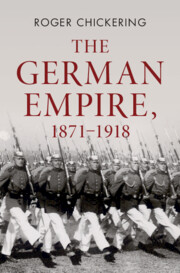
Furious economic growth and social change resulted in pervasive civic conflict in Imperial Germany. Roger Chickering presents a wide-ranging history of this fractious period, from German national unification to the close of the First World War. Throughout this time, national unity remained an acute issue. It appeared to be resolved momentarily in the summer of 1914, only to dissolve in the war that followed. This volume examines the impact of rapid industrialization and urban growth on Catholics and Protestants, farmers and city dwellers, industrial workers and the middle classes. Focusing on its religious, regional, and ethnic reverberations, Chickering also examines the social, cultural, and political dimensions of domestic conflict. Providing multiple lenses with which to view the German Empire, Chickering's survey examines local and domestic experiences as well as global ramifications. The German Empire, 1871–1918 provides the most comprehensive survey of this restless era available in the English language.
Jesus’s Jewish identity offers fresh insights into Christian–Jewish relations and historical Jesus research. Although often obscured in Christian tradition, this recognition has been emphasized by Jewish scholars to counter anti-Semitism and challenge Christian theological narratives. Memory of the Jewish Jesus serves as a critical tool in rewriting the history of Jewish–Christian relations and understanding the evolution of both Judaism and Christianity. It can energize a reevaluation of exegetical methodologies and dogmatic discourses, thus reshaping Christian theology and fostering mutual understanding.