To save content items to your account,
please confirm that you agree to abide by our usage policies.
If this is the first time you use this feature, you will be asked to authorise Cambridge Core to connect with your account.
Find out more about saving content to .
To save content items to your Kindle, first ensure no-reply@cambridge.org
is added to your Approved Personal Document E-mail List under your Personal Document Settings
on the Manage Your Content and Devices page of your Amazon account. Then enter the ‘name’ part
of your Kindle email address below.
Find out more about saving to your Kindle.
Note you can select to save to either the @free.kindle.com or @kindle.com variations.
‘@free.kindle.com’ emails are free but can only be saved to your device when it is connected to wi-fi.
‘@kindle.com’ emails can be delivered even when you are not connected to wi-fi, but note that service fees apply.
This chapter analyses psychiatric and psychological responses to the bombing war, examining both civilian morale and the experiences of aircrew. While British authorities’ fears of mass panic and distress among bombed British civilians never materialised, the clinical literature and official investigations of bombed cities such as Hull suggests a constant background of low-level disquiet. Bomber crews were also scrutinised for signs of impending breakdown, a process complicated by the physiological effects of flight and gruelling missions. Finally, the destruction of Hiroshima and Nagasaki and subsequent anxieties about atomic warfare extended wartime psychiatric frameworks into post-war civil defense planning. Overall, the bombing war troubled clear distinctions between combatant and non-combatant and bomber and the bombed, demonstrating psychiatry’s expanding remit into population-level questions of morale and productivity.
Architecture and design; housing and town planning; mechanization and the everydayness of machines; rationalization and scientific management; cars and romance of the road; scientific mastery of the natural world and the non-European globe; the physics revolution and natural science – these were the material frontiers of forward-facing progressivist expectancy between the wars. The excitements of innovation reached from the blueprints of Le Corbusier and the design departures of Bauhaus to Schütte-Lihotzky’s modular kitchens and Lubetkin’s modestly scaled public commissions. From photography, cinema, and X-rays, through electricity, mechanical tools, and small appliances, to automobiles and aeroplanes, machines harnessed enthusiasm and energized the imagination. Whether through new technologies, applied science, or theoretical chemistry and physics, laboratory science was universally mobilized for governance, especially in medicine and public health, industrial organization, agrarian research, and armaments. The epistemological foundations, theoretical directions, and experimental organization of laboratory science opened new vistas of policy-driven governmentality.
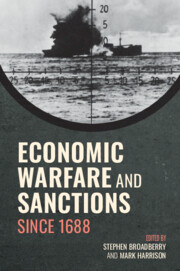
How have economic warfare and sanctions been applied in modern history, with what success and with what unintended consequences? In this book, leading economic historians provide answers through case studies ranging from the eighteenth-century rivalry of Britain and France and the American Civil War to the two world wars and the Cold War. They show how countries faced with economic measures have responded by resisting, adapting to, or seeking to pre-empt the attack so that the effects of an economic attack could be delayed or temporarily neutralised. Behind the scenes, however, economic measures shaped the course of warfare: they moulded war plans, raised the adversary's costs of mobilisation, and tipped the balance of final outcomes. This book is the first to combine the study of economic warfare and sanctions, showing the deep similarities and continuities as well as the differences, in an integrated framework.
The German home front was a vital part of the war Nazi-Germany waged. Skilfully deploying the country’s workers, its women, and its youth organizations, the regime would come to subject most of its economy to the war effort. The Wehrmacht’s campaign into the Soviet Union would permanently alter the way Germany structured its economy. The home front benefitted tremendously from the Nazi conquest of the East, and before long hundreds of thousands of slave labourers were forcibly drafted into its factories and its agriculture. As the war went on, the regime also increasingly deployed concentration camp inmates in the war effort and also used the threat of violence or imprisonment to coerce it own population. Determined to prevent a repeat of the ‘stab in the back’ of 1918, the home front was treated with increasing suspicion, while Allied bombing raids and the introduction of ever stricter rations put further strain on Germany’s citizens. Notwithstanding, resistance was rare, and the home front remained largely intact until the very end of the war: the vast majority of Germans only laid down their tools once Allied forces arrived.
A liberal reformist core dominated antiwar activities through the end of 1966. That year the movement maintained a predominantly decentralized orientation, both lacking and resisting true national coordination. Primarily through grassroots activity, the movement incorporated new constituencies and provided alternative sources of information that challenged the government’s credibility. Antiwar activists pursued change largely through the established political system, but also in coalition building for mass demonstrations and draft resistance. Dissent within the government became more visible, which gave wartime dissent a degree of respectability. Protesting napalm production signified an early economic challenge, and the case of the Fort Hood Three exemplified cooperation between active-duty military and civilian antiwar activists. Despite continued growth and some impressive achievements, the movement also faced more significant government and right-wing opposition, and the war’s continued escalation left many activists feeling frustrated and alienated.
North Vietnam launched a major offensive in 1972 and President Nixon responded with intensified bombing. The competing antiwar coalitions rallied modest demonstrations. Militant tactics attracted much of the public attention, but represented an approach overwhelmingly condemned by antiwar activists. The broader movement launched a “spring offensive” that appeared more cathartic than influential. College campuses continued as dependable sites of protest, but Congress struggled for efficacy and public opinion remained ambiguous. Individual organizations or focused alliances provided the most effective antiwar activity. Women targeted Congress, religious groups confronted corporations, and resistance continued within the armed forces, but most activists in 1972 tried to elect presidential nominee George McGovern and other officials who would finally end the war. A final spasm of retribution in December preceded the 1973 peace settlement. The Watergate scandal weakened the Nixon presidency and strengthened congressional authority, which, combined with determined grassroots activities, finally observed the war’s end two years later.
The environmental history of the Vietnam War is unique in the twentieth century for the unprecedented scale of aerial bombing and use of incendiaries such as napalm, as well as the United States military’s use of tactical herbicides to destroy forest cover in combat zones. Drawing on recent trends in environmental and military history, this chapter aims to provide a more comprehensive sketch of the environmental legacies of the Vietnam War. Besides the effects of bombing and herbicides, these include inquiries into the footprints of warfare in urban and industrial development, in ethnic and demographic shifts in former warzones, in the dispersion of invasive species, and even in the creation of wilderness or conservation areas.
Most of the available statistics on the Vietnam War come from the US government. Those for US military personnel strengths in Vietnam, and US casualties, are relatively accurate. Most of the rest are problematic. Republic of Vietnam Armed Forces personnel strengths were exaggerated; more men were listed on unit rosters than were actually serving. US figures for RVNAF casualties were below the actual levels in some periods. US estimates of communist personnel strength were usually well below the actual level. In US figures for communist losses, inflated “body counts” were balanced by communist personnel who died under circumstances not allowing US or RVN forces to count their bodies, so the overall totals may not have been exaggerations. The United States used air power on a huge scale. The bomb tonnage delivered on South Vietnam was the largest for any country in history, and that on Laos the second-largest. But it was indigenous forces that did most of the ground combat and therefore suffered most of the losses. The number of RVNAF personnel who died was far larger than the number of Americans. The number of communist personnel who died was larger still.
The Nixon administration’s decision in 1969 to begin the systematic bombing of Cambodia fundamentally altered the nature of the war the US was fighting in Vietnam for all parties involved – Americans, North Vietnamese, South Vietnamese, and especially the Cambodians. Cambodia had largely remained isolated from the fighting even as it escalated in 1965. North Vietnamese troops and Viet Cong cadres had been using the border territory as sanctuaries, but they remained along the border and did not engage the Cambodian population in any way that substantially altered the strategic situation or affected the peasants living in the region. The Nixon administration changed all that by undertaking four actions: 1) initiating a secret bombing campaign in 1969 to disrupt North Vietnamese troops; 2) supporting the overthrow of Prince Sihanouk and his replacement with Lon Nolo in March 1970; 3) authorizing a joint South Vietnamese–US invasion of Cambodia in May–June 1970; and 4) continuing with the bombing of Cambodia until August 1973, many months after the signing of the Paris Peace agreement. The results for Cambodia led to a collapse of the government and the takeover by the Khmer Rouge in April 1975.
This article offers a new interpretation of the coming of state ownership in aluminium-related big businesses in Norway. It shows that the Norwegian aluminium business of the late 1930s and the 1940s was undertaken by a Scandinavian business elite fully capable of filling capital requirements after the war. This elite had, however, entangled itself in the German war effort in Norway mainly by supporting the building of new aluminium plants under the German occupiers’ control. This left it morally vulnerable to the increasing emphasis during the war on aluminium as a strategic metal. The Allied war effort—especially evident in US attitudes—had come to see the cartelized aluminium industry of the 1930s as working against the national interest by impacting national production capacity in a negative way. The Allies bombed the major new plant in Norway in 1943, and after the war the US acted restrictively toward Norwegian capital assets in the US. By pursuing ownership after 1945, the Norwegian state performed strategic ownership roles in large corporations, thereby also protecting these entities from the possible wrath of the US against private owners.
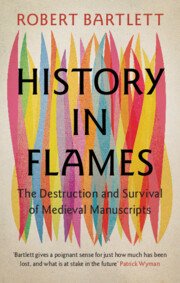
To what extent does our knowledge of the past rely upon written sources? And what happens when these sources are destroyed? Focusing on the manuscripts of the Middle Ages, History in Flames explores cases in which large volumes of written material were destroyed during a single day. This destruction didn't occur by accident of fire or flood but by human forces such as arson, shelling and bombing. This book examines the political and military events that preceded the moment of destruction, from the Franco-Prussian War and the Irish Civil War to the complexities of World War II; it analyses the material lost and how it came to be where it was. At the same time, it discusses the heroic efforts made by scholars and archivists to preserve these manuscripts, even partially. History in Flames reminds us that historical knowledge rests on material remains, and that these remains are vulnerable.
Through pinpointing how Churchill’s perceptions of aerial bombardment evolved across his political career, this chapter highlights the ambivalence and incongruence that dogged his bombing policy from its earliest days: ultimately arguing that his vacillating approach towards the Allied bombing campaign – and his eventual calculated detachment from it – was not out of character. The chapter begins by establishing his preliminary beliefs about aerial bombardment; next, it traces how his bombing theory converted into destructive reality, from ‘aerially policing’ the British Empire in the 1920s to the Combined Bomber Offensive; finally, it examines how Churchill attempted to reconcile his incriminating role in the German firestorms with a war-scarred Britain after 1945.
Walk into the Warsaw Uprising Museum in Poland’s capital, and it won’t be long before you’ll begin to feel the eeriness that comes with being surrounded by death.1 One exhibit allows visitors to cower inside a replica of the sewers where members of the Polish underground resistance used to hide while fighting the Nazis. Another exhibit shows original film footage of the destruction of Warsaw; by January 1945, after the Polish forces surrendered, 85 per cent of the city’s buildings had been flattened. A third is dedicated to the child soldiers and nurses who died fighting for freedom. Around 16,000 members of the resistance were killed fighting in the streets. But the actual death toll was much larger. During and after the uprising, an estimated 150,000 civilian men, women and children died, mostly in mass executions.
Ireland, a small state, and America, a great power, had little in common by 1938–9. But on the eve of the Second World War, security needs brought interaction between the two countries. Both states intensified military preparedness. But the London factor was influential again during negotiations when the American government agreement to sell arms and equipment was with British approval. The chapter concludes that the inevitable inclusion of Ireland in the US-defined war zone illustrated again de Valera’s misunderstanding of US foreign policy concerns. This gap between reality and aspiration was highlighted throughout the war also as Ireland adhered to neutrality while US neutrality was abandoned in 1941 proof also of the differing needs of a small vulnerable state and a great power and their respective leaders.
This chapter is about Allied plans to ‘wear down’ Greater Germany by strategic bombing, and to weaken its hold on occupied territory by encouraging an underground Resistance; some Allied leaders saw these methods as an alternative to a direct ground attack. Resources of the German war economy. Food production and war industry. The limited economic utilisation by the Germans of occupied territory. Forced (slave) labour as a key German asset. Albert Speer and the efforts to intensify the war economy. German technical innovation and ‘miracle weapons’. The Allied war economies in comparison. Development of strategic bombing by Britain and the USA. Relationship between strategic bombing and the ground campaigns. German missile programmes; the American the atomic bomb project. Occupation by Germany and collaboration with the occupiers. Development of the European Resistance, supported from Britain by the SOE. Role of the Communists in the Resistance. The Partisan movement in Russia and Yugoslavia. The effectiveness of the Resistance, relative to Allied conventional forces. Lack of large-scale opposition to Hitler in Germany, despite the July 1944 bomb plot. The resilience of the Nazi regime requires, in the end, occupation by ground armies; ‘wear down’ by underground movements and air bombing is not enough.
This chapter describes how the world’s first independent air force, led by Air Chief Marshal Sir Hugh Trenchard, reacted to the threats to its existence by maximizing the Royal Air Force’s (RAF) operational utility and financial efficiency, while simultaneously contriving a credible narrative about its future strategic potential. In pursuing these twin narratives, the RAF developed a unique culture of beliefs and taken-for-granted attitudes that thrived because of the conceptually incurious nature of the men it selected to become officers. Few of these technically able "practical men" were willing to challenge their superiors’ intuitive and speculative belief that the morale of civilian populations was especially vulnerable to bombing. Instead, like their leaders, they became consciously complicit in acceding to the societal prophecies, articulated in books, films, and newspapers, that bombing would have apocalyptic effects, and that civil societies subjected to its effects would wish to sue for peace. The chapter concludes by analyzing how this culture impeded the realization that the anticipated outcomes were not being achieved and explains how this stymied options to pursue alternative strategies.