To save content items to your account,
please confirm that you agree to abide by our usage policies.
If this is the first time you use this feature, you will be asked to authorise Cambridge Core to connect with your account.
Find out more about saving content to .
To save content items to your Kindle, first ensure no-reply@cambridge.org
is added to your Approved Personal Document E-mail List under your Personal Document Settings
on the Manage Your Content and Devices page of your Amazon account. Then enter the ‘name’ part
of your Kindle email address below.
Find out more about saving to your Kindle.
Note you can select to save to either the @free.kindle.com or @kindle.com variations.
‘@free.kindle.com’ emails are free but can only be saved to your device when it is connected to wi-fi.
‘@kindle.com’ emails can be delivered even when you are not connected to wi-fi, but note that service fees apply.
This article describes a ceremonial performance in Wellington, Aotearoa New Zealand of unique Indigenous song traditions from Australia and Amami Islands, Japan. We overview histories of sharing these traditions, provide background to the groups and their ceremonial song-dance traditions, and analyse the significance of those that they chose to perform through reflections from the ceremony leaders and performers. We argue that shared performances of Indigenous song and dance, like the Wellington Ceremony, reawaken and deepen connections between groups tracing back to Deep Time and in doing so strengthen community efforts to sustain important song-dance traditions.
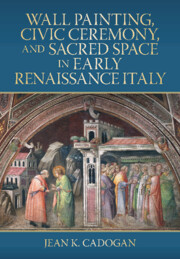
Wall Painting, Civic Ceremony and Sacred Space in Early Renaissance Italy investigates how mural paintings affirmed civic identities by visualizing ideas, experiences, memory, and history. Jean Cadogan focuses on four large mural decorations created by celebrated Florentine artists between 1377 and 1484. The paintings adorn important sacred spaces- the chapel of the Holy Belt in the cathedral of Prato, the monumental cemetery in Pisa's cathedral square, and the cathedral of Spoleto -- yet extoll civic virtues. Building on previously unpublished archival documents, primary sources, and recent scholarship, Cadogan relates the architectural and institutional histories of these sites, reconstructs the ceremonies that unfolded within them, and demonstrates how these sacred spaces were central to the historical, institutional, and religious identities of the host cities. She also offers new insights into the motives and mechanics of patronage and artistic production. Cadogan's study shows how images reflected and shaped civic identity, even as they impressed through their scale and artistry.
The final chapter demonstrates what the implications of the model developed are for one of the central figures of Late Antique society, the emperor, which plays a crucial role in current interpretations. Building on and nuancing the two current frameworks, constitutionalism and acceptance theory, the chapter argues that we can make sense of imperial power in Late Antiquity by seeing it as a virtue-based social role and tied into practices that both enabled the emperor to exercise power and constrained it. Whilst a long scholarly tradition considers that the Later Roman Empire is marked by the expansion of imperial power and an increased distance between emperor and subject, symbolized in the expansion of bureaucracy and ceremony, it is argued here that even in this period the role of the emperor was conceived of, and exercised, in interaction with other individuals and the people.
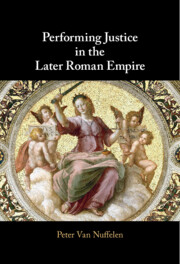
In the Later Roman Empire (AD 300–650), power seems to manifest itself mostly through legislation, bureaucracy, and an increasingly distant emperor. This book focuses instead on personal interaction as crucial to the exercise of power. It studies four social practices (petitions, parrhesia, intercession, and collective action) to show how they are much more dynamic than often assumed. These practices were guided by strong expectations of justice, which constrained the actions of superiors. They therefore allowed the socially inferior to develop strategies of conduct that could force the hand of the superior and, in extreme cases, lead to overturning hierarchical relations. Building on the analysis of these specific forms of interaction, the book argues for an understanding of late antique power rooted in the character and virtue of those invested with it.
On their first arrival in North America, Europeans entered a strange land but, most of all, an unfamiliar Indigenous economy. While capitalism functioned on a disembodied trade of goods or an abstract exchange of currency, Native societies honored the idea of the gift. On this belief in a gift economy, Indigenous people nurtured trade relations, but also diplomacy, war alliances, marriage, friendship, and peoplehood and ecology themselves. This chapter elucidates the idea and operation of an Indigenous gift economy, as it served and serves Native nations, and explores the gift’s impact on and disruption of European and American capitalist market economies. From this alternative Indigenous economic approach, as presented in anthropology as well as in traditional Indigenous thought, we turn to several representative works in American literature, from ancient myth and early testimony to autobiography, novel, and poetry, to illustrate the place of Indigenous ceremony, such as the giveaway and the potlatch, in its resistance to destructive colonial policy such as removal and allotment. Ultimately, Indigenous gift exchange economies give voice to America’s haunted money, from wampum to bucks, in which Native land was never “the gift outright.”
The Old Regime period in which war proved the norm and peace the exception witnessed the development of the modern law of nations. Questions of international law assumed a new urgency as did the status of diplomatic agents. By this time the existence of permanent embassies could still be deplored but no longer questioned, and diplomatic immunity could not be disputed, reinforced as it was by a body of precedent and tradition. This period witnessed first the expansion and later the contraction of diplomatic privilege. European aristocratic society reinforced diplomatic privilege, for the status of the ambassador was inextricably intertwined with that of the ruler. The explosive expansion of diplomats and their staff led many theorists, such as Grotius and Vattel, to analyse the evolving conventions, such as the importance of the civil immunity of the ambassador and the liability of the embassy staff. Practice tended to reinforce privileges identified as personal, that is, attached to the ambassador himself. Of these the exemption from criminal liability was perhaps the most important. Among territorially defined privileges, the right of asylum and the notorious right of quarter were first expanded and later either limited or eliminated.
Through patronage of art, architecture, and classical scholarship and through development of classically inspired rhetoric and ceremonies, the popes of the medieval and early modern periods promoted the recovery and reinterpretation of ancient Greek and Roman culture. Critics (including Roman civic leaders, Renaissance humanists, and Protestant reformers) pilloried the papal court as a symbol of corruption and cultural stagnation, but pontiffs and their advisers continued to adapt ancient and early Christian precedents to support their traditional claims to authority and to justify their new initiatives. This chapter argues that the papacy played a vital role in recovering and using the classical legacy throughout the (long) Middle Ages. It also argues that the venues and motivations for this appropriation remained more consistent than standard periodization of the medieval, Renaissance, and Counter Reformation papacy has suggested.
Papal ceremonial acted as a language through which the pope and clergy described Catholic identity, history, and moral ideals, establishing a liturgy and ceremonial practice that could be adapted to changing circumstances in Rome and beyond. Topography did not restrict papal ceremonial but enhanced it. Rather than seeing the pope as a prisoner of his ceremonial, as some stereotypes do, this chapter explores papal ceremonial as a language that articulated narratives of authority, responded to crises, and bridged gaps. From late antiquity through the twenty-first century, liturgy, politics, urban administration, and pilgrimage/tourism grew together in cities across the Christian world. As technology has eased communication and travel, the pope has sought more direct ways to speak to Catholics, yet the public maintains an interest in the papacy that grew out of fascination with its premodern ceremonial character.
Chapter 4 explores the kinds of extraordinary situations experienced in the lives of royal ladies-in-waiting, asserting their prominent roles in coronations, marriages, christenings, and other ceremonies designed to cement and further dynastic prestige, such as Order of the Garter tournaments and the Field of Cloth of Gold extravaganza. Serving the queen at important life-cycle rituals, seasonal events, and diplomatic spectacles contributed to the monarchy’s propaganda program, thereby bolstering royal authority and encouraging dynastic loyalty. When kings dispatched their daughters and sisters to foreign lands, their entourages signaled the wealth and status of the English monarchy. Highborn female attendants not only assisted the queen and female royals, but also reinforced hierarchical order by their very placement in these rituals, order that was displayed, I argue, both in processions and their particular assigned responsibilities. This chapter reveals how the spectacle of such pageantry had significant political dimensions, even if such was not always recognized by the subjects who witnessed royal processions.
This chapter discusses how historical exchanges with Makassan and other seafaring peoples from beyond the Arafura Sea remain a profound influence on Yolŋu music and culture that endures to this day. We explore how Yolŋu people, through their enduring ceremonial traditions, elaborately integrate song, dance and design elements to recount exchanges with Makassan seafarers, the boats in which they sailed, and the goods they carried. We also discuss how, since the mid-1980s, this autonomous history of Yolŋu exchanges with foreigners has been remembered and continues to inspire new forms of Yolŋu cultural expression that overtly reach out across cultures. Our approach is informed by our long history of researching Yolŋu song in all its forms and working together to document the Yolŋu public ceremonial song tradition known as manikay. Garawirrtja’s expertise is further grounded in his extensive training and practice as a Yolŋu elder and ceremonial singer of the manikay tradition, who maintains hereditary songs that recount Yolŋu contact histories with Makassan and other seafarers.
Leslie Marmon Silko’s Ceremony is an anglophone novel that aspires to heal the effects of conquest and colonization through a decolonial politics that accepts hybridity, recognizes the sensitive work involved in transitions, and embraces Indigenous knowledge. Even as Silko celebrates hybridization, transitions, and boundary-crossing, she recognizes that these processes have a dangerous side – specifically, the potentially world-destroying effects of the nuclear arms race. The novel shows that settler colonialism is one aspect of an unfolding pattern that denies limits and boundaries; with the invention of nuclear weapons, it threatens to destroy the world. Silko’s message echoes Vine Deloria, Jr.’s 1974 essay “Non-Violence in American Society,” commenting on the era’s social justice movements. Giving narrative form to Deloria’s message, in Ceremony the multiple strands of Silko’s political thought – the Native American Renaissance and decolonization, environmentalism, feminism, antiwar and anti-nuclear activism – are woven together in a story that is also a healing ceremony for readers. Ceremony aims to create a world where indigeneity emerges as the dominant force for a world at risk that is also a world in transition.
Chapter 2, ‘A Mathematical Culture: The Art of Setting Limits’ brings the reader directly into early modern metal mines. The birth of a vernacular culture of geometry is described, detailing the daily work of craftsmen and insisting on the materiality of measuring practices. Surveys, carried out in public during solemn ceremonies, were a keystone of mining laws. The chapter exposes a central hypothesis of this book: At the time, mathematical accuracy acquired a dual meaning. Measurements had to be precise enough to solve intricate technical problems, while at the same time respecting procedures codified in mining customs and laws. Far from being a mere tool, geometry was meant to ensure trust; it was ubiquitous and pervaded many aspects of a miner’s life. In the early years of the Protestant Reformation, Lutheran pastors actively fostered the rise of practical mathematics. Mathematical and religious rationality were equated, making subterranean geometry accurate in a third way, this time as an expression of divine will. The omnipresence of measurements, combined with their legal and religious recognition, ultimately conferred a higher status to the discipline.
Chapter 1, “The Politics of Shang Ritual under the Zhou” explores how the early Zhou repurposed ancestral-ritual techniques of Shang provenance to support their quest for legitimacy and lend focus to their efforts at building a new, shared identity.
Chapter 2, “The Ritual Figuration of the Zhou Kings” examines the surviving records of a few rare but important ritual techniques that posed symbolic arguments about the relationship of the Zhou king to the social order and the natural world. The details of their implementation, as the chapter shows, reveal an effort to refigure the Zhou kings as qualitatively different from their contemporaries, with a special relationship to the natural world and its products.
This chapter lays out the vibrant social networks and rich cultural activities of the elite residents of Ichijōdani, pushing back against the derivative claim that provincial capitals were mere “Little Kyotos.”
While Henry V is alive with religious echoes, its moral direction seems incoherent or unstable. Accordingly, the focus of this account is the way the play’s use of religion paradoxically intensifies and legitimates the pleasures of war. The chapter aims to explain not only how the sacral monarchy of England’s Plantagenet kings lives on in Shakespeare’s play but more importantly how in instrumentalizing it and its complex political theology, the prince outdoes his royal predecessors and the play aestheticizes war. It does this by enabling Henry to appropriate the dynamism and sheer agency imagined in Scripture’s representation of God’s freedom. The king comes out of a whirlwind and his army appears as Leviathan – all apparently in the service of the new national community. While Henry V is insistently skeptical about the value of war, its delight in the king’s virtù or violent agency complicates the irony and so denies the play any clear-cut moral critique.
There is a growing international emphasis on the importance of diversity in the judiciary and the impact of the individual in decision-making. However, it can be a challenge to gain insight into the individuals who sit on the bench. For instance, there is limited official information about the individuals who sit on the High Court of Australia. One of the rare glimpses provided by the justices themselves is their judicial swearing-in speech. Drawing on a case-study of the swearing-in speeches of High Court justices sitting between 2008 and 2016, this paper illustrates how these speeches can illuminate key demographic information about the judiciary, as well as facets of the individual rarely explored in studies of judicial diversity: personality and values. This study demonstrates how swearing-in speeches can assist with filling information gaps about judicial diversity, and so extend debates about judicial selection.
Indigenous cultures of North America confronted a problem of knowledge different from that of canonical European philosophy. The European problem is to identify and overcome obstacles to the perfection of knowledge as science, while the Indigenous problem is to conserve a legacy of practice fused with a territory. Complicating the difference is that one of these traditions violently colonized the other, and with colonization the Indigenous problem changes. The old problem of inter-generational stability cannot be separated from the post-colonial problem of sovereignty in the land where the knowledge makes sense. I differentiate the question of the value of knowledge (Part 1), and its content (Part 2). The qualities these epistemologies favor define what I call ceremonial knowledge, that is, knowledge that sustains a ceremonial community. The question of content considers the interdisciplinary research of Indigenous and Traditional Ecological Knowledge, as well as the issue of epistemic decolonization.
Chapter four turns to the staging of justice, analyzing the design and setup of the post-reform court, the presentation of the monarchy and the principles of modesty and equality in the courtroom, the representation of minorities, and the effects of legal procedures on those present in court. An emphasis is put on the pedagogical message communicated by court performances, a message designed to turn the participants into “morally sound,” law-abiding citizens.
Inside Manitou Cave in modern Alabama, nineteenth-century Cherokees carried out sacred ceremonies, recording their activities on the walls using Cherokee syllabary, a system invented in nearby Willstown by Cherokee scholar Sequoyah. Through collaboration between modern Cherokee scholars and Euro-American archaeologists, the authors report and interpret—for the first time—the inscriptions in Manitou Cave. These reveal evidence for secluded ceremonial activities at a time of crisis for the Cherokee. Pressures from the surrounding white populations disrupted the Cherokee ancient lifeways, culminating in their forcible relocation in the 1830s along the Trail of Tears.