Refine search
Actions for selected content:
41 results
13 - Eschatology
- from Part II - Theology
-
-
- Book:
- The Cambridge Companion to the Byzantine Church
- Published online:
- 16 July 2026
- Print publication:
- 06 August 2026, pp 231-249
-
- Chapter
- Export citation
10 - Mariology
- from Part II - Theology
-
-
- Book:
- The Cambridge Companion to the Byzantine Church
- Published online:
- 16 July 2026
- Print publication:
- 06 August 2026, pp 182-197
-
- Chapter
- Export citation
Divine-Hero Christology in Paul? Reading Romans 1:3–4 in Its Mythic, Religious, and Imperial Contexts
-
- Journal:
- Harvard Theological Review / Volume 119 / Issue 3 / July 2026
- Published online by Cambridge University Press:
- 06 October 2026, pp. 359-379
- Print publication:
- July 2026
-
- Article
-
- You have access
- HTML
- Export citation
VII - After Constantine
-
- Book:
- Inscriptions from the Age of Constantine
- Published online:
- 20 April 2026
- Print publication:
- 14 May 2026, pp 835-874
-
- Chapter
- Export citation
15 - Liturgy, Spirituality, and Piety
- from Part IV - Liturgy and the Life of the Churches
-
-
- Book:
- The Cambridge Companion to Christian Liturgy
- Published online:
- 19 September 2025
- Print publication:
- 09 October 2025, pp 268-282
-
- Chapter
- Export citation
Union, distinction and creaturely perfections: Petrus van Mastricht’s rejection of deification
-
- Journal:
- Scottish Journal of Theology / Volume 78 / Issue 3 / August 2025
- Published online by Cambridge University Press:
- 08 September 2025, pp. 189-201
-
- Article
-
- You have access
- Open access
- HTML
- Export citation
5 - Dubia, Part 2
- from Part II - Difficulties and Resolutions
-
- Book:
- The Humanity of Christ as Instrument of Salvation
- Published online:
- 21 August 2025
- Print publication:
- 04 September 2025, pp 151-172
-
- Chapter
- Export citation
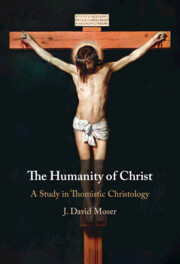
The Humanity of Christ as Instrument of Salvation
- A Study in Thomistic Christology
-
- Published online:
- 21 August 2025
- Print publication:
- 04 September 2025
5 - Sermons on the New Testament
- from Part II - Augustine’s Sermons on the Scriptures and Liturgical Feasts
-
-
- Book:
- The Cambridge Companion to Augustine's Sermons
- Published online:
- 26 May 2025
- Print publication:
- 12 June 2025, pp 98-115
-
- Chapter
- Export citation
2 - Scholarly Approaches to Physicalist Soteriology
-
- Book:
- Human Salvation in Early Christianity
- Published online:
- 09 January 2025
- Print publication:
- 23 January 2025, pp 34-65
-
- Chapter
- Export citation
3 - Athanasius
-
- Book:
- Human Salvation in Early Christianity
- Published online:
- 09 January 2025
- Print publication:
- 23 January 2025, pp 66-95
-
- Chapter
- Export citation
4 - Orthodox Foundations
- from Part II - An Emerging Story
-
- Book:
- Constructing an Incarnational Theology
- Published online:
- 09 January 2025
- Print publication:
- 23 January 2025, pp 87-113
-
- Chapter
- Export citation
4 - Hilary of Poitiers
-
- Book:
- Human Salvation in Early Christianity
- Published online:
- 09 January 2025
- Print publication:
- 23 January 2025, pp 96-129
-
- Chapter
- Export citation
10 - Constructive Approaches to the Historical Reality of Physicalism
-
- Book:
- Human Salvation in Early Christianity
- Published online:
- 09 January 2025
- Print publication:
- 23 January 2025, pp 289-306
-
- Chapter
- Export citation
Deification in Classical Greek Philosophy and the Bible
-
- Published online:
- 10 July 2024
- Print publication:
- 27 June 2024
Chapter 8 - What It Means to Be a God
-
-
- Book:
- Boethius’ ‘Consolation of Philosophy’
- Published online:
- 23 May 2024
- Print publication:
- 30 May 2024, pp 135-152
-
- Chapter
- Export citation
Chapter 5 - The Blending of Pagan and Christian Elements in Book III of the Consolatio
-
-
- Book:
- Boethius’ ‘Consolation of Philosophy’
- Published online:
- 23 May 2024
- Print publication:
- 30 May 2024, pp 82-97
-
- Chapter
- Export citation
7 - Righteousness Real and Imagined:
- from Part II - Rival Conceptions of God and Goodness:
-
- Book:
- The Cambridge Platonists and Early Modern Philosophy
- Published online:
- 09 May 2024
- Print publication:
- 16 May 2024, pp 176-210
-
- Chapter
- Export citation
6 - Is God an Arbitrary Tyrant?
- from Part II - Rival Conceptions of God and Goodness:
-
- Book:
- The Cambridge Platonists and Early Modern Philosophy
- Published online:
- 09 May 2024
- Print publication:
- 16 May 2024, pp 141-175
-
- Chapter
- Export citation
9 - Deification as Spiritual Sensation:
- from Part III - The Religious Epistemology of the Cambridge Platonists
-
- Book:
- The Cambridge Platonists and Early Modern Philosophy
- Published online:
- 09 May 2024
- Print publication:
- 16 May 2024, pp 237-268
-
- Chapter
- Export citation
