To save content items to your account,
please confirm that you agree to abide by our usage policies.
If this is the first time you use this feature, you will be asked to authorise Cambridge Core to connect with your account.
Find out more about saving content to .
To save content items to your Kindle, first ensure no-reply@cambridge.org
is added to your Approved Personal Document E-mail List under your Personal Document Settings
on the Manage Your Content and Devices page of your Amazon account. Then enter the ‘name’ part
of your Kindle email address below.
Find out more about saving to your Kindle.
Note you can select to save to either the @free.kindle.com or @kindle.com variations.
‘@free.kindle.com’ emails are free but can only be saved to your device when it is connected to wi-fi.
‘@kindle.com’ emails can be delivered even when you are not connected to wi-fi, but note that service fees apply.
War has long been a continuous reality for those forced to live through it. What may be changing today is the ease with which distant conflict enters ordinary life for those geographically removed from it. For many members of Generation Z, geopolitical tension is encountered less through formal news broadcasts than through feeds: through clips, memes, livestreams, notifications, commentary, and the repetitive logic of scrolling itself. This article argues that digital media does not create continuous war, but alters the texture through which conflict is experienced by many young people during a formative stage of life. The result is a generational condition marked by contradiction: to be highly informed yet uncertain, emotionally engaged yet exhausted, politically aware yet psychologically overwhelmed. Using moments of U.S.–Iran tension alongside broader contemporary conflicts, this essay explores how algorithmically mediated media environments shape attention, identity, and emotional life in ways that make war feel less like a distant event and more like an ambient psychological atmosphere.
How do armed actors leverage digital communication for territorial control? In violently contested urban environments (often known as “hybrid orders”), territorial control involves regulating who belongs in a specific geographical area. Enforcing these rules, in turn, requires gathering fine-grained information to evaluate threats and selectively project violence. This study illustrates how the affordances of digital communication platforms help armed actors to do so. Using a comparative ethnographic approach and open-source research methods, the article analyzes three digital intelligence-gathering practices used by criminal groups and militarized police in Fortaleza’s urban periphery (Brazil): smartphone inspections, digital information-sharing networks, and social media monitoring. The findings reveal how the structural features of digital communication platforms facilitate accessing and disseminating strategic information, which in turn introduces effectiveness, flexibility, and efficiency gains in territorial control. This suggests that digital media affordances play an important role in contemporary forms of territorial competition by armed groups.
Artificial intelligence (AI) systems already govern – they rank speech, allocate attention, filter applicants and triage claims. Technical improvements in safety and alignment do not determine whether publics will accept that governance. Legitimacy, on the sociological view used here, turns on recognition: whether power appears rule-bound, justified and situated in institutions that speak for those it governs. Social media demonstrates the problem: distribution improved even as publics questioned who sets the rules, producing recurrent conflicts grounded in missing authorization. As AI embeds upstream of more domains, the risk is repeating that crisis at larger scale – systems that perform yet lack legitimacy, inviting resistance and regulatory backlash. This Article makes legitimacy an explicit regulatory aim for AI. It identifies three persistent deficits: opacity blocks audience-understandable reasons; private actors wield public-facing authority without recognized authorization; and administrative automation strains participation, reason-giving and review. Legal tools can structure recognition. Thin legality supplies visible forms – publicity, stability, consistency – that signal non-arbitrariness. Thick legality adds public authorship, audience-facing reasons and contestation. This Article distills this into three principles: Integration seats AI rule-setting in recognized venues; Familiarity presents rules in locally credible forms; and Contestation guarantees a credible second look. Together, these convert performance into justification and justification into authority publics recognize as rightful.
Inequality is an essential concept for understanding the impact of digital media on political life. This Element offers an empirical portrait of digital political inequality globally. We find that gaps in online political information reception and engagement are prevalent worldwide and growing over time. These inequalities are related to the resources held by individuals, the experiences of groups, and the economic, democratic, and technological development of societies. Moreover, we find that digital political media use is associated with greater participation in electoral politics and belief in democracy, while at the same time lower political trust and satisfaction with political systems. Based on these findings, we offer an agenda for studying digital political inequality across societal, technological, institutional, and individual levels. Ultimately, digital media not only create walls that separate the political haves and have-nots, but also windows and doors to greater political voice and influence for the less powerful.
This article examines the Rio-based nonpartisan organization, the Marielle Franco Institute’s digital strategies to appeal to Afro-Brazilian voters. The literature reveals that most Afro-Brazilian voters do not vote along racial lines. However, scholarship also reveals that politicians make racial appeals to Afro-Brazilian voters. I argue that the MFI uses digital media to mobilize Afro-Brazilian voters to support progressive political candidates. I find that it seeks to mobilize them in four ways. The first is the Marielle Franco Agenda, an interactive platform that features progressive political candidates with similar agenda issues as Franco. Second, they highlight political candidates that are practitioners of African-derived religions. The third is that it promotes coalition politics through its collaboration with another nonpartisan organization to promote progressive candidates, and lastly, the MFI highlights candidates with a pro-Black woman aesthetic that challenges the notion that political spaces are nonblack spaces.
This chapter examines representations of wedding attire in a popular, though now defunct, feminist wedding blog, A Practical Wedding. The analysis compares two genres: posts sponsored by apparel brands and posts contributed by people about their own weddings. I argue that the two genres underline two forms of feminist personhood. On one hand, we find the rhetoric of neoliberal individuation, whereby the role of clothing is to help wearers present their best selves, wholly unfettered by others and their expectations. On the contrary, wedding accounts authored by readers-turned-contributors outline a model of clothing that is networked and connects the wearer to others alive and dead. I argue that the cleavage between these two models of dressed selfhood maps on to divergent impulses – toward individualism and being-in-relation – in contemporary feminism. Ultimately, the model of “haunting” by others that is implied by first-person accounts of dressing for the wedding provides a model for thinking about the ghosting of neoliberal feminism by relational ethics.
Should we adopt broad, anticipatory regulatory frameworks for AI to address its wide-ranging societal impacts? This Article argues that such a universal approach is misguided. Instead, it contends that we should adopt a two-track regulatory strategy that maintains agnosticism about AI’s uncertain long-term trajectory while implementing targeted interventions to address specific, documented harms in the present. The Article develops this argument through a case study of generative AI systems in digital media, examining how these technologies are reshaping the algorithmic dynamics of the public sphere. Tracing the ways in which AI-powered content generation and curation are amplifying long-standing challenges like the erosion of shared epistemic foundations, the entrenchment of echo chambers, and the concentration of informational power, the Article highlights the limitations of the EU’s horizontal AI Act and the potential of China’s more focused, domain-specific approach to regulating these harms. Drawing on this analysis, it makes the case for a hybrid governance model that combines targeted oversight of AI’s known dangers with a continuing spirit of regulatory humility and openness toward its transformative potential. In an age of rapid technological change, this balancing act offers a path beyond the false choice between reactive overregulation and reckless laissez-faire - one that remains attuned to AI’s contextual nuances while advancing the public interest.
This study focuses on a unique Facebook group: ‘Cyprus Immigrants Organisation’, whose members are mostly refugees who were once held in camps in Cyprus in the late 1940s and their descendants. The study offers a content analysis of 687 posts and comments published by group members during 2022. It reveals how a Facebook group made possible, produced, and promoted narratives of a topic that receives relatively little attention in the literature, media, and other memory spaces. The study highlights the range of memory-related content and activities within a Facebook group. We found three main activities of memory work within the group: (a) Members try to shape a coherent narrative of the events; (b) Members discuss acts of remembrance, suggesting additional activities and sharing personal initiatives; (c) Members aim to emphasise their personal connection and belonging to the Cyprus exiles’ community by sharing photographs, artwork, and documents. These memory practices, alongside processes such as gathering knowledge, sharing memories, shaping narratives, and commemorating, highlight the uniqueness of a Facebook group as a platform for memory. These kinds of activities would not be possible on such a scale without the digital environment or, more specifically, a Facebook group. With numerous narratives and collaborative knowledge gathering, the group exemplifies a democratised process of multi-generational memory work and narrative construction.
This study tested the hypothesis that caregiver scaffolding and child engagement are tightly coupled during shared book reading’s word-learning moments. It also examined whether this coupling is consistent or variable across print and digital reading media. Word-learning episodes were coded from a corpus of videorecorded shared-reading interactions between caregiver–child dyads (N = 78, children’s age range = 4;0–5;11). Results support the prediction that scaffolding and engagement are coupled during word-learning moments. This coupling was robust across reading media. Further, child age was a significant predictor of engagement. These findings confirm that engagement is a critical social interaction mechanism involved in the scaffolding process that supports word learning.
The Israeli genocide against Palestinians has revealed a new phase in global imperial politics. Western universities have become key sites at the center of these politics, necessitating new modes of scholarship and engagement with ongoing struggles for liberation. In this article, I outline the process of analyzing a dataset of the hashtag campaign #tweet_like_it’s_free from the 2021 Unity Uprising, where I turn the dataset into a poem. I propose the term “felt analysis” to describe both the sensorial attunement to the tweets and the tactile and embodied component of analyzing them. I investigate the relationship between conducting research during, about, and for a particular moment, attending to the questions: What does it mean to research digital culture in a moment when it is mobilized for resistance as well as oppression? How can we engage in scholarship around technology and resistance that not only documents and understands social movements but also creates opportunities to feel for the moment and help endure and survive it? By weaving the tweets into a poem, I document a feeling from 2021 in 2024, sharing the defiant dreams from a liberated Palestinian future to confront the violence of the present and create an opening toward liberation.
In contrast to previous studies that emphasized how resources and institutional forces influence nonprofit organizations (NPOs)’ use of information and communications technologies (ICTs), specifically on using social media for external stakeholder engagement, we examine the relationship between the organizational culture and NPOs’ use of old and new ICTs for external and internal communication. Drawing from surveys of 500 Korean NPOs, we found that cultural values and communication practices influence NPOs’ use of traditional, digital, and sharing media differently for different communication goals. NPOs with authoritarian cultures used every possible medium, including traditional media, for internal communication to improve their performance, while family-like NPOs lagged in using new ICTs. Information-transparent practices predicted more use of ICTs, whereas collaborative and democratic communication practices did not. Implications for understanding NPOs’ use of varied ICTs by considering the organizational cultures and different communication goals are discussed.
The bulk of this chapter is devoted to the family as part of a dynamic system that includes the child, but also the community and the larger society. In the latter part of the chapter we examine the role of formal schooling, neighborhoods, and media, especially online media, as socializing agents for children and adolescents.
Podcasting, with its focus on voices, remains a compelling topic for African studies research, which has historically put orality at the center of the field. Recognizing sparse audience inclusion in existing research on African podcasting, the authors conducted focus groups with listeners in urban Ghana to document consumption practices and attitudes toward this form of new orality. Using the concept “deep listening” drawn from participant comments, the researchers theorize that listeners and producers experience a form of sound-mediated, affective resonance from podcasts that utilize audience collaboration and local sonic aesthetics, linking the affordances of openness and freedom to the medium.
How language change manifests itself in the history of English is the primary focus of this volume. It considers the transmission of English though dictionaries and grammars down to the digital means found today. The chapters investigate various issues in language change, for instance what role internal and external factors played throughout history. There are several chapters dedicated to change in different areas and on different levels of language, includinginvestigations of the verbal system, of adverbs, of negation and case variation in English as well as more recent instances of syntactic change. This volume also looks atissues such as style and spelling practices which fed into emergent standard writing, and the complex issue of linguistic prescriptivism, with chapters on linguistic ideology, phonological standards and the codification of English in dictionaries. Itconcludes with a consideration of networks and communities of practice and also of the historical enregisterment of linguistic features.
This chapter will provide a foundation for the provision of quality visual arts educational experiences in early childhood and the primary years. Practical suggestions for planning a high-quality visual arts program are linked to recent theory in a way that helps you construct your own visual arts program. Visual arts concepts, language, elements and principles will be defined and explained, with examples of the progression in visual arts education from early childhood through the primary years. Practicalities such as classroom management, safety and materials are addressed and additional interactive material can be found through the icons.
This chapter draws on digital media created in and for the Australian context to show how dimensions of interculturality as a process can be manifested in contexts of teaching and learning through the creation and playing of Indigenous cultural games. It outlines four cultural design approaches that not only bring into creation interculturally produced digital media that students can engage in but are also exceptional exemplars of digital media that engage students in developing their own intercultural understandings through exploration and discussion with educators and peers. Through these examples, the chapter aims to show (1) the importance of understanding “culture” or the “intercultural” as dynamic and relational, not as something that is pre-established and “out there”; and (2) the affordances and constraints of digital technologies in engaging teachers and learners in experiencing interculturality.
In this overview of the dynamic field of MG sociolinguistics in the last four decades, we show the decisive move of the field, in the spirit of sociolinguistics in general, toward permeable boundaries with other areas of linguistics that set out to investigate language-as-action and language-in-context, as well as toward synergies with other disciplines invested in the study of society and culture. The studies we discuss show how researchers have been documenting a changing, diverse society, considering different resources and environments where language is used, and with a growing focus on digital media. These studies also reflect a shift towards sociolinguistic research that addresses social justice issues and recent socio-political crises in Greek society.
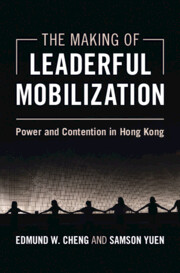
The past few decades saw the transformation of Hong Kong from a liberal enclave to a revolutionary crucible at China's offshore. The Making of Leaderful Mobilization takes you through the evolution of protests in this restive city, where ordinary citizens gradually emerged as the protagonists of contention in place of social movement organizations. The book presents a theory of mediated threat that illuminates how threat perceptions fueled shifting forms of mobilization – from brokered mobilization where organizations played guiding roles to leaderful mobilization driven by peer collaboration among the masses. Bringing together event analysis, opinion polls, interviews, and social media data, this book provides a thorough and methodical anatomy of Hong Kong's contentious politics. It unveils the processes and mechanisms of collective action that likely prevailed in many contemporary social movements worldwide. Our temporal approach also uncovers the multiple pathways reshaping hybrid regimes, underscoring their resilience and fragility.
Digital technology facilitates remote access to archaeological collections and offers an accessible platform for knowledge sharing and innovative storytelling. Here, the authors present a newly developed online museum resource co-curated by archaeologists and the descendant community in Quinhagak, Alaska.
Smartphones and social media have considerably transformed adolescents’ media engagement. Adolescents consume, create, and share media content anywhere, anytime, and with anyone, often beyond parents’ oversight. Parents try to keep track of their adolescents’ media use by employing control, surveillance, and solicitation. This chapter explores the prevalence and predictors of such monitoring strategies, and their effectiveness in managing adolescents’ media use and shaping the potential consequences of adolescents’ media use for their mental health. In addition, the chapter discusses parents’ use of digital media for monitoring adolescents’ nonmedia activities, such as the use of location-tracking applications. Overall, evidence regarding the prevalence, predictors, and effectiveness of parental media monitoring is limited and inconclusive. The chapter underscores the need for refining conceptualizations of media monitoring. Moreover, it highlights the importance of understanding the effectiveness of media monitoring within an ever-evolving digital world.