To save content items to your account,
please confirm that you agree to abide by our usage policies.
If this is the first time you use this feature, you will be asked to authorise Cambridge Core to connect with your account.
Find out more about saving content to .
To save content items to your Kindle, first ensure no-reply@cambridge.org
is added to your Approved Personal Document E-mail List under your Personal Document Settings
on the Manage Your Content and Devices page of your Amazon account. Then enter the ‘name’ part
of your Kindle email address below.
Find out more about saving to your Kindle.
Note you can select to save to either the @free.kindle.com or @kindle.com variations.
‘@free.kindle.com’ emails are free but can only be saved to your device when it is connected to wi-fi.
‘@kindle.com’ emails can be delivered even when you are not connected to wi-fi, but note that service fees apply.
Over the past 50 years, attention has intensified on Biological and Toxin Weapons Convention (BWC) Article X, which obligates states parties to provide international cooperation and assistance (ICA) and ensure the broadest accessibility of biology for peaceful purposes. In the absence of a treaty protocol and institutional support, Article X’s scope of activities and standard for compliance remain up to the interpretation of each state party. The Ninth BWC Review Conference established the Working Group on the Strengthening of the Convention (Working Group) and mandated it to address ICA, including establishing a mechanism to facilitate Article X implementation. Utilizing a mixed-methods methodology, this study characterizes the landscape of Article X and ICA perspectives among BWC delegations and other stakeholders. It identifies concrete opportunities to strengthen Article X implementation, in support of the Working Group’s efforts, including a pillar framework to illustrate alignment across an ICA mechanism’s roles, activities, and resources.
Numerous experts and activists placed hope in Christopher Nolan's Oppenheimer to reignite the conversation of nuclear disarmament and arms control. However, evidence on the persuasive effects on popular media is mixed, and studies estimating such causal effects are scarce. We draw on narrative persuasion literature to underpin the disarmament and arms control communities’ expectations of the Oppenheimer movie's impact with regards to various dimensions of nuclear disarmament and arms control. Leveraging nationally representative survey data from Italy both before and after the movie's release, we first show that younger respondents, men, and those with higher education were more likely to see the movie. Using inverse probability weighting, propensity score matching, and difference-in-difference methods, we then correct for these biases and find qualified evidence that watching the movie increased support for nuclear arms control. At the same time, the movie did not move attitudes towards unilateral nuclear disarmament, opposition to proliferation, or opposition to nuclear weapons use. Beyond sparking the conversation about the dangers of nuclear weapons, the movie did not appear to have shifted public attitudes in the direction of broader disarmament goals. Our findings not only shed light on the persuasive effects of the Oppenheimer movie and popular media more broadly, but further contribute to our understanding of public views regarding nuclear disarmament and arms control.
Backers of nuclear deterrence are thought to use strategic logic, while nuclear disarmament advocates are believed to embrace moral reasoning. Yet policy makers and diverse publics may hold both—ostensibly contradictory—preferences. Recent studies find that publics in Western democratic countries support the nuclear strikes underpinning long-standing conceptions of deterrence policy. But other scholarship indicates that these very same publics want to abolish nuclear arsenals. A lack of comparative analyses across the Global North and the Global South limits the generalizability of these claims. Does a categorical dichotomy between nuclear deterrence and disarmament really reflect global public views on the bomb? What explains a multitude of seemingly inconsistent scholarly results? In this reflection essay, we argue that deterrence and disarmament are not necessarily incompatible tools for reducing nuclear dangers. We point to several ways that individuals might simultaneously accommodate both pro- and antinuclear weapons policy positions. To investigate this proposition, we offer a new observational dataset on global nuclear attitudes from a survey we conducted in 24 countries on six continents (N = 27,250). Unlike isolated studies of these phenomena, our data strongly confirm that publics do not subscribe to categorical views of nuclear weapons. This headline finding and novel dataset open new possibilities for studying nuclear politics.
The prohibition on the use of expanding bullets was one of the first prohibitions to arise in contemporary international humanitarian law. This prohibition is not a mere historical curiosity and retains considerable importance due to the breadth of legal instruments that it gave birth to. The spirit that drove the negotiations of the 1899 First Hague Peace Conference – growing concern about the horrors created by new military technologies and their increased lethality – has continued to inspire those who wish to advance the agenda of humanitarian arms control and disarmament today. This article contributes to the literature examining weapons prohibitions by engaging with the historical diplomatic and medical literature and debates that influenced the prohibition of expanding bullets in armed conflicts. It examines the outcry against the use of these bullets, contrasts it with the interests of the States that chose to use or not use them, and traces their influence on the 1899 Hague Conference and contemporary legal instruments. In doing so, the article highlights the dual influence of ethics and military interests in the prohibition of the use of expanding bullets in armed conflicts and argues that the creation of norms is more multifaceted than typically accounted for.
On 7 July 2017 122 countries at the UN voted to approve the text of a proposed international treaty entitled ‘Draft Treaty on the Prohibition of Nuclear Weapons.‘ This article assesses the significance of broad international support for the draft treaty, the opposition to it on the part of all nine nuclear powers, and its possible contribution to nuclear disarmament.
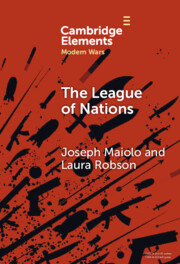
The Element challenges histories of the League of Nations that present it as a meaningful if flawed experiment in global governance. Such accounts have largely failed to admit its overriding purpose: not to work towards international cooperation among equally sovereign states, but to claim control over the globe's resources, weapons, and populations for its main showrunners (including the United States) – and not through the gentle arts of persuasion and negotiation but through the direct and indirect use of force and the monopolisation of global military and economic power. The League's advocates framed its innovations, from refugee aid to disarmament, as manifestations of its commitment to an obvious universal good and, often, as a series of technocratic, scientific solutions to the problems of global disorder. But its practices shored up the dominance of the western victors and preserved longstanding structures of international power and civilizational-racial hierarchy. This title is also available as Open Access on Cambridge Core.
Writing at the beginning of the 1990s on Australia’s disarmament and arms control policies and achievements, Trevor Findlay noted that, although a relative latecomer to the field, Australia had soon become ’an assiduous, well-respected participant ... sporting a range of considered, often imaginative policies and initiatives’. In the main, however, these efforts and initiatives were concentrated in the international arena, with little cross-over into Australia’s domestic political domain. As Findlay described it: ’There is a sense in which Australia has so far tackled, and in most cases accomplished, all the "easy" arms control tasks – those initiatives which can be taken both unilaterally and with relatively little cost to Australia or the government.’ He further added that ’apart from its technical input in the CW area, the Defence Department has so far played only a minor role in shaping Australian disarmament policy,’ and speculated that ’[t]his could change as the international disarmament agenda broadens to include conventional and high-technology weapons that Defence has or plans to acquire’.
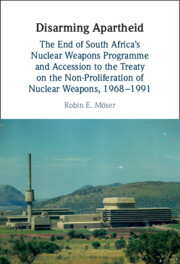
South Africa remains the only state that developed a nuclear weapons capability, but ultimately decided to dismantle existing weapons and abandon the programme. Disarming Apartheid reconstructs the South African decision-making and diplomatic negotiations over the country's nuclear weapons programme and its international status, drawing on new and extensive archival material and interviews. This deeply researched study brings to light a unique disarmament experience. It traces the country's previously neglected path towards accession to the Treaty on the Non-Proliferation of Nuclear Weapons (NPT). Rather than relying primarily on US government archives, the book joins the burgeoning field of national nuclear histories based on unprecedented access to policymakers and documents in the country studied. Robin E. Möser, in addition to providing access to important new documents, offers original interpretations that enrich the study of nuclear politics for historians and political scientists.
Multilateral diplomacy is defined as the management of relations among three or more nation-states, both within and outside international organizations. The main value of multilateral diplomacy is its ability to reduce the complexity of international relations in everyday life, including traveling, sending mail and solving crimes across borders. It produces agreements that are much more practical and less costly than a web of bilateral arrangements between individual countries, and it sets common standards that enable collaboration among scientists, engineers and businesses around the world. In addition to formal international organizations, multilateral diplomacy is practiced in informal or ad hoc groups and coalitions. There are few things in multilateral diplomacy more important than who writes the rules, who sets the agenda, and who holds the pen during negotiations.
Studies of nuclear politics and IR more widely have failed to seriously engage with what future nuclear-disarmed worlds would or should look like. I respond to this failure of imagination by advocating for a project of ‘post-nuclear worldmaking’. Counter-hegemonic political efforts around the 2017 Treaty on the Prohibition of Nuclear Weapons (TPNW) are a useful first step to ‘connecting’ our nuclear-armed present to a disarmed future. However, they do not tell us much about the broader characteristics of this future. Moreover, they often fail to transcend conservative assumptions of plausibility and probability, which unnecessarily exclude what might be called ‘utopian’ visions of alternative futures. In the context of mounting uncertainty generated by threats to planetary security, post-nuclear worldmaking can assist in drawing strong connections between the present and radically different future worlds, which should not be discounted as improbable or impossible. This project enables a widening of the scope of nuclear futures and policy options which are considered thinkable, as well as contributing a future-facing, prefigurative element of politics which complements existing counter-hegemonic strategy. It highlights the unavoidable obligation for nuclear scholars to think in utopian terms.
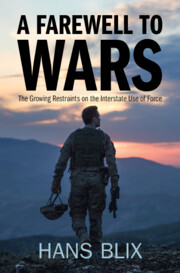
A farewell is given to something that is leaving. After thousands of years of freedom for nations to go to war, new proximity, interdependence, risks of nuclear war have led them to exercise restraints and to commit themselves to the UN Charter and the requirement to abandon interstate uses of force. This book concludes that while states will continue as always to compete, the great powers are saying farewell to direct interstate wars. For over 75 years there have been no wars between them and no nuclear weapon has been used. The Charter as rule-based international order has often been violated and the veto has often stood in the way of action. Yet, the General Assembly has asserted the order and declared that it does not recognize illegal annexations. The nuclear arsenals remain and pose existential risks to humanity. At the same time, the fear that they would be used in second strikes makes it implausible that any nuclear-armed states would initiate hostilities that could risk leading to nuclear war. Russia’s aggression in Ukraine is seen as out of tune with the twenty-first century – an aberration. The growing interdependence of states is creating restraints against causing ruptures and, at the same time, enables states to use crippling economic measures as substitutes for the use of force. In 1962, the Cuban missile crisis shocked the parties and prompted them to use diplomacy to avert the acute risk of nuclear war. Today, one may speculate if the war in Ukraine and threats to the human environment might shock nations to turn to diplomacy and disarmament and switch to the defence of the threatened human environment a major part of the some 2 trillion dollars that they now spend annually to defend themselves against each other. For this to become reality, an engaged public mind would be as important as it was against slavery and nuclear weapons.
Disarmament – in the sense of eliminating weapons – has not been a success as a means of restraining the use of force between states. Significant discarding of conventional weapons took place in Europe after the Cold War under an agreement (CFE) between NATO and the Warsaw Pact. Large scrapping of whole categories of tactical nuclear weapons also occurred through parallel commitments under the so-called Presidential Initiative by Presidents Bush and Gorbachev. However, the subject of ‘general and complete disarmament’ that has long been on the international agenda, has hardly even been taken seriously. And while the non-nuclear weapon states allowed the Non-Proliferation Treaty of 1970 to be prolonged indefinitely, the five nuclear weapons states parties have failed to live up to their obligation to agree on disarmament. A significant failure is also that the US and some other nuclear weapon states have failed to ratify the Comprehensive Test Ban Treaty concluded in 1996. The US and the Soviet Union/Russia have sought – not disarmament but – important strategic stability through ‘arms control’ in bilateral agreements. In 2021, they prolonged the START agreement setting limits on the number of American and Russian strategic nuclear weapons and carriers and providing for important mutual verification.
While the focus of the book is on the interstate use of force post-WWII, this chapter holds a rear mirror and offers a perspective of evolution of restraints that started long before states came into being. It recounts how human societies over the centuries became states free from widespread internal use of armed force and how great powers sought to avoid major armed conflicts through policies of balance of power and multilateral conferences. It describes how they developed common rules by concluding conventions and built institutions such as the League of Nations and the United Nations to create a rule-based order and mechanisms and methods to prevent the interstate use of force.
Since World War II, there has been a trend towards fewer wars, the Russian invasion of the Ukraine standing as a major 'aberration'. With decades of experience as an international lawyer, diplomat and head of UN Iraq inspections, Hans Blix examines conflicts and other developments after World War II. He finds that new restraints on uses of force have emerged from fears about nuclear war, economic interdependence and UN Charter rules. With less interest in the conquest of land, states increasingly use economic or cyber means to battle their adversaries. Such a turn is not free from perils but should perhaps be welcomed as an alternative to previous methods of war. By analysing these new restraints, Blix rejects the fatalistic assumption that there will always be war. He submits that today leading powers are saying farewell to previous patterns of war, instead choosing to continue their competition for power and influence on the battlefields of economy and information.
This chapter discusses how states ought to behave in tiems of armed conflict, highlighting the role of such mechanisms as proportionality and military necessity
The enforced disarmament of Germany enshrined within the Treaty of Versailles was a cornerstone of the post-war order. It provided the essential foundation upon which all other calculations regarding security on the European continent were based. The problem was how to enforce it. Three inter-allied control commissions would have free access throughout German territory to monitor the implementation of the land, sea and air provisions, with all their costs to be borne by Germany. The land disarmament clauses provoked the most controversy and anxiety. Serious difficulties confronted the Allied inspectors on the Inter-Allied Military Control Commission (IMCC) trying to judge the good faith of a government, military and indeed people acting under duress. More significantly, British and French authorities came to different views on the purpose and focus of disarmament. These differences shaped the work of the IMCC, hindered the shared understandings necessary to develop a stable disarmament order, and limited the capacity of the League in the later 1920s to broaden disarmament agreements.
This chapter provides an overview of the complex and continuously evolving disarmament, demobilization, and reintegration (DDR) programs in Colombia. Colombia has been experimenting with DDR for decades in an attempt to create a “post-conflict” environment amid ongoing armed conflict. As deserters are pressured to provide key intelligence in exchange for benefits, these programs are central to the government’s strategic framing that discredits guerrilla ideologies. In the early 2000s, the Colombian government partnered with a high-end marketing firm to entice guerrillas to leave their groups, with glossy promises of protection, income, and reunion with family members. However, most of these promises are patently false and leave many ex-combatants at risk of violent repercussions from their former groups and further disillusioned with the government. Starting with ad hoc individual demobilizations, to the more formalized process of demobilizing the AUC paramilitaries in 2003–2006, to the expansion of programs for deserters and finally, to the collective demobilization of the FARC in 2016, this chapter reviews the evolution and controversies around these various processes.
The chapter covers Germany’s perspective on the use of force, armed conflict and international humanitarian law, and arms control and disarmament. The first part addresses Germany’s position on the US killing of Iranian General Soleimani, Germany condemning Iranian missile attacks on US bases in Iraq and Germany refining the right of sustainable self-defence. The second part shows the German Federal Court of Justice reaffirming that there is no justification in international law for attacks by the Kurdistan Worker’s Party, the German government’s stand on foreign troop presence in Syria, Germany’s stand on the law of occupation regarding US forces in Syria, Germany considering Israeli settlement activities in the Occupied Palestinian Territories illegal, Germany’s view on drones, the Federal Constitutional Court affirming only States can claim compensation for violations of international humanitarian law, and the Federal Administrative Court ruling the US may continue to use its base in Germany. The third part covers Germany’s criticism of US anti-personnel landmine policy and Germany’s condemnation of North Korean missile tests.