To save content items to your account,
please confirm that you agree to abide by our usage policies.
If this is the first time you use this feature, you will be asked to authorise Cambridge Core to connect with your account.
Find out more about saving content to .
To save content items to your Kindle, first ensure no-reply@cambridge.org
is added to your Approved Personal Document E-mail List under your Personal Document Settings
on the Manage Your Content and Devices page of your Amazon account. Then enter the ‘name’ part
of your Kindle email address below.
Find out more about saving to your Kindle.
Note you can select to save to either the @free.kindle.com or @kindle.com variations.
‘@free.kindle.com’ emails are free but can only be saved to your device when it is connected to wi-fi.
‘@kindle.com’ emails can be delivered even when you are not connected to wi-fi, but note that service fees apply.
Although the first thing one learns about the 'Byzantine Empire' is that it was really the eastern Roman empire, scholars have preferred to call it 'Byzantine' in a repudiation of the self-conception and emic vocabulary of the inhabitants of that polity. The terminology of 'Byzantium' artificially severs the 'medieval' eastern Roman empire from its 'classical' roots allowing for the fundamentally Eurocentric schematization of history into 'ancient,' 'medieval,' and 'Renaissance' periods. 'Byzantine' is not a benign term of art but has served a variety of political and historiographical agendas including maintaining nationalist visions of ethnic continuity, creating precedents for communism, enabling politics of nostalgia for Orthodox dominion, and constructing visions of western European superiority and masculinity that justify colonialism. By exploring these intellectual legacies of 'Byzantium,' and the benefits of conceptualizing Roman history as an unsevered whole, this Element exhorts scholars to let go of the 'Byzantine' misnomer.
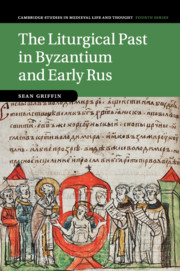
The chroniclers of medieval Rus were monks, who celebrated the divine services of the Byzantine church throughout every day. This study is the first to analyze how these rituals shaped their writing of the Rus Primary Chronicle, the first written history of the East Slavs. During the eleventh century, chroniclers in Kiev learned about the conversion of the Roman Empire by celebrating a series of distinctively Byzantine liturgical feasts. When the services concluded, and the clerics sought to compose a native history for their own people, they instinctively drew on the sacred stories that they sang at church. The result was a myth of Christian origins for Rus - a myth promulgated even today by the Russian government - which reproduced the Christian origins myth of the Byzantine Empire. The book uncovers this ritual subtext and reconstructs the intricate web of liturgical narratives that underlie this foundational text of pre-modern Slavic civilization.
Recommend this
Email your librarian or administrator to recommend adding this to your organisation's collection.