Refine search
Actions for selected content:
7 results
Human(e) among the Humanoids
- Part of
-
- Journal:
- Public Humanities / Volume 2 / 2026
- Published online by Cambridge University Press:
- 05 October 2026, e160
-
- Article
-
- You have access
- Open access
- HTML
- Export citation
Post-biographical dignity in the age of artificial intelligence: Narrative, ePROMs and ethical challenges in end-of-life care
-
- Journal:
- Palliative & Supportive Care / Volume 23 / 2026
- Published online by Cambridge University Press:
- 27 October 2025, e192
-
- Article
-
- You have access
- Open access
- HTML
- Export citation
Technology in Espionage and Counterintelligence: Some Cautionary Lessons from Armed Conflict
-
- Journal:
- Ethics & International Affairs / Volume 37 / Issue 2 / Summer 2023
- Published online by Cambridge University Press:
- 29 August 2023, pp. 147-160
-
- Article
-
- You have access
- Open access
- HTML
- Export citation
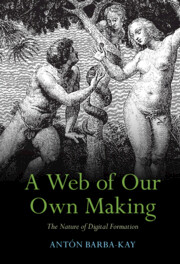
A Web of Our Own Making
- The Nature of Digital Formation
-
- Published online:
- 04 May 2023
- Print publication:
- 11 May 2023
TECHNOLOGY AND TRANSITIONAL JUSTICE
-
- Journal:
- Social Philosophy and Policy / Volume 38 / Issue 2 / Winter 2021
- Published online by Cambridge University Press:
- 15 June 2022, pp. 170-190
- Print publication:
- Winter 2021
-
- Article
-
- You have access
- Open access
- HTML
- Export citation

Ethics and Engineering
- An Introduction
-
- Published online:
- 14 May 2021
- Print publication:
- 27 May 2021
DATING THROUGH THE FILTERS
-
- Journal:
- Social Philosophy and Policy / Volume 37 / Issue 2 / Winter 2020
- Published online by Cambridge University Press:
- 04 May 2021, pp. 237-248
- Print publication:
- Winter 2020
-
- Article
-
- You have access
- Open access
- HTML
- Export citation
