To save content items to your account,
please confirm that you agree to abide by our usage policies.
If this is the first time you use this feature, you will be asked to authorise Cambridge Core to connect with your account.
Find out more about saving content to .
To save content items to your Kindle, first ensure no-reply@cambridge.org
is added to your Approved Personal Document E-mail List under your Personal Document Settings
on the Manage Your Content and Devices page of your Amazon account. Then enter the ‘name’ part
of your Kindle email address below.
Find out more about saving to your Kindle.
Note you can select to save to either the @free.kindle.com or @kindle.com variations.
‘@free.kindle.com’ emails are free but can only be saved to your device when it is connected to wi-fi.
‘@kindle.com’ emails can be delivered even when you are not connected to wi-fi, but note that service fees apply.
Chapter 2 examines the positionality of Africa in China’s larger pursuit of image and recognition. Drawing on high-level official speeches, academic and policy writings, as well as on selective interviews with China–Africa experts in Beijing and Shanghai, the chapter shows China’s dualistic visions for Africa. It is at once treated as an important pathway for China’s construction of its global image as a major responsible power, but also as a sensitive context in competing for narratives with the West. China’s activities in Africa are frequently the target of Western criticisms that feed into the larger Western narrative of the “China threat.” Chinese scholars and experts, in turn, advocate for both offensive and defensive image-making in Africa – strengthening its diplomatic reach and debunking Western narratives on neocolonialism and imperialism.
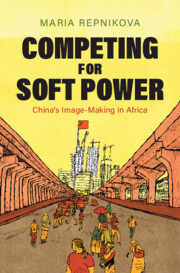
Through the critical case study of Ethiopia, Maria Repnikova examines the ambitious but disjointed display of Chinese diplomatic influence in Africa. In doing so, she develops a new theoretical approach to understanding China's practice of soft power, identifying the core mechanisms as tangible enticement with material and experiential offerings, ideational promotion of values, visions, and governance practices, and censorial power over the production and dissemination of China narratives. Through in-depth field work, including interviews and focus groups, Repnikova builds a clear picture of the uneven implementation and reception of this image-making, in which Chinese messengers can improvise official agendas, and Ethiopian recipients can strategically appropriate and negotiate Chinese power. Contrary to popular claims about China replacing the West in the Global South, this innovative research reveals the successes, but also the inconsistencies and limitations of Chinese influence, as well as the ever-present shadow of the West in mediating soft-power encounters.
A small group of altars to the Lares Augusti, set up by the vicomagistri of Rome’s urban neighbourhoods in the Augustan period, provides examples of imperial imagery produced by patrons of low social status. Their decoration shows the early effects of new Augustan motifs, but they are not merely examples of imagery trickling down from an original, central prototype. The patrons of these altars adapted and even invented images to express their relationship with the princeps for a local audience, and for viewers the altars were themselves sources of imagery, no less ‘official’ than any other source.
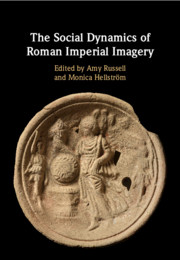
Images relating to imperial power were produced all over the Roman Empire at every social level, and even images created at the centre were constantly remade as they were reproduced, reappropriated, and reinterpreted across the empire. This book employs the language of social dynamics, drawn from economics, sociology, and psychology, to investigate how imperial imagery was embedded in local contexts. Patrons and artists often made use of the universal visual language of empire to navigate their own local hierarchies and relationships, rather than as part of direct communication with the central authorities, and these local interactions were vital in reinforcing this language. The chapters range from large-scale monuments adorned with sculpture and epigraphy to quotidian oil lamps and lead tokens and cover the entire empire from Hispania to Egypt, and from Augustus to the third century CE.
Recommend this
Email your librarian or administrator to recommend adding this to your organisation's collection.