To save content items to your account,
please confirm that you agree to abide by our usage policies.
If this is the first time you use this feature, you will be asked to authorise Cambridge Core to connect with your account.
Find out more about saving content to .
To save content items to your Kindle, first ensure no-reply@cambridge.org
is added to your Approved Personal Document E-mail List under your Personal Document Settings
on the Manage Your Content and Devices page of your Amazon account. Then enter the ‘name’ part
of your Kindle email address below.
Find out more about saving to your Kindle.
Note you can select to save to either the @free.kindle.com or @kindle.com variations.
‘@free.kindle.com’ emails are free but can only be saved to your device when it is connected to wi-fi.
‘@kindle.com’ emails can be delivered even when you are not connected to wi-fi, but note that service fees apply.
How do political institutions shape what courts do? This article develops a theory of judicial regime maintenance and argues that courts reproduce contested institutional settlements in systematically different ways. Comparing the U.S. H-2 and H-1B labor migration programs, I show how class conflict produces distinct statutory and regulatory frameworks that structure subsequent litigation. In dense regimes, courts regularize policy through recurring judicial review. In thinner and more permissive regimes, courts preserve existing arrangements through insulation. Collectively, these forms of judicial regime maintenance contribute to institutional lock-in and path dependence by making contested political settlements increasingly difficult to alter over time.
Chapter 7 studies how Kasımpaşa, nearby the Arsenal, transformed into working-class neighborhoods, focusing on the complicated connections between migration networks, labor coercion, industrial production, and urban modernization.Utilizing wage and population records, it demonstrates how shipbuilding was central to the district’s demography and culture, and how regional and occupational networks were significant in settlement patterns. It investigates the connections between forced labor draft (particularly from the Black Sea coasts and Alexandria/Egypt), the increasing visibility of bachelors, the settlement of working-class families, and the urban policies and elite perceptions towards the district. It investigates the social, cultural, and economic divergence between Kasımpaşa and the adjacent Galata-Pera axis in Istanbul, the epicenter of urban reforms in the Tanzimat Era. It highlights the emergence of a working-class culture, and analyzes the proletarian experiences of working-class families and the increasing contention between working-class men and women and the Ottoman state, by focusing particularly on strikes and petitioning.
Chapter 6 analyses the connections between trans-imperial labor migration and Ottoman industrial and urban modernization in the nineteenth century. In a context marked by the mechanization of industrial production through technology transfer, the increasing political-economic ties between the Ottoman and British states, and the scarcity of workers with mechanical skills in Istanbul, hundreds of British industrial workers migrated to Istanbul to work mostly in the arsenal, as well as some other state factories. This chapter narrates the history of these workers and the community they established in Hasköy beginning with the mechanization efforts in the 1830s until the economic crisis in the mid-1870s. It analyses the larger context of British workers’ migration from Britain, their relations with the Ottoman state officials and local workers, and their experiences in the workplace and the city. It demonstrates how their contentious relationship and effective struggles pushed the state authorities to deploy skilled military workers, who were the products of the processes described in the previous chapter, to decrease and eliminate its dependence on them.
The introduction points out that changing human presence in the Pacific affected Japanese politics throughout the nineteenth century. In particular, the whaling boom of the 1820s to 1840s caused security anxieties among policymakers, while Japanese whalers by mid-century struggled with declining catch rates. Building on scholarship from Oceania, the introduction suggests thinking of Japan not as an island, but as a “Sea of Islands,” a terraqueous zone awash in currents such as the Kuroshio south of Honshu that allocate warmth, humidity, and nutrients and create a specific, though fluid, offshore geography in which consequential historical conflicts and competitions unfold. It lays out a set of questions that emerge from such framing and suggests conceptualizing the history of the Kuroshio’s catchment area as an oceanic frontier. This brings the historical significance of ocean, islands, and human travelers beyond the traditional human habitat to the fore. Since the seventeenth century, ongoing attempts at controlling this frontier has informed business practices and expansionist ideologies of Japan.
This contribution explores the non-aligned era labor migration of Yugoslav men to postcolonial Zambia. Based on oral history and archival research conducted in Lusaka and Belgrade, it seeks to provide a gendered account of Yugoslavs negotiating their role as white Europeans in a postcolonial milieu and the ways in which Zambian colleagues understood Yugoslavs to have positioned themselves. Drawing upon contemporary social anthropological research from post-Yugoslav space, I argue that two modes of masculinities were in simultaneous operation and can help to make sense of the tensions inherent in the role of Yugoslav male workers in Zambia. An adventuring young Yugoslav man (frajer) might have driven fast, drunk heavily, and boasted about sexual conquests, but according to the motif of the “father,” the same person would also understand himself as a provider, whose responsible, serious, and protective characteristics would be used in assisting Zambians to develop as industrial workers.
A principal obstacle to protecting forced migrants is a legal regime that sharply distinguishes refugees from other migrants. But responses to migration are badly hobbled if they rely on a belief that this refugee–migrant line is clear. It would be a grave mistake to think that any country can dismiss forced migrants who reach its borders but fall outside the refugee definition. The disregard of displaced and suffering people is an unacceptable affront to human dignity. One way to rethink the protection of forced migrants is to understand that forced migrants are not just as survivors in flight, but multidimensional people who will shape the societies where they find protection. Just as it is essential to avoid the deceptive simplicity of a line between refugees and other migrants, it is also essential to consider opening up labor migration pathways to forced migrants who don’t qualify as refugees. Protection may also mean offering shelter that is provisionally temporary but available to a greater number of people. These two approaches to protection – coordination with labor migration and provisionally temporary protection – must be in addition to core protections based on the 1951 Refugee Convention.
According to Türkiye’s Ministry of Foreign Affairs, there are approximately 6.5 million Turkish people living abroad. With national communities in more than seventy nations, the Turkish diaspora has a global reach. This chapter examines Türkiye’s relations with its national communities abroad. Over the decades, Türkiye reimagined its relationship with its citizens abroad, which in turn allowed national communities abroad to reimagine their home state. In the early years of labor migration, Türkiye focused on economic benefits such as remittances. Later on, Ankara noticed the public policy potential of national communities living abroad. With widening diplomatic support and an increase in selective cultural engagement, Türkiye expanded its reach to overseas communities. While diplomatic services benefited all, some forms of cultural support targeted conservative populations. Domestic security concerns also led to an interest in understanding the political leanings of the diaspora.
Indonesia has long been the country of origin for millions of migrant workers. Indonesian men and women have left their homes in search of work to provide a better life for themselves and their families. Most migrant workers are in semi-skilled or unskilled positions in fields such as agriculture, construction, manufacturing, and domestic work, which are mostly low-wage and difficult jobs. There are large numbers of Indonesians in Asia, such as in Malaysia, Singapore, Taiwan, and Hong Kong, and in wealthy countries in the Persian Gulf, such as Saudi Arabia, Kuwait, and the United Arab Emirates. Migrant workers leave Indonesia both through official, legal channels, as well as through illegal, unofficial channels. These workers are often referred to as “irregular” migrants. Migrants are often treated poorly and are found in dangerous, undesirable jobs. The Indonesian government is increasingly compelled to try and address abuses of their citizens. The Indonesian government is highly attuned to the treatment of its citizens abroad and has embarked on many measures to try and improve their safety overseas. Ultimately, the government has seen some successes at protecting compatriots, but continues to face significant challenges in doing so for a larger number of their workers overseas.
Migration destabilized family life, gender, and sexuality. Whereas most Turkish guest workers traveled alone during the formal recruitment period (1961–1973), West Germany’s subsequent policy of family reunification sparked the increased migration of spouses and children. This chapter shows that, although migrants developed strategies to maintain connections to home, separation anxieties and fears of abandonment loomed. The departure of able-bodied young workers strained local economies, upended gender roles, and separated loved ones, sparking tensions at home: were guest workers sending enough money home, communicating enough, and remaining faithful to spouses? In Germany, reports about sex between male guest workers and German women fueled Orientalist tropes about “foreigners,” perpetuated stereotypes about Turkish men’s propensity toward violence, and stoked fears about the transgression of national and racial borders. Women left behind worried that their husbands would commit adultery while abroad. Guest workers’ children were viewed simultaneously as victims and threats: some stayed behind in Turkey, others were brought to Germany, and thousands of “suitcase children” (Kofferkinder) repeatedly moved back and forth between the two countries with their bags perpetually packed. As physical estrangement evolved into emotional estrangement, the perceived abandonment of the family came to represent the abandonment of the nation.
The book begins in the Turkish beach town of Şarköy, home to a community of first- and second-generation return migrants who were interviewed for this book. These returnees are just some of the millions of people who have journeyed back and forth between Turkey and Germany for over 60 years. The introduction lays out the book’s four core arguments, which together reveal that Turkish-German migration history is far more dynamic than typically told. First, return migration was not an illusion or unrealized dream but rather a core component of all migrants’ lives, and migration was not a one-directional event but rather a transnational process of reciprocal exchange that fundamentally reshaped both countries’ politics, societies, economies, and cultures. Second, migration introduced new ambivalence into European identities: although Germans assailed Turks’ alleged inability to integrate, they had integrated enough to be criticized in Turkey as “Germanized Turks” (Almancı). Third, examining West German efforts to “kick out” the Turks in the 1980s exposes the reality of racism in the liberal, democratic Federal Republic of Germany. Finally, including Muslims and Turks in European history expands our idea of what “Europe” is and who “Europeans” are.
Challenging the myth of non-return, this chapter shows that, by the 1970s, many guest workers did want to return to Turkey. But instead of support, they encountered opposition from the Turkish government. In the 1970s, the link between return migration and financial investments dominated bilateral discussions between Turkey and West Germany. After the Oil Crisis, West Germany devised bilateral policies to promote remigration. Turkey, then mired in unemployment, hyperinflation, and debt, actively resisted those efforts. The Turkish government realized that guest workers played a significant role in mitigating the country’s economic crisis. To repay its foreign debt, Turkey needed guest workers’ remittance payments in high-performing Deutschmarks. If guest workers returned to Turkey, then that stream would dry up. Turkish officials thus strove to prevent mass return migration at all costs – even when it contradicted guest workers’ interests. These tensions also manifested in Turkey’s charging of exorbitant fees for citizens abroad who sought exemptions from mandatory military service, prompting young migrants to create an activist organization that critiqued this policy. The knowledge that they were unwanted in both countries widened the rift between the migrants and their home country, which disparaged them as “Germanized” yet relied on them as “remittance machines.”
Historians have tended to view postwar labor migration, including the Turkish-German case, as a one-directional story whose consequences manifested within host country borders. This chapter complicates this narrative by arguing that Turkish migrants were mobile border crossers who traveled as tourists throughout Western Europe and took annual vacations to their homeland. These seasonal remigrations entailed a three-day car ride across Central Europe and the Balkans at the height of the Cold War. The drive traversed an international highway (Europastraße 5) extending from West Germany to Turkey through Austria, socialist Yugoslavia, and communist Bulgaria. Migrants’ unsavory travel experiences along the way underscored East/West divides, and they transmuted their disdain for the “East” onto their impoverished home villages. Moreover, the cars and “Western” consumer goods they transported reshaped their identities. Those in the homeland came to view the Almancı as superfluous spenders who were spending their money selfishly rather than for the good of their communities. Overall, the idea that a migrant could become German shows that those in the homeland could intervene from afar in debates about German identity amid rising racism: although many derided Turks as unable to integrate, they had integrated enough to face difficulties reintegrating into Turkey.
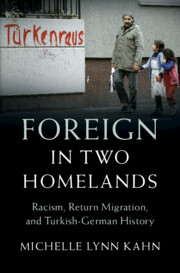
What happens when migrants are rejected by the host society that first invited them? How do they return to a homeland that considers them outsiders? Foreign in Two Homelands explores the transnational history of Turkish migrants, Germany's largest ethnic minority, who arrived as 'guest-workers' (Gastarbeiter) between 1961 and 1973. By the 1980s, amid rising racism, neo-Nazis and ordinary Germans blamed Turks for unemployment, criticized their Muslim faith, and argued they could never integrate. In 1983, policymakers enacted a controversial law: paying Turks to leave. Thus commenced one of modern Europe's largest and fastest waves of remigration: within one year, 15% of the migrants—250,000 men, women, and children—returned to Turkey. Their homeland, however, ostracized them as culturally estranged 'Germanized Turks' (Almancı). Through archival research and oral history interviews in both countries and languages, Michelle Lynn Kahn highlights migrants' personal stories and reveals how many felt foreign in two homelands. This title is also available as Open Access on Cambridge Core.
As a part of the conversation in the forum “Austria and the Czech Republic as Immigration Countries: Transnational Labor Migration in Historical Comparison” this article revisits the history of refugees in the Bohemian Lands and Czechoslovakia, from World War I until the occupation by Nazi Germany in 1939. Taking stock of existing research, it suggests alternative lines of thinking about the management of migrants' labor and contributes to the wider discussion about how to conceptually combine refugee studies and research on labor migration. For analytical purposes, it focuses on three distinct state approaches to managing refugee labor that often existed in parallel: mobilization of refugee labor in a crisis situation, the support of labor as a pathway to future citizenship, and the denial of work as a sign of statelessness. These three approaches show how refugees' work impacted their status, communicated ideas about the future, and reproduced hierarchies defined by ethnicity, class, or political persuasion.
This chapter surveys the history of labor in the Edo period. It begins by analyzing how merchant, samurai, and peasant households organized and mobilized working people, including shop clerks, building superintendents, apprentices, maidservants, sumo wrestlers, samurai retainers, wet nurses, and farmhands. It then moves to consider groups that mobilized labor outside the household, such as boardinghouses and gangster organizations. Along the way, it considers gendered divisions of labor, as well as the relationship between productive and reproductive labor, which could be paid or unpaid, pursued inside or outside kinship structures. Overall, the chapter argues that although households continued to be important in consolidating and deploying labor, an older form in which labor was controlled chiefly by samurai overlords working through status groups gradually gave way to a more diverse, specialized, and highly mobile labor market.
This chapter examines the role of the International Organization for Migration (IOM) in global migration governance and its implications for migrant workers’ rights and well-being. As global lead migration agency for the U.N. system, is well-positioned to influence whether and how States address the significant gaps in international migration law and institutions that enable the continued exploitation and abuse of migrant workers worldwide. This chapter explores IOM’s potential to advance migrant workers’ rights by examining an IOM initiative explicitly established to do so: IOM’s International Recruitment Integrity System’s (IRIS), which seeks to promote ethical cross-border recruitment. IOM’s approach tends to prioritize increasing labor migration to harness “the developmental potential of migration” – but too often at the cost of migrants’ rights. Moreover, IOM ultimately encourages further privatization of area of governance that experts—and, indeed, ethical recruiters themselves—believe requires, instead, strong state involvement in order to meaningfully advance migrant workers’ rights protection.
Volume 1 of The Cambridge History of Global Migrations documents the lives and experiences of everyday people through the lens of human movement and mobility from 1400 to 1800. Focusing on the most important typologies of preindustrial global migrations, this volume reveals how these movements transformed global paths of mobility, the impacts of which we still see in societies today. Case studies include those that arose from the demand for free, forced, and unfree labor, long- and short-distance trade, rural/urban displacement, religious mobility, and the rise of the number of refugees worldwide. With thirty chapters from leading experts in the field, this authoritative volume is an essential and detailed study of how migration shaped the nature of global human interactions before the age of modern globalization.
Volume 2 of The Cambridge History of Global Migrations presents an authoritative overview of the various continuities and changes in migration and globalization from the 1800s to the present day. Despite revolutionary changes in communication technologies, the growing accessibility of long-distance travel, and globalization across major economies, the rise of nation-states empowered immigration regulation and bureaucratic capacities for enforcement that curtailed migration. One major theme worldwide across the post-1800 centuries was the differentiation between “skilled” and “unskilled” workers, often considered through a racialized lens; it emerged as the primary divide between greater rights of immigration and citizenship for the former, and confinement to temporary or unauthorized migrant status for the latter. Through thirty-one chapters, this volume further evaluates the long global history of migration; and it shows that despite the increased disciplinary systems, the primacy of migration remains and continues to shape political, economic, and social landscapes around the world.
In Somalia the boom in labor remittances inflows fueled a different type of informal economy. More specifically, while the oil boom period reduced the Somali state’s ability to regulate the economy as in Egypt and Sudan, the consequences of this development differed. In Somalia informal financial networks facilitated a thriving commercial sector comprised of firms oriented around clan families. It was not religious or class affiliations, but rather ethnic mobilization and conflict that became the most salient. This difference was due to two factors: the dearth of formally organized institutions (i.e., official banks, and publicly registered enterprises); and the fact that President Siad Barre pitted one clan against another in his search for legitimacy and financed a patronage system excluding clans and constituencies that opposed his rule. Thus, with the expansion of the parallel economy, the politics of ethnicity and personalistic networks quickly eclipsed the power of the state.