To save content items to your account,
please confirm that you agree to abide by our usage policies.
If this is the first time you use this feature, you will be asked to authorise Cambridge Core to connect with your account.
Find out more about saving content to .
To save content items to your Kindle, first ensure no-reply@cambridge.org
is added to your Approved Personal Document E-mail List under your Personal Document Settings
on the Manage Your Content and Devices page of your Amazon account. Then enter the ‘name’ part
of your Kindle email address below.
Find out more about saving to your Kindle.
Note you can select to save to either the @free.kindle.com or @kindle.com variations.
‘@free.kindle.com’ emails are free but can only be saved to your device when it is connected to wi-fi.
‘@kindle.com’ emails can be delivered even when you are not connected to wi-fi, but note that service fees apply.
In her final years, Anaïs Nin’s body – once celebrated in her life and writing as a source of beauty and sexual inspiration – entered the realm of illness. The Unexpurgated Diary of Anaïs Nin: A Joyous Transformation (2023) records her struggle with cancer and the closing of her lifelong journal with her death in 1977. Focusing on pain and the relief of writing, this chapter situates Nin’s “autopathography” within the rise of health feminism and growing social awareness of cancer in the United States in the late twentieth century. During this period, women increasingly challenged the medical establishment, demanding care that addressed their needs, recognized their voices, and respected their accounts of illness. Nin’s diaries reflect some of these concerns, noting her distrust of Western medicine, praising the benefit of Medicare reimbursement, and lamenting the agony of cancer complications. Her accounts of medical treatments and hospitalization also echo the experiences of many cancer patients of the 1970s and beyond, who endured surgery, radiation, and chemotherapy. Interwoven with fears of aging and dying, Nin’s story – never intended for publication – universalizes the patient’s struggle for dignity. Through writing, Nin records her confrontation with mortality while revealing broader shifts in women’s rights in healthcare.
Linked electronic health records (EHR) and Medicare claims data are excellent sources for amyotrophic lateral sclerosis (ALS) research. However, quality assessment of data in these sources is critical to produce accurate real-world evidence.
Methods:
In this study we evaluated the consistency and concordance of ALS-linked EHR and Medicare data across the Greater Plain Collaborative (GPC) clinical research network. We used rule-based methods to assess the consistency of demographic, ALS diagnosis, riluzole prescription, and percutaneous endoscopic gastrostomy (PEG) procedure data in both data sources. We used Cohen’s Kappa statistics (k) to assess the concordance between the two data sources and multiple logistic regression models to identify potential driving factors of discordance.
Results:
Our findings revealed that demographic data was mostly consistent across most sites, with the highest discrepancies observed in race and ethnicity. For ALS-specific diagnosis, most sites demonstrate moderate (k = 0.41–0.60) to substantial (k = 0.61–0.80) concordance for ALS diagnosis, riluzole prescription, and PEG procedure. Sensitivity analysis showed that the data in both data sources were concordant across many sites (Sensitivity > 70%). However, results also revealed discordant data at some sites. Age distribution, sex, and the type of insurance used in the index encounter were key factors contributing to discordance.
Conclusion:
These results provided insight into the level of ALS data concordance between EHR and Medicare, as well as illustrated quality issues requiring assessment before use in clinical research and in providing recommendations based solely on available secondary data.
This chapter discusses health insurance, including its sources (public and private) in the US and the unique quirks introduced by employer-sponsored insurance. Employer purchasing of health insurance on behalf of employees likely induces a decrease in monetary wages, so employees are paying for much of this out of their own pockets. This is due to the federal tax exclusion of fringe benefits, such that it is cheaper for employers to compensate their employees in health insurance than in monetary salary. The chapter also discusses selection, risk pooling, and coverage options in large group health insurance, as individuals will likely choose jobs with health packages that maximize their own utility, which can lead to adverse selection of which managers should be aware. The chapter concludes by addressing Medicaid and Medicare as the other two arms of insurance in the US, with a final word of caution that our private-centric system may be unstable to future political pressures.
The catchphrase “if you build it, they will come,” from the movie “Field of Dreams,” described an audacious plan to build a small baseball stadium in a remote cornfield. It could also describe the government infrastructure which has drawn in the ever-growing American health care business sector. A series of increasingly complex and expensive programs, first launched just after World War II, continue to provide essential funding and regulatory support for a multitude of private companies that have revolutionized medical care and, in the process, built an industry that represents more than 18% of the country’s economy. This parade of programs includes the Hill-Burton Act of 1946, Medicare and Medicaid in 1965, the initiation of the Human Genome Project in 1990, and 2010’s Patient Protection and Affordable Care Act, all of which created platforms on which private entities rely to provide medical services and products. In the process, these private entities have made and continue to generate substantial profits. And while many of them have improved public wellbeing dramatically, many have also degraded the system’s integrity through fraud and anticompetitive behavior. In its role of keeping this huge and essential private enterprise on track, health law has become an indispensable part of the system, with health lawyers serving as the foundation of its effective operation.
In this chapter of Complex Ethics Consultations: Cases that Haunt Us, the author describes a case in which she was the community member on an ethics committee undertaking a retrospective ethics review of a case where a patient’s surrogate shifted to end-of-life care and discharge to home after being told Medicare (government insurance) would no long pay for his hospitalization. Although the consult was called on a Friday while the patient was alive, it was not reviewed by the full committee until Tuesday, by which time the patient had died.
There is a substantial difference between the housing that older Americans prefer and the housing that the market supplies. While market failures and seniors’ resource constraints explain part of this mismatch, zoning laws, Medicare and Medicaid reimbursement policies, and health law also loom large. Older Americans strongly prefer to age in place, in home-like environments. This chapter focuses on two types of housing that facilitate that manner of aging: Green House nursing homes and accessory dwelling units. The chapter discusses the substantial benefits for seniors who rely on others for care, and those who can live independently, in these respective kinds of housing. These benefits include substantial health and quality-of-life advantages as well as the ability to maintain connectedness within existing social networks. The chapter further examines the legal impediments to the proliferation of these housing types and the measures that some forward-looking jurisdictions are taking to facilitate their growth.
The federal government does not provide universal social insurance for the risk of needing nonmedical custodial care in old age. A majority of individuals aged sixty-five or older will require long-term care (LTC, also known as long-term services and supports) at some point in their lives. LTC includes assistance with activities of daily living, such as eating, bathing, dressing, getting in and out of a chair or bed, walking, toileting, and continence. This chapter explores the implications – for current and future seniors and their caregivers – of increased longevity and other trends on unpaid LTC and on publicly funded and privately funded paid LTC. In addition to addressing alternative means of accessing and funding LTC, this chapter highlights recent LTC innovations, new developments in the law, and federal LTC reform proposals.
This piece takes as a given that we are stuck with our fragmented, inefficient, multi-payor health care system for at least the short run. It then analyzes the deficiencies of three payment mechanisms whereby regulators (including Congress) have invited private sector providers to help ameliorate perceived problems. The first concerns an inadequate supply of nursing home beds in the early ‘70s, the next focuses on Medicare Advantage as a supposedly superior cost containment alternative to traditional Medicare, and the final one involves the ‘devil’s bargain’ struck with the pharmaceutical industry to get prescription drug coverage added to Medicare. All three teach the same lesson: the government needs to be more vigilant not to give away the store when it invites the private sector in.
This article proposes building on the success of publicly funded drug research and development and expanding the model to include the full cycle development, testing, manufacture and distribution of innovative and affordable new drugs.
Theoretical expectations regarding communication patterns between legislators and outside agents, such as lobbyists, agency officials, or policy experts, often depend on the relationship between legislators’ and agents’ preferences. However, legislators and nonelected outside agents evaluate the merits of policies using distinct criteria and considerations. We develop a measurement method that flexibly estimates the policy preferences for a class of outside agents—witnesses in committee hearings—separate from that of legislators’ and compute their preference distance across the two dimensions. In our application to Medicare hearings, we find that legislators in the U.S. Congress heavily condition their questioning of witnesses on preference distance, showing that legislators tend to seek policy information from like-minded experts in committee hearings. We do not find this result using a conventional measurement placing both actors on one dimension. The contrast in results lends support for the construct validity of our proposed preference measures.
Glucagon-like peptide-1 receptor agonists are effective for treating obesity, but the high cost of these medications endangers the financial viability of our health care system. To ensure that these drugs are available to Medicare beneficiaries, pharmaceutical manufacturers must lower their prices.
Our students ought to know about the history of formal hospital segregation and desegregation. To that end, this article urges those who teach foundational health law and policy courses to do three things. First, to teach the Simkins case. Second, to swap out the usual Medicare signing ceremony picture for one that includes W. Montague Cobb, M.D., Ph.D. Third, to highlight how the implementation of that program for the elderly led, in a matter of months, to the desegregation of hospitals throughout the country.
A series of structural constitutional arguments lodged in multiple cases against Centers for Medicare and Medicaid Services’ (CMS) authorities to negotiate prescription drug prices via the 2022 Inflation Reduction Act threaten the legitimacy of CMS program and federal agency powers.
In recent months, pharmaceutical manufacturers have brought legal challenges to a provision of the 2022 Inflation Reduction Act (IRA) empowering the federal government to negotiate the prices Medicare pays for certain prescription medications. One key argument made in these filings is that price negotiation is a “taking” of property and violates the Takings Clause of the US Constitution. Through original case law and health policy analysis, we show that government price negotiation and even price regulation of goods and services, including patented goods, are constitutional under the Takings Clause. Finding that the IRA violates the Takings Clause would radically upend settled constitutional law and jeopardize the US’s most important state and federal health care programs.
Chapter 14 provides a brief overview of major health insurance provided by the government in the United States. The majority of the chapter goes through the major programmatic details of the Medicare and Medicaid Programs: who is covered, what services are covered and how generously, and how providers are paid by the programs. The discussion of Medicaid also explains the nature of the federal-state partnership and explores ways in which states have and use their freedom to expand upon the program. The remainder of the chapter briefly describes other public insurance (or insurance-related) programs: the VA and CHAMPVA, TRICARE, CHIP, COBRA, and the IHS.
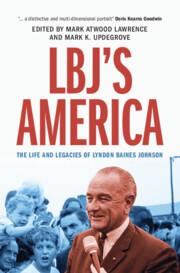
In innumerable ways, we still live in LBJ's America. More than half a century after his death, Lyndon Baines Johnson continues to exert profound influence on American life. This collection skillfully explores his seminal accomplishments—protecting civil rights, fighting poverty, expanding access to medical care, lowering barriers to immigration—as well as his struggles in Vietnam and his difficulty responding to other challenges in an era of declining US influence on the global stage. Sweeping and influential, LBJ's America probes the ways in which the accomplishments, setbacks, controversies and crises of 1963 to 1969 laid the foundations of contemporary America and set the stage for our own era of policy debates, political contention, distrust of government, and hyper-partisanship.
The War on Poverty was in many ways a political slogan rather than a concrete set of policy initiatives. Often invoked interchangeably with the “Great Society,” it included anti-poverty programs that contributed to America’s patchwork safety net and other initiatives intended to maximize the individual citizen’s ability to realize his or her fullest potential. Conservatives then and later derided the War on Poverty as a failed attempt at economic redistribution that led millions of Americans into a state of permanent dependency on the government, but in truth, LBJ and his aides never seriously contemplated policies that would enforce equality of income, wealth, or condition. They did not broadly support quantitative measures like a guaranteed minimum income or employment. Instead, they believed that qualitative measures like education, workforce training, and access to health care and food security would level the playing field and help poor people realize their share of a growing economy. When economic growth sputtered in the early 1970s, the limitations of these policy decisions became immediately evident. But, considered on its own terms, the War on Poverty proved a lasting and important component of the nation’s response to poverty.
This chapter examines the ways in which Lyndon Johnson attempted to build on and expand the liberal tradition in twentieth-century American politics. As he did so from the perch of the Oval Office, Johnson ran directly into the structural limitations and debilitating political fears of liberalism that were at work right at this high point for Johnson’s career: the racial accord that Northern Democrats had entered into with Southerners in the 1930s, and the fears about appearing weak on national security. In the end, the political vulnerabilities and limitations of this tradition would overwhelm him, leaving him to announce that he would not run for reelection in October 1964 and defining his legacy over the failed war in Vietnam. While it is important to understand how Johnson’s own agency led to his downfall, it is equally relevant to understand how the nature of American liberalism trapped Johnson into these positions. The president was caught in the basic contradictions of the agenda that he inherited and championed. The same tradition that strengthened his resolve to grow the government to tackle new areas of domestic life also pushed him toward the decisions that drowned his legacy for decades to come. This is not just the story of Lyndon Johnson – it’s the story of American liberalism in the twentieth century.
The following was written as a commentary on an article we published in our Spring 2023 issue, “’Comprehensive Healthcare for America’: Using the Insights of Behavioral Economics to Transform the U. S. Healthcare System,” by Paul C. Sorum, Christopher Stein, and Dale L. Moore. This commentary should have appeared alongside that article. We apologize to the authors and our readers for the error.