To save content items to your account,
please confirm that you agree to abide by our usage policies.
If this is the first time you use this feature, you will be asked to authorise Cambridge Core to connect with your account.
Find out more about saving content to .
To save content items to your Kindle, first ensure no-reply@cambridge.org
is added to your Approved Personal Document E-mail List under your Personal Document Settings
on the Manage Your Content and Devices page of your Amazon account. Then enter the ‘name’ part
of your Kindle email address below.
Find out more about saving to your Kindle.
Note you can select to save to either the @free.kindle.com or @kindle.com variations.
‘@free.kindle.com’ emails are free but can only be saved to your device when it is connected to wi-fi.
‘@kindle.com’ emails can be delivered even when you are not connected to wi-fi, but note that service fees apply.
In this chapter a method of ‘somatic enquiry’ is put forward, which demonstrates ways in which the bodily knowledge of the minuet might inform analytical approaches to this repertoire. Drawing on other contributions to the field of somatic studies by scholars such as Suzanne Ravn and Maxine Sheets-Johnstone, it demonstrates ways in which the sensation of dancing informs my perception of the musical sounds, and conversely how the sounds affect my body’s kinaesthetic sensations. Taking Elisabeth Le Guin’s similar exploration of Boccherini’s body as a model, it considers challenges faced by any attempts to grapple with bodily knowledge. It builds on Christopher Hasty’s notion of projection, or ‘throwing forth’, in his theory of metre, arguing that to dance is a physical throwing forth of one’s body. The method of somatic enquiry is illustrated through detailed accounts of dancing to movements from Haydn’s Minuets Hoboken IX:11, composed in 1792 for the first annual ball of the Gesellschaft bildender Künstler at the Hofburg Redoutensaal. Ultimately, it argues that musical listening (even when seated) is a more active bodily experience than is typically recognised, even when one’s awareness of this activity is limited.
This chapter turns to the concert minuet, asking how somatic knowledge of the minuet dance informs engagement with and understanding of this genre. The chapter begins with writings that show eighteenth-century listeners discussing concert minuets in relation to the minuet dance step, as well as eighteenth-century music-theoretical discussions of minuet composition that put forward a view of the concert minuet as the nonconformist version of the dance minuet. Two case studies discuss minuets from Haydn’s ‘London’ Symphonies – Nos. 97 and 102 – which were written around the same period as the dance minuets discussed in the previous chapter, and were also performed in Vienna in the 1790s. These case studies show ways in which Haydn plays with expectations formed by the dance minuet: he subverts the structural norms of minuet composition, as well as manipulating one’s feeling of the dance step. The argument is made that, while traditional forms of analysis tend to seek subversion of expectations as a feature for explication, minuets and somatic enquiry invite us to see artfulness through a different lens.
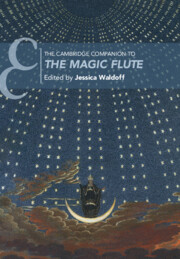
Since its premiere in 1791, The Magic Flute has been staged continuously and remains, to this day, Mozart's most-performed opera worldwide. This comprehensive, user-friendly, up-to-date critical guide considers the opera in a variety of contexts to provide a fresh look at a work that has continued to fascinate audiences from Mozart's time to ours. It serves both as an introduction for those encountering the opera for the first time and as a treasury of recent scholarship for those who know it very well. Containing twenty-one essays by leading scholars, and drawing on recent research and commentary, this Companion presents original insights on music, dialogue, and spectacle, and offers a range of new perspectives on key issues, including the opera's representation of exoticism, race, and gender. Organized in four sections – historical context, musical analysis, critical approaches, and reception – it provides an essential framework for understanding The Magic Flute and its extraordinary afterlife.
Recommend this
Email your librarian or administrator to recommend adding this to your organisation's collection.