To save content items to your account,
please confirm that you agree to abide by our usage policies.
If this is the first time you use this feature, you will be asked to authorise Cambridge Core to connect with your account.
Find out more about saving content to .
To save content items to your Kindle, first ensure no-reply@cambridge.org
is added to your Approved Personal Document E-mail List under your Personal Document Settings
on the Manage Your Content and Devices page of your Amazon account. Then enter the ‘name’ part
of your Kindle email address below.
Find out more about saving to your Kindle.
Note you can select to save to either the @free.kindle.com or @kindle.com variations.
‘@free.kindle.com’ emails are free but can only be saved to your device when it is connected to wi-fi.
‘@kindle.com’ emails can be delivered even when you are not connected to wi-fi, but note that service fees apply.
Chapter 5 provides an in-depth analysis of the far right in Chile, focusing on José Antonio Kast and the Republican Party (PR). It begins by elucidating the ideological bedrock of authoritarianism, nativism, and neoliberalism that fuels the ascent of the far right. Central to this exploration is how these ideologies manifest in the politicization of punitive justice, traditional gender roles, and restrictive immigration policies – all within a framework marked by a staunch anti-communist stance. The chapter then seamlessly connects these political strategies to the tactics of otherization targeting indigenous communities, immigrants, and leftist elites. By doing so, it places these exclusionary practices within the broader context of identity politics, providing a comprehensive understanding of how these dynamics interact and reinforce each other in shaping the far right’s impact on Chile’s political landscape.
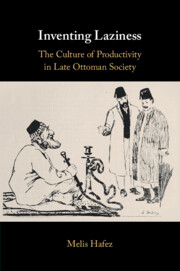
Neither laziness nor its condemnation are new inventions, however, perceiving laziness as a social condition that afflicts a 'nation' is. In the early modern era, Ottoman political treatises did not regard the people as the source of the state's problems. Yet in the nineteenth century, as the imperial ideology of Ottomanism and modern discourses of citizenship spread, so did the understanding of laziness as a social disease that the 'Ottoman nation' needed to eradicate. Asking what we can learn about Ottoman history over the long nineteenth-century by looking closely into the contested and shifting boundaries of the laziness - productivity binary, Melis Hafez explores how 'laziness' can be used to understand emerging civic culture and its exclusionary practices in the Ottoman Empire. A polyphonic involvement of moralists, intellectuals, polemicists, novelists, bureaucrats, and, to an extent, the public reveals the complexities and ambiguities of this multifaceted cultural transformation. Using a wide variety of sources, this book explores the sustained anxiety about productivity that generated numerous reforms as well as new understandings of morality, subjectivity, citizenship, and nationhood among the Ottomans.
Recommend this
Email your librarian or administrator to recommend adding this to your organisation's collection.