To save content items to your account,
please confirm that you agree to abide by our usage policies.
If this is the first time you use this feature, you will be asked to authorise Cambridge Core to connect with your account.
Find out more about saving content to .
To save content items to your Kindle, first ensure no-reply@cambridge.org
is added to your Approved Personal Document E-mail List under your Personal Document Settings
on the Manage Your Content and Devices page of your Amazon account. Then enter the ‘name’ part
of your Kindle email address below.
Find out more about saving to your Kindle.
Note you can select to save to either the @free.kindle.com or @kindle.com variations.
‘@free.kindle.com’ emails are free but can only be saved to your device when it is connected to wi-fi.
‘@kindle.com’ emails can be delivered even when you are not connected to wi-fi, but note that service fees apply.
This chapter focuses on the expressive functions of tears, the face and the body on the early modern stage, to probe the deep relation between drama and the law, including their entwined but distinct investments in natural self-evidence and the rhetoric of presence. Through an interdiscursive approach, it shows how drama mines the complexities of hypokrisis through an engagement with the radical performativity at the core of law, and offers the provocation that law’s disknowledges are turned into a poetic condition of theatrical knowledge, and a forging of subjecthood and inwardness that complicates the distinction between the fiction of theatre and the reality of the law court. It ends with the suggestion that the theatre looks at, as well as beyond, the vivid invisibilities of judicial encounters to unpack the epistemic, affective and ethical impulses structuring the ‘scene’ of law.
One factor that has been shown to mediate and protect against psychopathology is the ability to engage in meaning making in adverse situations during the COVID-19 pandemic. To date, the models that have attempted to explain the relationship between traumatic, stressful events’ meaning and clinical symptoms have been conducted in a piecemeal fashion. The objective of this study is to analyze which model (two-pathway model vs three-pathway model) has a better fit in explaining the association between the violation of global meaning and clinical symptoms such as somatization, anxiety, and depression in participants during the COVID-19 pandemic. The study sample consisted of N = 1106 adults. The results suggest that the violation of schemas affects depression and anxiety symptoms through three pathways: (a) Path one, directly, schema violation explains clinical symptoms; (b) Path two, indirectly, schema violation explains clinical symptoms through the search for meaning and negative effect; and (c) Path three, the presence of meaning explains positive affect and buffers clinical symptoms. The three-pathway model explains 90% of the variance in clinical symptoms. The three-pathway model has clinical implications for the assessment, prevention, and treatment of people who are coping with unforeseen negative situations.
This chapter argues that the wellspring of theatre can be found in childhood pretend play – a universal human phenomenon that leaves us all capable of theatrical behavior, whether as performers who enact make-believe “realities” or as audience members who imaginatively engage in others’ make-believe. Such play is likely associated with an evolutionary adaptation for advanced symbolic thinking. Theatre might be a by-product of pretend play, carried over into adult life, but it might be an exaptation in which childhood pretend play has been co-opted for the new evolutionary purpose of allowing performers and audiences to explore “what-if” situations in ways that compel attention through the performers’ presence and artistry, and the empathy given to their enacted characters by the audience. The universality of pretend play suggests this behavioral trait evolved more than 50,000 years ago, at which point humans had begun their globalizing expansion from Africa.
In the genre of images known as the Mass of Saint Gregory the central drama is the living body of Christ on the altar. To one side of that drama, if one looks closely, can be found a single book, opened but not legible (Plate 6). By the fifteenth century, depending on the church, one might find a range of different kinds of books for the liturgy in its library, its choir stalls, or sacristy: antiphonaries, graduals, psalters, hymnals, or breviaries. Only one liturgical book, the missal, the book for the celebrant of the Eucharist, would have been found on the altar. That object is the focus of this chapter.
The long-tailed goral Naemorhedus caudatus is a small ungulate that inhabits mountainous regions in eastern Russia, China and Korea. It is highly sensitive to human disturbance and is categorized as Vulnerable on the IUCN Red List. We present the first distribution map of the long-tailed goral in South Korea and identify habitats critical for enhancing conservation and recovery efforts. We conducted a two-step modelling process, using MaxEnt to identify sites for field surveys, and subsequently draft a distribution map, and then used linear mixed-effects modelling to identify predictors of goral presence. Based on 641 records of the goral, we used MaxEnt to identify 364 of 1,027 10×10 km grid cells as potentially suitable for the species. In field surveys during 2019–2022, we confirmed goral presence at 892 of 1,232 survey sites in 123 of the 364 grid cells, primarily in the north-eastern and central-eastern mountains. There were no detections south of latitude 36°16′N. Using linear mixed-effects models, we examined the contribution of 14 environmental and anthropogenic variables to the prediction of goral presence. Elevation, land-cover type, human footprint, distances to nearest express highway, paved road and national park, and land price were significant predictors of goral presence. In combination, the distribution map and predictive model of goral presence can be used to monitor and protect remaining goral populations.
Scores of young men and women were killed by regime forces during the Arab Spring in Egypt (2011–2013). Their photographs assumed iconic proportions, meandering online and off through countless acts of creative remediation. This essay examines the different kinds of social and political work that these photographs came to play during this period, including as indexes of the revolutionary cause and as mediators of revolutionary subjectivities at a distance. This essay departs from extant studies of visual cultures of secular martyrdom or funerary portraiture framed by notions of commemoration, and instead stresses contingent presence grounded in the specific liminal temporality of the revolutionary process. In this temporal limbo, photographs of martyrs often blurred conventional boundaries between representations and their referents. Established visual conventions of funerary portraiture were turned upside down, and portraits of martyrs were understood not as representations of the dead, but as alive and present, sometimes more alive than the dwindling group of dedicated revolutionaries.
Patrick Prétot comments on the individual parts of which the celebration of the Eucharist consists. For that, he takes as his point of departure the script of the Order of Mass, which is used in the Roman Catholic Church but which shows many commonalities with other liturgical and ecclesial traditions.
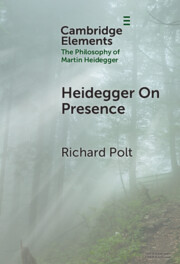
Heidegger calls the thought that 'being is presence' the 'thunderbolt' that led him to link being and time and inspired his deconstruction of Western metaphysics. However, the scope of the concept of presence varies in his texts; the narrower it is, the more dramatic yet less plausible is his 'thunderbolt.' What is presence? Does Heidegger ultimately reject presence as the meaning of being, or does he accept it if conceived broadly enough? This study surveys the meaning and status of 'presence' in Heidegger. It argues that Heidegger maintains a critical perspective, and that his critique can be applied not only to the tradition as interpreted in his 'history of being,' but also to contemporary phenomena such as information technology.
Acts of worship typically involve expressions of fealty: One takes off one’s shoes, bows low, or falls on one’s face. Experiences that naturally prompt such expressions – the sense that one is in the presence of God in an unusual and profound way – raise interesting metaphysical questions about divine presence and absence. Talk of special divine presence poses serious puzzles. In the Jewish scriptures – and in the writings and words of those who treat these scriptures with reverence, whatever their religion – there is much talk of God’s presence and of God’s absence. And yet, God is also affirmed to be everywhere. How can God be everywhere, but also absent from some places, and especially present in others? Metaphysics is a likely place to look for a range of possible answers to this simple but puzzling question.
The eight dimensions of being with, outlined in detail in my A Nazareth Manifesto and elsewhere in their missiological, ethical and public policy implications, are here explored in their full scriptural dimensions. Presence, attention, mystery, delight, participation, partnership, enjoyment and glory each have profound resonances in Old and New Testaments, and each provides a continuous thread through incarnation, the reason for creation, the nature of Jesus’ ministry and death, the work of the Holy Spirit, the church and heavenly destiny – in relation to God, to one another and to the whole creation. They affirm how the incarnation is not a means to an end (such as saving us from our sins) but an end in itself, and they expand the notion of being with into a multidimensional concept with rich resonances.
The Chinese pangolin Manis pentadactyla is categorized as Critically Endangered on the IUCN Red List but little is known about its status in Nepal. Although indirect sign surveys have reported its presence in several community forests in Kavrepalanchok district, no photographic or video evidence has previously been documented. We used camera traps to investigate the occurrence of pangolins in 20 community forests in Panauti Municipality in Kavrepalanchok. A total of 75 0.01 km2 plots were surveyed using camera traps during September 2022–February 2023, with a total survey effort of 803 trap-days. The cameras recorded a total of 16 individual video footage events of Chinese pangolins in six of the community forests. This is the first camera-trap evidence of the species' presence in these forest patches, and in Kavrepalanchok district. The pangolins displayed behaviours such as sniffing, gathering plant material and digging, between 18.00 and 1.00. The camera-trap records provide more accurate species identification and reliable information than indirect sign surveys, indicating camera traps are a useful surveying tool for rare, nocturnal and elusive pangolins.
Eugenio Barba first defined ‘theatre anthropology’ as the study of the human being in an organized performance situation in a lecture in Warsaw in May 1980. The first session of ISTA (International School of Theatre Anthropology) was held in October 1980 and the last to date in 2023. This article gives a personal account of ISTA’s history from its origins, rooted in Eugenio Barba’s interest in Asian classical theatre techniques and the founding of Odin Teatret in Denmark, to the most recent experiences, which include the intercultural production of Anastasis/Resurrection at the 2023 Theatre Olympics in Budapest. It identifies masters of given ISTA sessions and their invaluable contribution to the School’s emphasis on, and understanding of, craft, as well as the distinguishing characteristics and points of change and development of selected ISTAs.
Experiences that take place in virtual reality (VR) become part of users’ autobiographical memory. As memories can impact users’ self-perception, personal beliefs, and social interactions, storyliving in VR narratives can be used to manipulate memory and mould users’ self according to the preferences of the VR narrative creators. Poland's Ministry of Culture and National Heritage has, in recent years, generously invested in the production of VR films that depict events from the Polish historical canon. VR is a spatial technology that positions users ‘inside’ a virtual storyworld and leverages users’ sense of body position and movement to enhance memory and a sense of presence. Three dimensions of presence – self, social, and spatial – are relevant to understanding the role of VR in the politics of memory. The article interrogates a recent Polish VR production, Wiktoria 1920 (2020, dir. Tomasz Dobosz), and argues that VR representations exploit a sense of presence to shape users’ memory, perspective, and emotions in relation to the past.
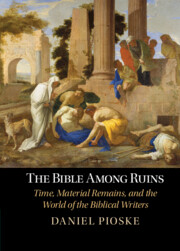
Biblical writers lived in a world that was already ancient. The lands familiar to them were populated throughout by the ruins of those who had lived two thousand years earlier. References to ruins abound in the Hebrew Bible, attesting to widespread familiarity with the material remains by those who wrote these texts. Never, however, do we find a single passage that expresses an interest in digging among these ruins to learn about those who lived before. Why? In this book, Daniel Pioske offers the first study of ruination in the Hebrew Bible. Drawing on scholarship in biblical studies, archaeology, contemporary historical theory, and philosophy, he demonstrates how the ancient experience of ruins differed radically from that of the modern era. For biblical writers, ruins were connected to temporalities of memory, presence, and anticipation. Pioske's book recreates the encounter with ruins as it was experienced during antiquity and shows how modern archaeological research has transformed how we read the Bible.
After discussing different phenomenological modes of presence, I argue that the full force of the icon’s visual language is meant to bring us into an encounter with the listening presence of a person. This begins to emerge through the painting’s natural aesthetic presence as a portrait, but can only come to full fruition for the one who prays. After a phenomenological account of the act of prayer, I show how the experience of the icon takes on a critical structural difference for those who come before the icon in the conviction that the words that they say and actions that they perform are truly communicated to the person who is visibly present.
Given China’s position in Pacific Asia, defining its regional centrality might seem a simple task. But centralities grander than merely geographical have been alleged and contested. Currently some maintain that China is the central kingdom because of its power. But it was conquered by the Mongols and the Manchus, and its present centrality is due more to its economic mass and connectivity than to its military. Others claim that hierarchy is natural to Asian culture, and China is the apex. But neighbors were often cynical about China’s moral stature, and China’s soft power is now at a low ebb. I argue that China was the center of regional attention in the premodern era, and that it has returned to center stage since 2008. The three basic reasons for China’s original centrality and its return were situational: presence, population, and production. The salience of all three disappeared with Western imperialism’s global presence, the devaluation of mere demography, and industrial production. Traditional and current centrality created asymmetric relationships between China and its neighbors, but the regional situations differ fundamentally.
While it is only recently that disgust has been (re)assessed as a category of analysis for the Early Modern period, its temporalities are in need of further investigation. The chapter argues that disgust is triggered and represented by material memory objects in Hamlet and Othello. Here, disgust serves as affective response to the pressure of seemingly paradoxical temporalities – Hamlet’s experience of a past that is embodied in the untimely object of the skull, and Othello’s experience of a ‘future anterior’ that is mediated by and manifested in the handkerchief, respectively. In the two plays, the temporality of disgust is paradoxical: it simultaneously lags behind the memory object from which it recoils and generates the object in the very act of recoiling. By reading the respective temporalities of disgust both tragedies display, I suggest that the affective dynamics of disgust find literary analogy in the structural dynamics of both Hamlet’s and Othello’s fundamental dramatic conflict.
The third chapter turns to the body in erotic poetry. Here the temporal frame widens to embrace the experience of the present within longer human spans, a rhythm over lifetimes garnered through instances of erotic embodiment. Poetry can bind the inexplicable presence of touch to time, and can also summon the past as presence through the reenactment of the poem itself in performance, a dynamic we see at work in Sappho and then again in the modern erotic poetry of Anne Sexton and Sharon Olds – begging the question of why certain poetics recur across time. This is poetry that challenges the ephemerality of embodied experience by showing its power to reenact the force of touch.
The Introduction has three aims. First, it offers a new interpretation of the Seikilos epitaph, one of the most important musical documents from the ancient world. The chapter shows that we can use the Seikilos epitaph as a model for reading carpe diem. Second, the Introduction offers a short history of the carpe diem motif from Homer to late antiquity, analysing its key features and function. Third, the Introduction lays out the methodological framework of the thesis: it is argued that close analysis of the carpe diem motif can advance our understanding of presence, performance, and textuality. These themes have been central to literary studies in Classics and beyond.