To save content items to your account,
please confirm that you agree to abide by our usage policies.
If this is the first time you use this feature, you will be asked to authorise Cambridge Core to connect with your account.
Find out more about saving content to .
To save content items to your Kindle, first ensure no-reply@cambridge.org
is added to your Approved Personal Document E-mail List under your Personal Document Settings
on the Manage Your Content and Devices page of your Amazon account. Then enter the ‘name’ part
of your Kindle email address below.
Find out more about saving to your Kindle.
Note you can select to save to either the @free.kindle.com or @kindle.com variations.
‘@free.kindle.com’ emails are free but can only be saved to your device when it is connected to wi-fi.
‘@kindle.com’ emails can be delivered even when you are not connected to wi-fi, but note that service fees apply.
In this chapter I address the problem of human suffering. After giving an account of the nature of suffering, I argue that suffering does not justify intending death. However, suffering needs to be understood within the larger story of Christ’s redemptive work.
This chapter examines how the death of Jesus of Nazareth, as portrayed in the canonical Gospels – especially Luke – became a foundational narrative in Christian memory and western thought. It explores the final phase of Jesus’ life, from his prophetic warnings of suffering to his betrayal, arrest, crucifixion, and resurrection. Emphasis is placed on Jesus’ articulation of martyrdom as “testimony” (martyrion), framing suffering and persecution as meaningful within a divine plan. The narrative also analyzes the Last Supper and Jesus’ transformation of a shared meal into a redemptive ritual – the Eucharist. Luke’s account of Jesus’s passion reveals both the brutality of Roman execution and the crowd’s hostility, while also portraying Jesus as forgiving and self-possessed. The chapter traces how Jesus’s resurrection not only fulfilled scriptural prophecy but also redefined expectations about divinity, justice, and life after death. Jesus’ post-resurrection appearances are interpreted as both literal and symbolic events that conferred authority on his disciples. The chapter concludes by considering the enduring legacy of this narrative and how it became a template for Christian theology, moral reflection, and cultural memory across centuries.
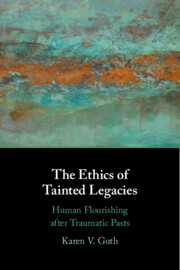
What do we do when a beloved comedian known as 'America's Dad' is convicted of sexual assault? Or when we discover that the man who wrote 'all men are created equal' also enslaved hundreds of people? Or when priests are exposed as pedophiles? From the popular to the political to the profound, each day brings new revelations that respected people, traditions, and institutions are not what we thought they were. Despite the shock that these disclosures produce, this state of affairs is anything but new. Facing the concrete task of living well when our best moral resources are not only contaminated but also potentially corrupting is an enduring feature of human experience. In this book, Karen V. Guth identifies 'tainted legacies' as a pressing contemporary moral problem and ethical challenge. Constructing a typology of responses to compromised thinkers, traditions, and institutions, she demonstrates the relevance of age-old debates in Christian theology for those who confront legacies tarnished by the traumas of slavery, racism, and sexual violence.
Recommend this
Email your librarian or administrator to recommend adding this to your organisation's collection.