Refine search
Actions for selected content:
2 results
Millimeter-wave UAV channel model with height-dependent path loss and shadowing in urban scenarios
-
- Journal:
- International Journal of Microwave and Wireless Technologies / Volume 18 / Issue 3 / April 2026
- Published online by Cambridge University Press:
- 04 September 2026, pp. 532-540
-
- Article
-
- You have access
- HTML
- Export citation
-
Uncrewed aerial vehicles (UAVs) serving as aerial base stations (ABSs) are expected to extend 6G millimeter-Wave (mmWave) coverage and improve link reliability in urban areas. However, UAV-based air-to-ground channels are highly dependent on height and urban geometry. This paper proposes an ABS height-dependent mmWave channel model and investigates whether urban geometry, beyond the standard built-up parameters, significantly affects line-of-sight (LoS) probability (
 $P_{\text{LoS}}$) and large-scale fading (LSF). Using MATLAB ray tracing (RT) at 26 GHz, we simulate approximately 10K city realizations for four urban layouts that share identical built-up parameters but differ in their spatial organization. We extract elevation-based
 $P_{\text{LoS}}$ using a sigmoid model and derive height-dependent path-loss exponents (PLEs) and shadow-fading trends using exponential fits. Results show that PLE for non-LoS decreases toward
 $2.5$–
 $3$ at high altitudes, LoS PLE remains near
 $2$, and shadow fading reduces with height. We also find that geometric layout introduces a modest but consistent change in PLE (
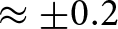 $\approx \pm 0.2$), even when built-up parameters are fixed. The proposed model matches RT results and provides a practical, height-dependent LSF model for ABS planning in urban scenarios.


3 - Performance Analysis of Traditional Sparse and Dense Wireless Networks
- from Part I - Getting Started
-
- Book:
- Fundamentals of Ultra-Dense Wireless Networks
- Published online:
- 17 June 2022
- Print publication:
- 30 June 2022, pp 73-100
-
- Chapter
- Export citation
