To save content items to your account,
please confirm that you agree to abide by our usage policies.
If this is the first time you use this feature, you will be asked to authorise Cambridge Core to connect with your account.
Find out more about saving content to .
To save content items to your Kindle, first ensure no-reply@cambridge.org
is added to your Approved Personal Document E-mail List under your Personal Document Settings
on the Manage Your Content and Devices page of your Amazon account. Then enter the ‘name’ part
of your Kindle email address below.
Find out more about saving to your Kindle.
Note you can select to save to either the @free.kindle.com or @kindle.com variations.
‘@free.kindle.com’ emails are free but can only be saved to your device when it is connected to wi-fi.
‘@kindle.com’ emails can be delivered even when you are not connected to wi-fi, but note that service fees apply.
This chapter examines the trajectories of liberal reformers who assumed ministerial and advisory roles in post-1991, newly independent Russia. While systemic liberals such as Anatoly Chubais participated in government and negotiated with political and industrial elites, informal liberals and defectors from the establishment instead aligned themselves with the democratic opposition. These critics denounced the compromises made by systemic liberals, arguing that such concessions undermined genuine reform. Despite their vocal opposition, however, the democratic liberals failed to mobilise broad public support for their agenda. The chapter highlights figures such as Chubais and his opponent Grigory Yavlinsky, illustrating the contentious debates over Russia’s transformation in the 1990s.
The chapter examines how the size and diversity of the migrant population shaped economic outcomes in western Poland using statistical analysis. It shows that when state institutions were extractive, the composition of the migrant population played no role in shaping economic performance. Once institutions became more inclusive, however, municipalities settled by more regionally diverse populations registered higher incomes and entrepreneurship rates. The chapter then rules out a series of alternative explanations for these findings.
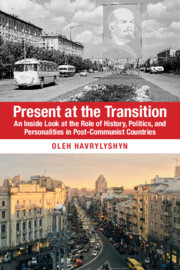
Nearly thirty years after the fall of the Soviet Union, debates over paths to market liberalization have produced numerous studies across the social sciences. This groundbreaking work from Oleh Havrylyshyn offers a new perspective. Havrylyshyn, a former official in the post-independence Ukrainian government, provides a unique, primary source account of the people and problems at the heart of economic transitions. Grounded in three decades of data, along with experiential research gleaned from nearly thirty countries, this book contains the most up-to-date assessment of economic transitions in post-communist regions. It critically examines questions of gradual versus radical reforms, the relationship between democracy and market liberalization, and how history, individual personalities, and foreign influence determined political choices. Thorough research and accessible style make this work a valuable resource for students and specialists of economics, political science, and history as well as readers generally interested in international studies, government, and business.
Recommend this
Email your librarian or administrator to recommend adding this to your organisation's collection.