To save content items to your account,
please confirm that you agree to abide by our usage policies.
If this is the first time you use this feature, you will be asked to authorise Cambridge Core to connect with your account.
Find out more about saving content to .
To save content items to your Kindle, first ensure no-reply@cambridge.org
is added to your Approved Personal Document E-mail List under your Personal Document Settings
on the Manage Your Content and Devices page of your Amazon account. Then enter the ‘name’ part
of your Kindle email address below.
Find out more about saving to your Kindle.
Note you can select to save to either the @free.kindle.com or @kindle.com variations.
‘@free.kindle.com’ emails are free but can only be saved to your device when it is connected to wi-fi.
‘@kindle.com’ emails can be delivered even when you are not connected to wi-fi, but note that service fees apply.
What did contemporary critics mean when they celebrated the usefulness of Maria Edgeworth’s fictions? And how did such praise affect her writing? Arguing for the significance of the tale mode in Edgeworth’s writing well into the first decade of the nineteenth-century, this chapter tracks the meanings of morality across a range of her writing, paying particular attention to its imperial contours. Close attention to her tale ‘To-Morrow’ (from Popular Tales, 1804) points to an experimental mode of imperial morality, characterized by adjustments, disruptions, and displacements, highly characteristic of Edgeworth’s writing up to about 1810. The chapter concludes by considering the longer legacy of this early inscription of the imperial and racialized geographies of use.
This essay assesses Bowen’s relationship to the English author D. H. Lawrence, and suggests that in view of the chronological overlap in their careers, the latter was effectively a contemporary as well as a forerunner. Bowen regarded Lawrence as a major author but also identified with him as an ‘outsider’ to cosmopolitan English literary circles. Both novelists are transitional figures, comfortable with the novelistic legacies of nineteenth-century fictional realism but moving towards formal experimentation, while tuning their work to modernist preoccupations with psychology and sexuality. Their interests aligned in the exploration of female subjectivity and the shifting gender politics of the twentieth century. Lawrence’s landmark novel Women in Love, with its programmatic positioning of two sisters caught between the inherited shapes of English Victorian romance and the pull of a modern European independence, provides a persuasive template for Bowen in her structured pairings of women across several works, including an unpublished story titled ‘Women in Love’. The two writers are linked, finally, by their respective responses to the world at war, with Bowen hailing Lawrence as a guide to her literary navigation of wartime London.
Although Elizabeth Bowen is primarily known for her work as a novelist throughout her long career, her prose frequently resembles poetry. She often borrows elements from verse to enhance her fiction. Notably, the three-part greater romantic lyric has an influence on The House in Paris and The Death of the Heart in its plying together of past and present, as well as different locations. In her lectures, radio broadcasts, and literary criticism, Bowen was fond of illustrating the craft of fiction with examples from verse. Not only was she an avid reader and reviewer of contemporary poets such as T. S. Eliot, W. H. Auden, Stephen Spender, Christopher Isherwood, and May Sarton, but she was also a close friend of many of them. Whenever her work was compared to poetry, she took it as the highest compliment. This essay explores her intertwined connections, both in her language and in her life, to the poets and poetry that surrounded her.
The short story is a young art’, Elizabeth Bowen declared in her introduction to The Faber Book of Modern Stories; ‘as we know it, it is the child of this century’. The contemporaneity of the short form allowed Bowen to argue that it was free from many of the conventions that tether more established literary modes – exposition, for instance, as well as unwieldy segues, and what she termed the ‘forced continuity’ of longer prose narratives. It also encouraged her to conceptualise the short story in relation to other types of writing, particularly poetry and the novel. This chapter explores Bowen’s aesthetics of short fiction through an analysis of a selection of her stories and non-fiction. In essence, she believed that the structural economy of the short form meant that stories are defined by obliquity and concision. She also considered the form – or rather, the forms – of short fiction to be productively uncertain, and understood that the same story can be simultaneously concise, expansive, and wonderfully strange. This chapter examines the complexities of this stance, and its implications for reading Bowen in the twenty-first century.
Flannery O’ Connor’s mom criticized her for not writing what people would want to read. While O’Connor’s novels are full of freaks and distortions, this article offers some philosophical clues as to why this is so. We explore Jacques Maritain’s influence upon her as she saw herself as ‘cutting her aesthetic teeth upon his Art and Scholasticism’. Key to understanding the grotesque world of O’Connor’s stories is the understanding of Maritain’s notion of artistic imitation and its reliance upon his notion of distortion. It is the latter notion that gives us the central insight into why she distorted her characters and plot. True storytelling for O’Connor plunges the reader deeply into reality, especially into the reality of human persons. Not wanting to stay at the physical surfaces of things, distortion plunges the reader into the depth of human character and their existential aspirations, motivations, decisions, and especially, their responses to the gift of supernatural grace.
Literary scholars’ expertise is founded on knowledge of a small collection of texts, below which lies the vast realm of archived but long-forgotten literature that Margaret Cohen has called the “Great Unread.” Cohen’s account frames the Great Unread as the exclusive domain of highly trained specialists, while students are, for pragmatic reasons, taught to close-read the established canonical texts. This article argues that there is great value in facilitating the engagement of newcomers with the Great Unread, and in particular, the Global Great Unread. Within a course I created and taught at the Massachusetts Institute of Technology, I guided undergraduates through exploring the Great Unread of nineteenth-century global periodicals, selecting a short story of interest and creating a digital edition to reintroduce the story to a present-day audience. In crafting editorial materials of various kinds, students independently studied and wrote about global contexts ranging from the linguistic to the cultural to the geopolitical. After the course was complete, students could choose to have their edition published on a website and thus actually become available to a public readership beyond the classroom. Through such initiatives, we can expand our understanding of the ways in which literary scholars and literary study can be valuable to publics on a global scale.
By providing an overview of the varied shorter fictions produced by key Bloomsbury group members, this essay touches on some significant short fiction writers among its outer circles. Virginia Woolf’s shorter fiction features prominently; the chapter conveys the volume and variety of the short fictions that she produced – though rarely published – during her lifetime. It also gives due attention to Woolf’s husband Leonard’s overlooked experiments with fiction, including his “Three Jews,” which was published with Virginia’s “The Mark on the Wall” as Two Stories (1917), their Hogarth Press’ first publication. Within E. M. Forster’s significant short fiction output, particular attention is paid to works published – like his radical novel of homosexual awakening Maurice – after his death. The chapter takes in some early stories by Mulk Raj Anand, the prolific Indian writer associated with Bloomsbury through Forster, and gives a flavor of the enormous variety in lesser known stories by core group members such as Desmond MacCarthy, David Garnett, and Lytton Strachey – encompassing ghost stories, speculative queer fictions, Jamesian social commentaries, and allegorical flights of fancy.
Michael Field are remembered for their poetic works, but they also wrote short prose. Focusing on their collection of prose sketches or ‘croquis’ entitled For That Moment Only, this chapter sets their prose writings in the wider context of the fin-de-siècle trends towards the short story and aesthetic essay. Through analysis of stories like ‘A Maenad’, the chapter outlines Michael Field’s affinities with New Woman prose writers like George Egerton, as well as their affinities with decadent aesthetes like Oscar Wilde. Ultimately, this chapter shows that attending to Michael Field’s prose works as well as their poetry provides a more accurate picture of their distinct contribution to turn-of-the-century literary culture.
This chapter argues that the brevity and inherent orality of the Russian short story allows for the introduction of new, often stigmatised subject matter and for experimentation with form and language. The short story laid the groundwork for the novel, but not by providing shorter pieces to be assembled into a more complex plot. Rather, its role was to work out innovative aesthetic and thematic models that the novel would later carry into the cultural mainstream. For this reason, the short story often came to the fore during periods of literary and ideological change. The chapter presents the evolution of the Russian short story in the nineteenth and twentieth centuries, with particular attention to Anton Chekhov, the author who finalised the shift to what we now recognise as the typical concerns of the modern short story.
By the beginning of the twentieth century, short-story writing in the US was well established as a form of efficient literary production along the lines that Edgar Allan Poe had established sixty years earlier. One way of understanding the American modernist short story is as an attempt to reinvent the form by restoring the balance that Poe had once advocated: not to forget technique but to make it work again in the service of art understood as both an expressive and an elite activity. This chapter considers some of the ways in which American short-story writers can usefully be said to have developed, modified, or put into question the modern principle of efficiency.
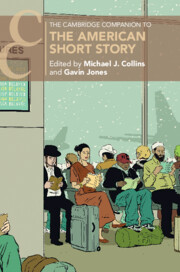
This Companion offers students and scholars a comprehensive introduction to the development and the diversity of the American short story as a literary form from its origins in the eighteenth century to the present day. Rather than define what the short story is as a genre, or defend its importance in comparison with the novel, this Companion seeks to understand what the short story does – how it moves through national space, how it is always related to other genres and media, and how its inherent mobility responds to the literary marketplace and resonates with key critical themes in contemporary literary studies. The chapters offer authoritative introductions and reinterpretations of a literary form that has re-emerged as a major force in the twenty-first-century public sphere dominated by the Internet.
Premier playwright of modern theater and trailblazer of the short story, Anton Chekhov was also a practising doctor, journalist, writer of comic sketches, philanthropist and activist. This volume provides an accessible guide to Chekhov's multifarious interests and influences, with over 30 succinct chapters covering his rich intellectual milieu and his tumultuous socio-political environment, as well as the legacy of his work in over two centuries of interdisciplinary cultures and media around the world. With a Preface by Cornel West, a chronology and Further Reading list, this collection is the essential guide to Chekhov's writing and the manifold worlds he inhabited.
Chapter three looks at works written during the civil rights era to understand how and why the poor white southerner entered the national spotlight as the face of racism in this era. In this part, I probe the disconnect between the period’s activism and its literature—in other words, I work to make sense of why at the very moment that black civil rights activists were taking on the Board of Education of Topeka, Kansas, the public transit system of Montgomery, Alabama, and other discriminatory institutions, midcentury southern white women writers were depicting acts of racism perpetrated by isolated individuals located on the ragged margins of southern society. Using evidence from her fictional works as well as her correspondence, I propose that Flannery O’Connor broke rank with her celebrated contemporaries. In her short stories, O’Connor took up specific formal techniques that Harper Lee, Lillian Smith, and Eudora Welty used to depict diabolical poor white men and redeployed them to expose the social blight her contemporaries were at pains to obscure: middle-class racism.
This article is dedicated to the study of the question of generic contiguities within Berber (Kabyle) literature. It is devoted more particularly to the study of the boundaries between novels (ungal) and short stories (tullist). I show that the identities of literary genres do not depend only on a norm coming from elsewhere (from the West in particular) but that they are also shaped by the context from within which they evolve and by the function assigned to these genres.
Flynn’s chapter argues for the crucial role of nineteenth-century French naturalism in the conception and evolution of Joyce’s Dubliners. Specifically, it argues that Joyce’s ambition to correct the development of his country through representing the debilitation of its capital city is modelled on Émile Zola’s aim in his naturalist, twenty-novel series Le Rougon-Macquart (1871-1893) to present and diagnose the pathologies of the Third Republic through representing several generations of a diseased family. However, in their indirection, Joyce’s stories expand upon an ambiguity intrinsic to naturalism – the subjectivity inherent in any would-be objective perception of reality – an ambiguity developed to comic effect by the second-generation naturalist, Guy de Maupassant in the story “Auprès d’un Mort” (Beside Schopenhauer’s Corpse). The chapter argues that the first story of Dubliners, “The Sisters,” is inspired by this minutely observed, disenchanted, and enigmatic story. The chapter closes by looking at the final scene of “The Dead” to argue that Joyce turns the dead end of naturalism into a test for an Irish readership.
This chapter explores how the NAACP’s Crisis, the National Urban League’s Opportunity, Abbott’s Monthly and Challenge/New Challenge are representative of the more palpable literary focus on the experiences of the working classes and the poor that occurs in 1930s Black print culture. Along with novels, volumes of poetry, and coverage in the Black press more generally, these literary journals and magazines published explicit depictions of African Americans’ social conditions. As instances of how the New Negro reader of the Harlem Renaissance was recast throughout the decade, The Crisis, Opportunity, Abbott’s Monthly, and Challenge/New Challenge often targeted African Americans as working subjects and intended readers. As the chapter illustrates, the sections of literature, book reviews, editorials/criticism, and correspondence comprising these literary journalsʼ and magazinesʼ 1930s content allowed editors and writers to engage in work that both prioritized literary portrayals of African Americans’ inner lives as maids, cooks, day laborers, and the unemployed and expanded audiences for their developing literary tradition.
The short story as a way into discussions of plot. The event-plot short story. Synchronised (reader and character) moments of discovery as a key pleasure in fiction. Poetic justice. The relationship of the character to the theme. The Chekhovian / slice-of-life / anti-plot short story. Plot is sidelined as a prime focus in favour of narratives reflective of human experience. Plot and time: plot is only available in retrospect and the location of the reader in – and in relationship to – the narrative defines the meaning of the story. Telling it slant: the usefulness of an indirect route to meaning.
‘Plot may depend not so much on a sequence of events unfolding chronologically as on what the protagonists and the reader know about the events and when they know it.’
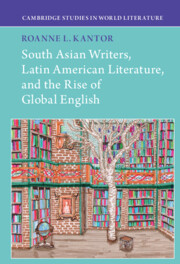
Ever since T.B. Macaulay leveled the accusation in 1835 that 'a single shelf of a good European library was worth the whole native literature of India,' South Asian literature has served as the imagined battleground between local linguistic multiplicity and a rapidly globalizing English. In response to this endless polemic, Indian and Pakistani writers set out in another direction altogether. They made an unexpected journey to Latin America. The cohort of authors that moved between these regions include Latin-American Nobel laureates Pablo Neruda and Octavio Paz; Booker Prize notables Salman Rushdie, Anita Desai, Mohammed Hanif, and Mohsin Hamid. In their explorations of this new geographic connection, Roanne Kantor claims that they formed the vanguard of a new, multilingual world literary order. Their encounters with Latin America fundamentally shaped the way in which literature written in English from South Asia exploded into popularity from the 1980s until the mid-2000s, enabling its global visibility.
This chapter argues that the spatialising habits of the short fiction of the period can best be understood in terms not only of a modernist preoccupation with the complex and ambiguous layering of urban milieu, but of its polar opposite: the threat (or promise) of movement, of inter-relation, which unsettles the remote traditional communities portrayed in local colour writing. James Joyce’s ‘The Dead’, Katherine Mansfield’s ‘Bliss’ and ‘The Stranger’, and ‘A Conjugal Episode’, a late story by one of the most successful New Woman novelists, George Egerton (Mary Chavelita Dunne), will be taken to exemplify the first of these tendencies. The second can be shown to include stories about Englishness and empire, by Rudyard Kipling and D. H. Lawrence; stories about migration, by Joseph Conrad and George Moore; and stories about ghosts, by M. R. James and May Sinclair. In either case, short fiction tended to be at its best, and most characteristic, when least forgiving.
In her analysis of the rising prominence of recent short and flash fiction, Angela Naimou considers narrative brevity as an opening to geopolitical and temporal expansiveness in her chapter on “Short, Micro, and Flash Fiction.” Measured in major prize awards, sales, or downloads, short and short-short fiction have paradoxically thrived during the spatial and temporal conceptual expansions of, for example, globalization and the Anthropocene. Naimou identifies the techniques of short fiction representing planetary stories of migration, climate crisis, and evolutionary history in works by Teju Cole, Edwidge Danticat, Rachel B. Glaser, Viet Thanh Nguyen, and George Saunders.