To save content items to your account,
please confirm that you agree to abide by our usage policies.
If this is the first time you use this feature, you will be asked to authorise Cambridge Core to connect with your account.
Find out more about saving content to .
To save content items to your Kindle, first ensure no-reply@cambridge.org
is added to your Approved Personal Document E-mail List under your Personal Document Settings
on the Manage Your Content and Devices page of your Amazon account. Then enter the ‘name’ part
of your Kindle email address below.
Find out more about saving to your Kindle.
Note you can select to save to either the @free.kindle.com or @kindle.com variations.
‘@free.kindle.com’ emails are free but can only be saved to your device when it is connected to wi-fi.
‘@kindle.com’ emails can be delivered even when you are not connected to wi-fi, but note that service fees apply.
In the Introduction, the need for an interdisciplinary approach to human well-being is presented, focusing on law and the social sciences, to elevate the interests of humanity amid rapid scientific and technological change.
In Chapter 10, the book concludes with a review of the numerous means available in the law to support the well-being of humans in an age of rapid scientific and technological development, emphasizing the need to revisit what it is to be human.
The theoretical orientation of Interpersonal Psychotherapy (IPT) focuses on the contribution of an individual’s interpersonal and social context to the development and maintenance of mental health difficulties. We describe a selection of contemporary theories that underpin IPT, attachment theory, mentalisation and contemporary interpersonal theory. Attachment theory examines the early interpersonal experiences between a parent and young child that build internal working models of relationships that influence many of the interpersonal issues examined in a course of IPT. Mentalisation is founded in attachment theory and has been referred to as the capacity to cognitively represent or imagine others’ needs, desires, feelings, beliefs, goals and purposes to interpret human behaviour. The capacity to mentalise is thought to develop through attachment relationships but is able to increased through self-awareness and curiosity about others’ mental states. IPT may improve depression by increasing a client’s ability to mentalise in their interpersonal interactions. inally, Interpersonal Communication theory extends our understanding of ‘here and now’ communication in dyadic interpersonal relationships. We go on to consider how specific IPT techniques may provide the structure and experience for a client to break down these cycles of communication with others.
The Middle East has famously been described as a region ‘dripping with identity politics’. Therefore, it is hardly surprising that constructivism has gained prominence among scholars studying the international relations of the region. Following an introduction to the philosophical and sociological roots of constructivism as a social theory, the chapter discusses various strands among constructivists. It also explores how Middle Eastern scholars employ a constructivist approach holding distinct characteristics compared to those found in the broader debate on constructivism within International Relations. Scholars of Middle Eastern politics have been attentive to challenges to state identity, at supra- and sub-state levels, resulting in puzzling international behaviour. Insights from these debates on constructivism inform the case study, which contrasts the ‘classic’ Arab cold war among Arab states in the 1950s and 1960s with the regional rivalries that emerged following the Arab uprisings, which some observers have characterised as a new (Arab, neo-sectarian, Sunni–Shia) cold war. While supra- and sub-state identities played a crucial role in regional politics during both periods, notable differences existed. The case study examines whether and how identities and ideas matter in the international relations of the region in these two eras of Middle East history.
The modern world has moved beyond the Information Age and entered a new era of industry, automation, and 'intelligence.' How might the law preserve human value in the wake of rapid societal transformation? Is the field even equipped to do so? Humans in Exile offers a unique, interdisciplinary approach to addressing the societal stress and existential threats caused by these rapid developments, bringing the reader to the essential point of what it is to be human. The book reveals the historical and theoretical ties between science, technology, and government and demonstrates how scientism and technological determinism have steered legal decision-making in the wrong direction. The book concludes by providing an array of examples of law in action to address cutting edge challenges, such as surveillance, AI, and toxic waste. Humans in Exile posits that privacy is not dead and humans remain valued and resilient under the law.
The Introduction opens with a (personal) precursor to the writing of the book. It discusses the methodological, normative, and theoretical basis of the book. It offers an overview of the argument and the chapters, and outlines sources employed in the research.
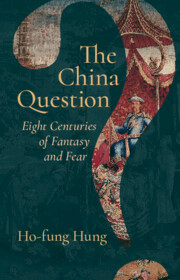
For centuries, Western scholars portrayed China either as a land of superior morality, economy, and governance or as a formidable country of pagans that posed a global threat to Western values. Idealized images of China were used to shame rulers for their incompetence, while China was demonized as an external threat to cover up domestic political failures. In the twentieth century, the geopolitics of global capitalism have facilitated more nuanced perspectives, but the diversifying of knowledge about China is far from complete. In this thought-provoking study, Ho-fung Hung finds that both Western elites and China's authoritarian regime today continue to promote many Orientalist stereotypes to advance their economic interests and political projects. He shows how big-picture historical, social, and economic changes are inextricably linked to fluctuations in the realm of ideas. Only open debate can overcome extremes of fantasy and fear.
This article outlines a theoretical framework for interpreting the meaning and function of political protest in modern democracies and develops normative criteria for assessing its democratic quality. To allow for a better understanding of how social structures, legal institutions, and political engagement interact in protest, I combine analytical perspectives from social theory and democratic theory. A useful first distinction, I argue, is between reformist and transformative forms of protest. While reformist protest does not challenge the given framework of the modern democratic order, transformative protest politicizes the basic principles of that order. Finally, I develop four criteria to identify emancipatory traits within protest movements: 1) expanding the circle of those who benefit from the fulfillment of democracy's promises; 2) the establishment of discursive democratic spaces; 3) a balance between dramatization and exchange; and 4) a willingness to become someone else.
Unlike theories in physics, social theories are usually tested by applying statistical hypothesis testing to observational data. This approach has more problems than commonly realised owing to false positives and model uncertainty, and it inhibits the development of social science. A better method to test a theory is by making definitive predictions that, if proved, strongly support the theory against alternative explanations.
This article builds on the Linguistic Society of America's Statement on Race to argue that linguistics urgently needs an interdisciplinarily informed theoretical engagement with race and racism. To be adequate, a linguistic theory of race must incorporate the perspectives of linguistic researchers of different methodological approaches and racial backgrounds and must also draw on theories of race in neighboring fields, including anthropology, sociology, and psychology, as well as speech and hearing sciences, composition and literacy studies, education, and critical interdisciplinary race studies. The lack of comprehensive and up-to-date theoretical, analytical, and political understandings of race within linguistics not only weakens research by erasing, marginalizing, and misrepresenting racially minoritized groups, but it also diminishes the impact of the entire field by devaluing and excluding the intellectual contributions of researchers of color, whose work on this topic is rarely welcome within linguistics departments. The article therefore argues for a rethinking of both linguistic scholarship and linguistics as a discipline in more racially inclusive and socially just terms.
Volunteering research focuses predominantly on predicting participation in volunteering, proceeding from the quasi-hegemonic foundation of resource theory and dominant-status theory. Empirical research in this tradition has provided extremely robust evidence that dominant groups in society are more likely to volunteer. At the same time, it has reinforced the status quo in the production of knowledge on volunteering, thereby neglecting the clear problematic of “inequality in volunteering.” Compared to the guiding question of “participation,” the concept of “inequality” can generate a more variegated, critical, and change-oriented research agenda. With this special issue, we aim to build a “new research front” in the field of volunteering. In this introduction, we advance a novel research agenda structured around a multidimensional understanding of inequality, concomitantly delineating four central research programs focusing on (a) resources, (b) interactions, (c) governmentalities, and (d) epistemologies. We discuss the focus of these lines of research in greater detail with respect to inequality in volunteering, their main critique of dominant research on participation in volunteering, and key elements of the new research agenda.
European studies have traditionally relied on the power of broad concepts to account for the experience of the European Union: be it integration, governance, market, or legal order. Many of these concepts originated in social sciences. Yet, one concept is conspicuously absent from this list: ‘society’ was seen as ill-suited for picturing European integration. This background makes the recent and pervasive return of the term ‘society’ in the EU institutional discourse even more apparent. The paper attempts to propose a framework within which to think of the EU and its law in terms of European society makes sense. First, it argues that this turn to society is a response to challenges posed to the core assumptions upon which EU law has been predicated. Secondly, it inquiries about the sort of society produced by the law of European society. Thirdly, it suggests a new development for EU law and EU legal studies, integrating in their technical and conceptual appartuses additional resources and critical knowledge drawon from social sciences and social theory.
Chapter 2 starts with a meditation on David Riesman’s concept of “other-direction,” laid out in his classic study The Lonely Crowd as a theoretical baseline for my book, moving from other-direction to émigré-direction to enemy-direction. I consider various paradigmatic experiences of transatlantic migration and their consequences for American sociality, with a special focus on conceptions theorized by Black intellectuals, such as Zora Neale Hurston and Alain Locke, and their consequences for a symmetrical approach to the intellectual history of American-European collaborations in World War II. The chapter provides a theoretical outline for understanding the sources and aspirations of the cool-headedness observed in these collaborations.
Few social scientists expected another major inter-state war in Europe. The dominant positions either confine warfare to the dustbin of European history or downplay its significance in late modernity. Sociologists of war have been less surprised by recent developments, however. In a wider socio-historical context warfare remains a crucial catalyst of social change. No other social phenomenon has continuously influenced the social world to such an extent and this has been particularly the case in European history. In this article, I critically review recent developments in the sociology of war. I also look at the ways in which existing analytical tools can be deployed to explain the return of inter-state warfare in Europe. I argue that the integration of longue durée comparative historical sociology with micro-sociological scholarship on everyday behaviour in war is the best way forward to understanding the long-term dynamics of war and society.
The Introduction explains the ‘theses and documents’ mode of proceeding, provides a quick overview of the period covered historiography, including recent work by political scientists, explains the economic underpinnings of the religious systems analysed, and introduces the concept of ‘deep structure’.
The emergence of ‘compassionate cities’ and ‘compassionate communities’ (CCC) as social movements has become a pronounced development in public health approaches to the end-of-life. Drawing on the World Health Organisations’ Ottawa Charter, it contends that end-of-life care has become individualised and medicalised and promotes the ‘rediscovery’ of community approaches. Drawing on a range of sociological theory insights, it deploys a ‘critical interpretative’ analytic approach to literature identified in a narrative review. The paper aims to question the affirmative consensus that exists around CCC by building on the emergence of critical themes have recently emerged in various meta-reviews. This analysis identifies tensions and inconsistencies between the ideals of The Ottawa Charter, CCC practice and a relatively superficial and uncritical deployment of theory, particularly in relation to its status as a conservative or radical movement. The paper concludes by suggesting constructive ways forward.
This paper is interested in the spread of an autocratic ideology and the emergence of a societal belief. It is often assumed that the greater the capacities of an autocratic regime to inculcate an ideological belief into the minds and hearts of subordinate citizens, the more an autocratic ideology is shared in a given society. The extent of an ideological belief is explained by a direct and immediate function of its indoctrination capacities. The paper does not question this top–down, macro–micro approach, but argues that the spread of an ideology also depends on stabilizing micro–micro interactions and micro–macro linkages. In this light, the paper makes use of James Coleman’s famous explanatory model and theorizes the different partial mechanisms. It pays particular emphasis on the micro–macro mechanism. Borrowing insights from epidemiology, it argues that three classes of parameters should be taken into closer consideration: timing, contact structure, and the contagiousness of an ideology. In empirical terms, the paper illustrates its theoretical reasoning with the dissemination of the North Korean Juche ideology from the 1950s to the early 1970s, which represents an extreme case of a rapidly ideologizing autocracy. The paper relies on secondary sources as well as archival material retrieved from the former embassy of the German Democratic Republic in Pyongyang.
This chapter will introduce you to some of the key formal social work theories that underpin practice. We begin with the individualistic and systems-based theories that originated in psychology and conservative sociology respectively. As was evident in Chapter 5 on the history of social work, these establishment theories generally dominated social work before the emergence of critical social work theories. We then shift our attention to the development of critical theories, such as Marxist, radical, structural, feminist and anti-oppressive perspectives that aim for social justice and autonomy, and discuss the more recent contribution of poststructural and queer theories to the evolution of critical theories and to critical social work. The newer critical theories developed out of critiques of the older establishment theories, so it is necessary to have some familiarity with the principles of both. Finally, we draw on research with our first-year students to demonstrate the application of theory in relation to a case study.
In this book, Jonathan Valk asks a deceptively simple question: What did it mean to be Assyrian in the second millennium bce? Extraordinary evidence from Assyrian society across this millennium enables an answer to this question. The evidence includes tens of thousands of letters and legal texts from an Assyrian merchant diaspora in what is now modern Turkey, as well as thousands of administrative documents and bombastic royal inscriptions associated with the Assyrian state. Valk develops a new theory of social categories that facilitates an understanding of how collective identities work. Applying this theoretical framework to the so-called Old and Middle Assyrian periods, he pieces together the contours of Assyrian society in each period, as revealed in the abundance of primary evidence, and explores the evolving construction of Assyrian identity as well. Valk's study demonstrates how changing historical circumstances condition identity and society, and that the meaning we assign to identities is ever in flux.
This chapter introduces the main themes of the volume, Anticolonialism and Social Thought. It provides a brief overview of the history of anticolonialism and argues that anticolonialism in history generates social thought and social theory.