To save content items to your account,
please confirm that you agree to abide by our usage policies.
If this is the first time you use this feature, you will be asked to authorise Cambridge Core to connect with your account.
Find out more about saving content to .
To save content items to your Kindle, first ensure no-reply@cambridge.org
is added to your Approved Personal Document E-mail List under your Personal Document Settings
on the Manage Your Content and Devices page of your Amazon account. Then enter the ‘name’ part
of your Kindle email address below.
Find out more about saving to your Kindle.
Note you can select to save to either the @free.kindle.com or @kindle.com variations.
‘@free.kindle.com’ emails are free but can only be saved to your device when it is connected to wi-fi.
‘@kindle.com’ emails can be delivered even when you are not connected to wi-fi, but note that service fees apply.
The Introduction theorizes the relationships between tragedy affect and labor within modern US fiction. Affect is key to showing how and in what forms a classical mode like tragedy persists into late twentieth- and early twenty-first-century novels. Likewise a study of the changing organization of labor – a shift in wage work toward jobs described as immaterial or affective – is central to understanding why and under which historical conditions we see the resurgence of tragedy as affect in major works of literature. Literature in this argument articulates the collective imaginary of a people in a specific time and place. The chapter proposes that the apposition of an ill-fated and newly created class of immaterial laborers during the economic and political crises of the postwar period generates a tragic structure of feeling. Tragedy resides as both a form and a feeling that are as much concerned with the fearful misery of singular characters caught up in domestic dramas as with collective suffering played out on a public (and more overtly political) stage.
Chapter 4 shows how novels engaged with narratives of racial coherence as Cuban slavery came to an end. Because of their ability to construct clashing voices, bring them into a tense truce via free indirect discourse, and engage the reader’s own knowing and refusal to know, novels were uniquely poised to stage racial passing. The chapter puts the first novel published by a Cuban of African descent, Martín Morúa Delgado’s Sofía (1892), in dialogue with two others: Cirilo Villaverde’s Cecilia Valdés (1882) and Ramón Meza’s Carmela (1887). As Sofía shows, white identities were secured through hypocrisy and cynicism – an open secret that Villaverde and Meza had not fully acknowledged. In this way, the chapter traces the conditions of possibility for passing-as-open-secret. While in the United States passing is generally understood as a divergence between the private and public identities of a given subject – the public one being perceived as a deception that serves to hide the private one – these novels delved into situations in which this divergence was willfully ignored, and in which white identity was not invalidated by the perception of fraud.
This chapter examines two conservative novels written in the 1810s: Harriet Waller Weeks’ Memoirs of the Villars Family, or The Philanthropist and Lady Dunn’s The Benevolent Recluse, both of which are concerned to depict how the upper ranks can remake a moral economy based on a changing notion of benevolence and philanthropy. These novels have a didactic concern to represent philanthropy and benevolence as a particular ideological practice with a moral power to justify the traditional ranks within English society. In so doing, they engage in the period’s debates about the nature of poverty, and the redefinition of the social responsibility of the privileged towards the poor. In the end, both novels fail to produce a conservative ideology to rival the more bourgeois/democratic ideologies we find in other novels of the period that we still read today. However, in that failure is the beginning of a modern concept of philanthropy in the exchange logic of the commodity: a return on the gift invested. Thus, the reciprocity of moral obligations would now unify and justify hierarchical social relations under the guise of benevolence and moral judgement. Understanding philanthropy as acquiring this exchange value at this historical moment provides a framework for the discussion of these conservative novels, revealing their ideological significance to our understanding of this period, as well as why we may have forgotten them.
This essay explores the significance of modern French writers, especially Flaubert, Maupassant, and Proust, for Bowen’s thinking and writing. It traces the influence of these figures on her short stories, essays, and novels. Across her career, she reviewed, translated, and cited these and other French authors. In Maupassant, she found a way of mapping the relation between short story and novel onto the division between poetry and prose. From Flaubert, she borrowed a close attention to pacing and rhythm, as well as an interest in the more indirect ways that history might intervene in the novel. Most obviously, perhaps, Proustian notions of memory inflected her own plots and narrative structures, as well as her prose style. Modern French fiction offered Bowen a series of models – and foils – for her own developing theories of character, style, and form. These intertextual resonances reveal how Bowen situated herself in a broader European tradition, rather than British, Irish, or English alone.
Chapter 1 focuses on fictional narrative and gameplay. The novel, understood as a game space, provides an apt literary form to probe the distinction between, and interpenetration of, fiction and reality. My discussion addresses how risk is hypothetically imagined in a future-oriented sense and counterfactually in a retrospective sense, as something that has already happened but can be overwritten or reinvented by fiction. In either case, risk transforms the experience of literature and the world. Through horizontal comparisons of approximately contemporary works, I read together Sino-French and Hong Kongese Sinophone writers: Shan Sa with Dorothy Hiu Hung Tse and Dai Sijie with Dung Kai-cheung. This comparison brings together, for the first time, Sino-French and Hong Kongese Sinophone writers who share Sinitic linguistic and cultural heritage as well as an insider–outsider relation to national Chinese literature.
This chapter examines what are arguably the two most jarring moments in the relationship between the history of technology and that of the English novel by way of two novels that refigure imaginary space first for a national and then for an international readership. Charlotte Brontë’s Shirley (1849) demonstrates how the intervention of the power loom spelled the doom of the working household by moving productive labor from the home to the mechanized factory, thereby transforming domestic life into a space reserved for that highly cathected version of social reproduction: the romantic couple and nuclear family. A century and a half later, Tom McCarthy’s Remainder (2005) spells out how the spatial transformation of Victorian realism as communication technology progressively subsumed the trappings and function of both the home and communal spaces reserved for the attitudes, behaviors, and events composing everyday life and spat them out in a continuous flow of information. Where realism divides literary space into reproduction and production, love and labor, respectively, the contemporary novel collapses these categories as the former becomes a repository of information to be algorithmically guided toward a new class of consumers who desire nothing more than to become the very objects they consume.
In the eyes of other nations, Britain was a colonial, maritime, and mercantile country, whose still strong interests in Europe were expressed largely culturally. This perception made the Enlightenment a broadly recognizable movement, carried on over national boundaries and concerned with ideas such as ‘the modern’, of religious toleration, of progress, of the ‘science of man’ so strongly supported by David Hume, and of human (or rather, white and masculine) dignity. It self-consciously located itself geographically in Europe and chronologically in ‘the modern age’, which, after much debate in the early part of the century, it saw as superior to that of the Greeks and Romans, in spite of their immense cultural legacy, which was shared by all Europeans. Yet in the end, this chapter argues, in spite of a shared ancient legacy, Britain remained pulled in two directions, the colonial and imperial on the one hand, and the European on the other.
This chapter explores the uneasy relationship between Gulliver’s Travels and scholarship on the development of the English novel during the eighteenth century. The chapter argues that to approach the miscellaneous Gulliver’s Travels with a rigid and absolute conception of genre is to overlook Swift’s engagement with a range of new and old fictional modes. Placing Swift in context means recognising the doubtful applicability to Gulliver of retrospectively formulated assumptions about the novel, including consistency of character. The final section of the chapter looks beyond Gulliver to consider the novelistic qualities of A Tale of a Tub and the lesser-known Memoirs of Capt. John Creichton.
Understanding contemporary African American literature, this chapter argues, requires accounting for the rich, multifaceted dialogue between Black literary production and the visual arts. This chapter traces what Toni Morrison called the “alliances and alignments” between literature and the other arts by analyzing the aesthetics and themes of contemporary African American writing and examining the cross-arts influences that shaped it. The dialogue between African American literature and visual culture is part of a much longer tradition, and contemporary writers have built on many earlier precedents. But this chapter also unpacks how important historical changes, including developments in media technology and the rise of Black art institutions, have generated new and more numerous intersections between Black literary and artistic cultures since the 1970s. Focusing on three key spaces that provided material support and thematic inspiration for Black writers’ experiments with visual art – the home, museum, and university – this chapter examines how authors working in a range of literary genres, including novels, poetry, plays, screenplays, memoirs, and essays, engaged with a variety of visual arts, including painting, film, sculpture, and photography. The influences and aesthetics of visual culture, the chapter shows, powerfully infuse the work of many writers today.
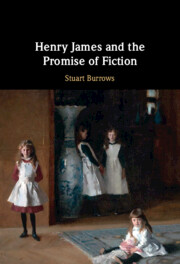
My introduction makes four closely related arguments: that the promise functions as the governing trope of James’s work, that James rearranges the moral landscape of the nineteenth-century novel, that the depictions of promise-giving in James’s fiction challenge a number of moral philosophy’s accounts of the nature of obligation, and that the relation between morality and literature is better posed in terms of form than in terms of content. I explore a range of ethical dilemmas posed by philosophers working in moral philosophy, speech act theory, and the philosophy of identity. In addition I sketch out a short history of the nineteenth-century novel, focusing on the centrality of the promise to British, French, and American writers.
What is the relation between the novel and ethical thought? Henry James and the Promise of Fiction argues that the answer to this question lies not in the content of a work of fiction but in its form. Stuart Burrows explores the relationship between James's ethical vision and his densely metaphorical style, his experiments with narrative time, and his radical reimagining of perspective. Each chapter takes as its starting point a different aspect of an issue at the heart of moral philosophy: the act of promising. Engaging with a range of moral philosophers and literary theorists, most notably David Hume, Friedrich Nietzsche, Paul Ricoeur, and Jacques Derrida, Henry James and the Promise of Fiction argues that James's formal experimentation represents a significant contribution to ethical thought in its own right.
While Robinson Crusoe has been dramatized many times, Defoe often expressed suspicion of theatre. In The Family Instructor (1715), Defoe explores theatre-going as a gateway to other sins and a form of frivolity. The Fortunate Mistress (1724) depicts theatricality as part of elite corruption and an expression of the heroine’s deceptive practices. While including such versions of antitheatricality in such narratives, Defoe nevertheless weaves theatrical techniques into his own writing and does not engage in the passionate hostility to the stage that we see in some of the religious moralists of his time.
This chapter maps the literary terrain that Defoe’s novels entered into and considers his position in literary history as the so-called father of the English novel. While Defoe would come to be associated with the emergence of a new style of realist fiction, he draws on, combines, and exploits the audience for popular generic forms, including romances, travel and adventure tales, romans à clef, pirate chronicles, jest books, collections of anecdotes, and criminal biographies. Extending his non-fictional work, Defoe experimented with narrative strategies to capture everyday experience – an artistic aim we now associate with various forms of realism. Provocative from the start, Defoe’s novels earned detractors and defenders but were recognized as central to the English canon as early as the turn of the nineteenth century. The chapter traces Defoe’s significance to the work of both practitioners and scholars of the novel form, including Virginia Woolf and J. M. Coetzee.
This chapter examines what ‘popular’ and ‘fiction’ may have meant to Defoe before ‘popular fiction’ was a generic category, and then looks at Defoe’s own fictions as an anxious attempt to avoid alignment with those established forms of literature known and demonized as ‘romances’ and ‘novels’. Defoe takes the sex out and puts the ‘history’ in, along with a large moral dose of religious prophylaxis; the whore biography and criminal/pirate life were alike turned into moralistic stories of economic redemption. Yet, given his status as a businessman and exile from elite literary circles, Defoe’s resistance to popular fiction was ambivalent, and he was always aware of the supplementary pleasures of his texts. The individual survival stories, with their incident-rich, class-dissolving, non-classical mode of contemporary, evolving prose, were of high price but often rendered ‘popular’ by the publishing industry itself, which filleted them for chapbook consumption by any literate person.
This chapter considers the place of Ishiguro’s work within the novel tradition. It traces Ishiguro’s dialogue with the novel form, as this extends from Artist of the Floating World to Klara and the Sun, in order to examine the means by which he adapts the tradition to his own ends. The chapter begins and concludes with a reading of Klara and the Sun that focuses on the role of imitation. How far can Klara, the ‘artificial friend’, be regarded as a copy of an existing form of life, and how far does she manifest a new mode of being? And how does Ishiguro adapt the apparatuses of the novel in order to explore the difference, between the imitation of an existing life and the creation, in prose, of an unprecedented one, a fictional life without a model in the world?
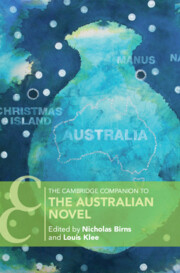
The Cambridge Companion to the Australian Novel provides a clear, lively, and accessible account of the novel in Australia. The chapters of this book survey significant issues and developments in the Australian novel, offer historical and conceptual frameworks, and demonstrate what reading an Australian novel looks like in practice. The book begins with novels by literary visitors to Australia and concludes with those by refugees. In between, the reader encounters the Australian novel in its splendid contradictoriness, from nineteenth-century settler fiction by women writers through to literary images of the Anthropocene, from sexuality in the novels of Patrick White to Waanyi writer Alexis Wright's call for a sovereign First Nations literature. This book is an invitation to students, instructors, and researchers alike to expand and broaden their knowledge of the complex histories and crucial present of the Australian novel.
“The Cambridge Companion to the Australian Novel provides a clear, lively, and accessible account of the novel in Australia. The chapters of this book survey significant issues and developments in the Australian novel, offer historical and conceptual frameworks, and demonstrate what reading an Australian novel looks like in practice.”
This chapter contests the prevailing interpretation of the post-Mabo turn as a decisive new era in Australian cultural history. While the Mabo High Court decision of 1992 was an important milestone in struggles for Indigenous land rights, the insistence on this date as a literary periodization neglects the continuities in settler culture that still structure settler fiction in Australia. Alternatively, recent First Nations fiction suggests possibilities within and outside dominant paradigms of legality.
The introduction to the volume situates surrealism in relation to theories and historiographies of the novel, noting ways in which the surrealist novel both fits into and diverges from these, and addresses tensions and contradictions generated by the surrealist use of the novel form. It provides a historical context to the development of the surrealist novel across the globe, and discusses the ways in which the surrealist novel has influenced literary forms and styles such as the nouveau roman, the postmodern, as well as the magical realist novel. Moreover, the introduction provides a rationale for the structure of the volume, and a general discussion of notable themes, techniques, and formal specificities of the surrealist novel.
One can ascribe a double origin to surrealism in 1924, André Breton’s First Manifesto of Surrealism and Louis Aragon’s A Wave of Dreams. If one can see these texts as a double manifesto recapitulating previous experiments and launching a programme, they also plant the seeds for a later divergence. I locate the roots of the breakup between Aragon and Breton less in their politics than in opposed conceptions about the role of the novel and its power to explore the unconscious. Such a divergence is founded upon different interpretations of Freud’s concept of the unconscious. The two founders of surrealism could not agree about the place of a collective unconscious in a surrealist mythology, which can be verified by comparing Anicet and The Paris Peasant on the one hand, and Nadja on the other. I conclude by returning to Walter Benjamin’s critical assessment of surrealism. Halfway between Breton and Aragon, Benjamin identified some pitfalls in a surrealist mythology of the unconscious but intuited what could be gained from a writing capable of exploring reality and surreality together.