To save content items to your account,
please confirm that you agree to abide by our usage policies.
If this is the first time you use this feature, you will be asked to authorise Cambridge Core to connect with your account.
Find out more about saving content to .
To save content items to your Kindle, first ensure no-reply@cambridge.org
is added to your Approved Personal Document E-mail List under your Personal Document Settings
on the Manage Your Content and Devices page of your Amazon account. Then enter the ‘name’ part
of your Kindle email address below.
Find out more about saving to your Kindle.
Note you can select to save to either the @free.kindle.com or @kindle.com variations.
‘@free.kindle.com’ emails are free but can only be saved to your device when it is connected to wi-fi.
‘@kindle.com’ emails can be delivered even when you are not connected to wi-fi, but note that service fees apply.
By bringing three narratives about creation and life found in the Hebrew Bible into conversation with the Gaia hypothesis, this chapter offers a Jewish response to contemporary planetary science. Adumbrated by the influence of concepts taken from Lurianic Kabbalah and Hasidism in Hans Jonas’ and Martin Buber’s respective philosophies, the chapter argues that the conceptions of creation and life put forth by the book of Job offer poetic and theological expression to a commitment to the enduring value of life on a living planet.
Articulating George MacDonald’s theology is a complicated project, given his well-known resistance to theological systems and the allusive character of his writing. Explicit theological statements are replete in his sermons and letters, although they usually emerge suggestively, in contrast to particular foils in Victorian Christianity. In his imaginative works, a variety of fictive voices emerges alongside the voice of a pastoral narrator; these voices are sometimes difficult to distinguish. The variety of sources that shaped his theological imagination and the extent to which he adhered to Christian orthodoxy (variously conceived) remain matters for debate. This chapter distils key themes of MacDonald’s theology across his body of work, including: the generative love of God as the deepest reality, the epistemological priority of ‘childlike imagination’ in response, and the soul-shaping journey of suffering leading to glory. It also notes tensions in MacDonald’s theology regarding divine providence, theodicy, and the possibility of universal reconciliation.
The evil-god challenge brings to scrutiny a belief taken for granted by many traditional theists: God’s goodness. Evil-god challengers claim that evil-god parodies of theistic arguments are as reasonable as the originals, calling into question the assumption of God’s goodness. I take a new approach to this challenge by considering how great good and great evil are best promoted in conjunction with evil-god’s character and evidential arguments regarding lost or absent goods and evils. I conclude that the world has lost far too many great evils for the evil-god hypothesis to be a serious challenge to traditional theistic belief in God’s perfect goodness.
In this chapter, a theodicy that addresses the hard questions about innocent and horrendous suffering is presented and defended in dialogue with analytic philosophers of religion. It is argued that, possibly, every case of innocent, nonsacrificial suffering will retrospectively be transformed into sacrificial suffering that enables a greater intimacy with God. This could take place if God were to offer all innocent sufferers the opportunity to present – if necessary, from a postmortem state – their previous suffering to God as a sacrifice that perfects their love and unites them closely with him.
This chapter introduces the notion of theodicy, addresses objections against the legitimacy of theodicy, and summarizes the main argument of the book. The relationship between human and divine love is also thematized, and it is argued that the former but not the latter has an essential relation to suffering.
In this book, Mats Wahlberg explores one of the perennial topics in Christian theology. Drawing on ideas from Thomas Aquinas, the Carmelite mystical tradition, and contemporary analytic philosophers, he suggests a new way of responding to the philosophical and theological problem of evil. Wahlberg analyzes the logical relationship between love, suffering, and sacrifice as conceived in the Bible and considered by Christian saints and mystics through the ages. Emphasizing the embodied nature of human love, he argues that love essentially includes a disposition to act self-sacrificially in a wide range of 'possible worlds'. This analysis provides the building blocks for a new theodicy, which portrays the sacrificial dimension of love as essential for the attainment of human fulfilment and deep intimacy with God. The book offers new insights into the relationship between self-love and love for others, the nature of sacrifice, and the legitimacy of theodicy in a world filled with horrendous evils.
This chapter offers an interpretation of early Greek conceptions of divine and human as a coherent constellation of ideas organised around the core notions of human vulnerability, short-sightedness and mutability. Beginning with Achilles’ speech to Priam in Iliad 24, I discuss these key principles and their expressions in genres including epic, elegy, choral lyric, philosophy and historiography. I analyse some of their specific formulations and inflections, with a particular focus on perceptions of the unpredictable and unstable nature of human affairs, the conception of human beings as ephēmeroi (‘creatures of the day’), ideas of divine retribution and the ‘archaic chain’ linking prosperity, greed, arrogance, delusion and disaster. In a second step, I examine the relationship between these ideas and the narratives in which they are embedded, mainly using the examples of the Iliad and Solon’s Elegy to the Muses (fr. 13W).
According to recent accounts of doxastic wronging, we can morally wrong others by the beliefs that we form about them. This paper shows that the case for doxastic wronging yields a novel moral argument both against beliefs about evil prevalent in theistic responses to the problem of evil, as well as against theistic beliefs that posit the existence of a morally perfect God. The moral risks incurred by these beliefs generate an additional epistemic argument against them. Various responses to these arguments are considered – denying doxastic wronging altogether, rejecting moral encroachment, or adopting a nondoxastic theory of religious commitments – and are found to be either unsuccessful in meeting both the moral and epistemic objections and/or to face several significant challenges of their own. The paper contends that the risk of doxastic wronging makes belief in a morally perfect God and beliefs instrumental in responses to the problem of evil more difficult to epistemically justify than previously thought.
In The Image of God (2022), Eleonore Stump seeks to address a residual problem that remains even after a successful theodicy, namely the problem of mourning. The problem of mourning concerns the appropriateness of certain evaluative responses (such as grief or disappointment) with respect to the world that contains suffering. To answer this problem, Stump seeks to demonstrate how lives with suffering are maximally great precisely because they contain suffering: some person S’s most glorious self is to be located in her participating in the sufferings of Christ and thereby magnifying God’s love in herself. This paper identifies a problem with Eleonore Stump’s solution to the problem of mourning, namely valorisation: Stump’s solution entails that there is a type of suffering that is constitutive of value and therefore a reason-giving end in it itself. Valorisation is something we should avoid. I therefore present a different solution to the problem of mourning that is based on the incommensurability of S’s best lives. After this I address one final issue – the problem of preference – that is in the neighbourhood of Stump’s problem of mourning. I argue that if S’s best lives are incommensurate, we can reject the preference problem as incoherent.
A non-identity theodicy is any attempt to explain why an all-powerful, all-knowing, all-good, and all-loving God might cause or permit the pain and suffering of his creatures that makes use of one or more claims about the identity conditions of those creatures. Most non-identity theodicies make use of one identity thesis in particular: origin essentialism, the thesis that the particular circumstances in which a person first comes into existence are essential to that person. In this paper, I argue that, despite some impressive upshots, origin essentialist non-identity theodicies fall short in at least two ways. I argue, furthermore, that both of these shortcomings can be rectified by building a non-identity theodicy on a stronger identity thesis: superessentialism, the thesis according to which every event in the life of a person, and not just the circumstances in which he or she first begins to exist, is essential to that person.
This chapter begins with an interpretation of the final sections of the ‘Spirit’ chapter of the Phenomenology. Here, Hegel diagnoses the paradoxes of Kantian theodicy before going on to elaborate, in a highly allegorical idiom, how he envisages overcoming the dichotomy between divine and human standpoints that plagued his Leibnizian and Kantian predecessors. By developing the thesis that evil is a structural possibility of rational self-conscious, the culminating dialectic of ‘conscience’ posits an essential relation between human freedom and the historicity of the good; the ideal of conscience, of a unity between natural and ethical wills, is their continually coming apart. The chapter then moves away from the Phenomenology to elaborate the resulting picture of Hegelian theodicy in its own terms, drawing also on Hegel’s preface to his Philosophy of Right. Hegelian theodicy stands revealed as reconciling us to reality by fulfilling a primarily diagnostic function, resolving our theodical puzzlement by explaining its mistaken, but intelligible, origins. To bring out the specificity of this view of Hegel’s project, the chapter ends by contrasting it with two recent alternatives, Michael Rosen’s ‘right Hegelian’ and Robert Brandom’s ‘left Hegelian’ interpretations.
Following Allen Wood, Leibniz’s theodicy can be seen as both totalitarian – it claims that divine wisdom informs every single part of creation – and wholesale – it proves this only in general terms. This chapter explores the criteria Leibniz considers to be criteria of goodness and how he argues, in wholesale fashion, for their instantiation. Leibniz’s criteria can be divided into two categories: metaphysical, which concern properties and features of being as such, and anthropocentric, which bear on the morality and happiness of human beings. What unites them is an overarching conception of goodness as rational intelligibility: a maximally good world provides a maximal number of actual opportunities for rational creatures to appreciate its goodness and thereby perfect themselves. Closer attention to Leibniz’s handling of criteria, however, reveals a danger that anthropocentric ultimately dissolve into metaphysical criteria, the practical into the theoretical. As a result, Leibniz’s project is threatened with dialectical contradiction: the existential concerns that govern his theodicy’s underlying motivation cannot be articulated in the theoretical terms of its execution.
This chapter begins by setting out various axes along which to categorise different kinds of theodicy. In particular, it is useful to distinguish between the kind of puzzle to which a theodicy responds and the kind of solution it proposes; between theodicies with theoretical and theodicies with existential motivations; and between theodicies that offer defences of religious doctrines and theodicies that endeavour to explain how those doctrines should be understood. With this framework in place, the chapter outlines certain central traits of the theodicy tradition prior to Leibniz, in order to bring out the historical peculiarity and radicality of Leibniz’s own enterprise. A brief look at the example of Augustine allows us to make two further crucial distinctions: between the project of explaining how God can be causally implicated in evil and that of addressing the apparent inadequacy of creation; and between theodicies that begin with fixed axiological criteria and those that think the nature of goodness must be gradually revealed.
The introductory chapter compares two systems: the cosmological system of the Cherokee Nation and the Ogallala aquifer in Kansas. Ontological and epistemological systems are used to illustrate a new method of comparing phenomena across distinct cultural systems. Comparison is not based on the similarity between cultural or religious phenomena but on the analogy or homology of element function within distinct systems.
This chapter turns to the execution of Kantian theodicy. Concentrating on the external obstacles to realising the highest good, it surveys the various theological commitments Kant regards as concomitants of hoping for their removal. Of especial importance is Kant’s socio-historical theodicy, which exploits a notion of purposiveness to explain how human social dynamics facilitate an imminent, historical progression towards the realisation of the good. Attention to the content of Kantian theodicy, however, shows how it not only reintroduces central elements of its Leibnizian predecessor, albeit within a radically altered epistemic framework, but involves a structural invocation of divine freedom that reveals fundamental continuities with Kant’s own pre-critical theodicy. This invocation in fact leads to a paradox at the heart of Kantian theodicy: echoing the dialectical contradiction between motivation and execution that afflicted Leibnizian theodicy, the finite, practical perspective that motivates Kantian theodicy proves impossible to maintain in light of the divine, infinite perspective integral to its execution. With this paradox in mind, we can ask whether Kant’s own critical, ‘authentic’ theodicy in fact survives the critique launched in On the Miscarriage of All Philosophical Trials in Theodicy.
This chapter charts the evolution of Kant’s thinking about theodicy and explains the fundamental shifts in his attitude towards the project. It begins by examining his pre-critical sketch for a theodicy that remains firmly within the Leibnizian mould while repairing its structural inconsistencies and gaps. At the heart of his reparative measures is a different conception of divine freedom, one that Kant will retain throughout his critical period. The chapter ends with a consideration of his late essay On the Miscarriage of All Philosophical Trials in Theodicy of 1791, in which he rejects the entire tradition of rationalist theodicy, whilst still maintaining the importance of an ‘authentic’ alternative. The basis of his rejection of previous theodicies is moral: the very pursuit of such a theodicy involves sacrificing individual freedom and rejecting an autonomous stance. Accordingly, the central sections of the chapter explain Kant’s critical concept of autonomy and how the theory of normativity it entails is fundamentally incompatible with a rationalist conception of value.
After sorting out a half-dozen forms of the problem of evil , the chapter examines several particularly striking facets of Jewish discussions of evil, such as “protest literature,” “afflictions of love, ” and “antitheodicy” (according to which it is wrong in some way-- religious, moral, pragmatic-- to engage in theodicy).
This article examines the poetry of Raïssa Maritain as a distinctive form of theodicy shaped by prayer, suffering, and the catastrophic violence of the twentieth century. Situating Maritain’s poetic work within the context of debates on suffering, this article places her in dialogue with Johann Baptist Metz’s concept of Leiden an Gott (‘suffering unto God’), as well as with the challenges to theodicy articulated by Elie Wiesel and Emmanuel Levinas. While Wiesel’s refusal of theology after Auschwitz and Levinas’s ethical critique of teleological accounts of suffering underscore the crisis of theodicy, Metz offers a theological response that centres on prayer as anguished address to God rather than rational explanation. I argue that Maritain’s poetry anticipates, embodies and extends this insight by functioning as a form of poetic prayer that confronts evil without aestheticising or prematurely redeeming suffering. Through close engagement with poems written before and during the Second World War, I show how Maritain’s poetic language gives voice to accusation, lament, and solidarity with the suffering other, while nonetheless holding open the possibility of redemption. In doing so, her work offers a humane poetic theodicy that both complements and critically deepens Metz’s political theology.
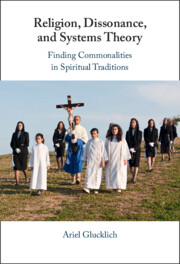
Religious belief systems are often marked by internal dissonance. Mitigating this dissonance can lead to surprising religious phenomena, including blood libels, scapegoating, religious violence, the worship of saints and martyrs, asceticism, austerities, as well as processions, fasting, and clowning. In this study, Ariel Glucklich provides a new approach to understanding how religious actions emerge in the context of belief systems. Providing an innovative psychological and social understanding of the causes that stimulate believers to action, he examines a range of religious phenomena in India, Israel, Austria, Italy, and the United States. Glucklich's new theory enables recognition of the patterns that account for the full complexity of actions inspired by religious beliefs and systems. His systematic comparison of actions across traditional boundaries offers a novel approach to cause and effect in comparative religion and religious studies more broadly. Glucklich's book also generates new questions regarding a universal phenomenon that has escaped notice up to now.
Hegel's claim that his philosophy provides a theodicy tends to be dismissed as an outdated or implausible feature of his thought. Yet through a novel retelling of the development from Leibniz to Kant to Hegel, this book places that claim in a new light, showing its centrality both to Hegel's transformations of such fundamental notions as freedom and goodness, and to his understanding of the task of philosophy as such. The account begins with Leibniz's distinctively modern project of proving that the world is a hospitable home for rational subjects, before turning to Kant's critical appropriation of Leibniz's programme in light of his radical reconfiguration of freedom as autonomy. Hegel's attempt to liberate Kant's philosophy from its residual rationalist and theological commitments then gives birth to his programme of reconciling us with the world, but only by turning the prior tradition of theodicy on its head.