To save content items to your account,
please confirm that you agree to abide by our usage policies.
If this is the first time you use this feature, you will be asked to authorise Cambridge Core to connect with your account.
Find out more about saving content to .
To save content items to your Kindle, first ensure no-reply@cambridge.org
is added to your Approved Personal Document E-mail List under your Personal Document Settings
on the Manage Your Content and Devices page of your Amazon account. Then enter the ‘name’ part
of your Kindle email address below.
Find out more about saving to your Kindle.
Note you can select to save to either the @free.kindle.com or @kindle.com variations.
‘@free.kindle.com’ emails are free but can only be saved to your device when it is connected to wi-fi.
‘@kindle.com’ emails can be delivered even when you are not connected to wi-fi, but note that service fees apply.
This Introduction provides a condensed telling of five hundred years of Romani history within an Atlantic context. It illustrates that Romani people have been part of the modern Atlantic world and that the Atlantic world has shaped the Romani diaspora and Romani people’s sense of who they are. Stories of Atlantic circulations, interactions, connections and exchanges show how Romani people and ideas held about them, transcended empires, nations and borders. The Introduction specifically contextualizes three moments of visibility. During the early modern era, Romani people experienced (often forced) population movements as part of imperial expansions and prompted the translation of European antigypsyism in the context of colonialism, slavery, capitalism, Indigenous genocides and emerging racial thought. At the turn of the twentieth century, nationalistic immigration controls provoked a heightened recognition of Romani people that impacted their experiences, forms of sociability and strategies of mobility. After World War II, as transnational migrants and refugees, they garnered new attention and built diasporic communities in the face of novel and changing international circumstances. Adding Romani people to Atlantic history allows us to think differently about the Atlantic world and transforms our understanding of Romani lived experiences.
Romani people fundamentally shaped the development of early modern transatlantic racialized thought. They were considered, and considered themselves, in relation to the evolving web of beliefs that bound people from four continents together and that prompted new concepts and categories transformative to the lives of all Atlantic inhabitants. Their physical and ideological presence as familiar outsiders made them a referent and template for non-Romani Europeans and American colonists anxious to comprehend and control less-familiar outsiders encountered throughout the Atlantic world. Recent Romani arrivals to Western Europe had primed early modern Europeans to notice certain registers of difference when encountering new strangers abroad. The content of these tropes reproduced with each mention and retrenched with each experience creating a sense of timelessness that stabilized racialized thought. Examples from the sixteenth through nineteenth centuries are drawn from Portuguese, Spanish, French and English Atlantic spaces to show how non-Romani Europeans viewed Romani people, Native Americans, Africans and themselves relationally.
Asylum periodicals participated in complex exchanges of medical and general print that took place in the nineteenth century. Therapeutic publishing spread in different institutions through networks of physicians, who were keen to stay abreast of the newest developments in their discipline. Asylum periodicals themselves contributed to medical communication, once they were in circulation. When launching and supporting periodical publication, however, physicians were not purely driven by self-interest and the interests of their institutions. As asylum periodicals joined the wider networks of print, they enabled patients’ continuous engagement with literary culture and public life. This function was not secondary to most of the publishing projects, but it was an effect sought by physicians for the benefit of those in their care and to support the provision of healthy recreation, which was an important aspect of the moral treatment. The inception, development, and survival of asylum periodicals depended on the exchanges they facilitated – exchanges that were themselves enabled and often encouraged by physicians.
The Romani Atlantic is the first comprehensive look at Romani experiences in the Atlantic World. Together, the essays detail the Romani people's transatlantic circulations, interactions, connections, and exchanges, reinforcing the view that the Atlantic was a zone of contact where identities interlaced and transformed. The geographical points and flows covered include imperial Spain and Mexico, Lusophone Angolan slave trading ports, Ellis Island immigration controls, South-Eastern European villages, and Canadian community centers. Each case study illustrates the migratory flow and reflow of people, ideas, and processes, showing that Romani people have strategically engaged with state instruments, cultivated Romani distinctiveness, and built resilient communities. The Romani Atlantic traces the underexplored history of Romani migration and highlights the ways that Romani agency has shaped the modern world. This title is available as open access on Cambridge Core.
‘He thinks you’ve completely fucked yourselves.’ This was Washington DC in late June 2016, a couple of days after the Leave victory, lunch with one of Obama’s inner circle, and his response to my question about how the President had viewed the outcome. My guest continued, ‘We just don’t understand why you would call a referendum which you didn’t need to hold without being absolutely certain of getting the right answer. Why would you do that? And what happens now you’ve blown yourselves up?’ The Obama team had form in questioning David Cameron’s judgement. They blamed him for miscalculating UK Parliamentary opinion on a proposed US–UK–France attack on Syria, summoning Parliament back from holiday in August 2013, then losing the vote, and triggering a chronically cautious Obama to back away from his plan to bomb Assad’s military bases. Brexit, in their eyes, was more of the same. But the mood on the nightly Washington social circuit was similar: I noticed people staring at me with a near-horrified look in their eyes: ‘What have you done?’
Chapter 15 provides a biographical analysis of Manley O. Hudson’s role as a networker between the League of Nations and American elites during the interwar period. As a professor at Harvard Law School, Hudson played a pivotal role in advancing the League’s agenda in the United States. Through his extensive travels and engagements with American elites, Hudson circulated information, offered advice, and forged connections that helped to shape the American perspective on international law. The chapter examines how Hudson’s life and profession shaped his development into a prominent figure in a transatlantic network formed around the League of Nations system. Drawing on Hudson’s private papers and other archives, the chapter situates his intellectual and professional work within its social and historical context. By exploring Hudson’s intersecting roles as practitioner, advocate, and academic, we gain insight into his evolution as a leading American international lawyer. This examination allows us to understand the self-perception and worldview of one of the key figures in the development of international law and the complex relationship between the League and the United States. The chapter contributes to the trend in international and transnational history that uses biography to portray transnational spaces and experiences beyond national frameworks.
After sketching two indicative moments from Emerson’s 1867 westward lecturing trip – his visit to the Santee Sioux in Minnesota and his visit to a group of Hegelian philosophers in St. Louis – this Introduction to the New Cambridge Companion to Ralph Waldo Emerson gives an overview of the volume contributors’ main thematic emphases. These are Emerson in relation to his contemporary moment; his religious and spiritual development; transatlantic Romanticism; nature, the environment, and climate; ethics and self-reliance; political resistance and slavery; race, US imperialism, and Asia; aesthetics, poetry, philosophy, and experimentalism; and his late style and legacy. While many readers of Emerson are most familiar with the iconic picture of him as the Sage of Concord, this introduction paints a picture of a transitional and transnational Emerson who tirelessly lectured across the United States throughout his lifetime, who can be placed in his contemporaneous transatlantic currents of Romantic literature, religion, philosophy, or science, and who nonetheless looks forward to modernist poetic, aesthetic, or musical innovations.
This chapter examines the historical emergence of white supremacy and race-based slavery in colonial America, challenging any assumption that white supremacy preceded and caused the transatlantic slave trade. English colonizers initially followed Spanish precedents in enslaving both Native Americans and Africans without racial justification, similar to historical practices of enslaving prisoners of war since ancient times. The transformation to race-based chattel slavery occurred primarily between 1660 and 1700, driven by two main factors: the desire for a completely captive labor force for brutal sugar cultivation and fear of slave revolts. This shift was codified through new laws that made “blackness” rather than enslavement the mark of being essentially lower, effectively creating both a slave race and, by extension, a master race. This evolution was neither inevitable nor unopposed, seeing resistance from enslaved people themselves and criticism from some English colonizers who viewed slavery as morally wrong. The emergence of white supremacy is thus a historical construction intimately tied to the development of early capitalism, particularly through the sugar industry.
Relying on a variety of archival sources, including the recently discovered private correspondence of the Uruguayan diplomat Enrique Buero, this article demonstrates that a Latin American bloc with a common agenda emerged in Geneva during the 1920s and transformed the codification of international law in both the League of Nations and the Pan-American Union. Key pressure groups previously thought to have operated exclusively in the Americas were created in the League by Latin American diplomats who wanted to reform international law to protect small states but had lost faith in Pan-Americanism. The article examines the ideological origins of this bloc and the obstacles that it encountered, including an initial tendency among some diplomats to prioritize status-seeking. It charts the Latin American bloc’s success in dismantling obstacles to the League’s involvement in the Americas. Finally, the article demonstrates that the bloc was able to leverage its influence beyond the League, including during the run-up to the 1933 Montevideo Conference.
African popular intellectuals in colonial Freetown, Sierra Leone, during the late nineteenth and early twentieth centuries produced public writing in which they lamented the danger of reading ‘like a European’, or quick and mechanical reading practices, which they argued led to the degeneration of the ‘African mind’. This chapter’s case study of Orishatukeh Faduma’s 1919 Sierra Leone Weekly News column, ‘How to Cultivate a Love For Reading,’ reveals how contributors in Freetown reimagined transatlantic public anxieties about race, nationhood, and madness to encourage local readers to ‘read like an African’, which meant slowly, selectively, and critically. Through public writing, Faduma and other popular intellectuals turned globally popular understandings of racial madness on their head to generate the ‘right’ kind of African reader. They used the press to produce a distinctly African literary culture in between the local and the global, and thus used literacy as a social vehicle of colonial self-making.
The antislavery campaign was in many ways the cradle of the constellation of reform movements and ideologies that are usefully understood as part of a nineteenth-century global reform culture. Chapter 1 surveys the cultural legacy of antislavery among reformers, as it offers a typology of the main motifs and dominant memories. To set the stage for the following chapters, it discusses how abolitionism served both as an organized and as a cultural movement in the US, the UK, France, the Low Countries, and the German states. It argues that though organizational efforts were insignificant compared to the unprecedented scale of popular mobilisation achieved in the Atlantic World, the cultural impact in Continental Europe – divided into a pre- and post-Uncle Tom’s Cabin phase – was lasting and diverse. This impact was twofold: it lay both in the depictions of the institution of slavery that the movement promoted (in a coordinated fashion) and in the way abolitionism itself came to serve as a venerated model.
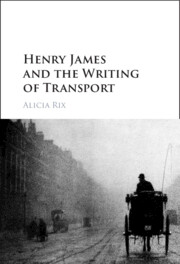
Few studies of Henry James and travel attend to the act of travelling itself: a formative experience for the author and for his invariably itinerant characters. This book explores the relationship between transport and representation in James's later fiction, examining the ineluctable significance of moving and being moved. Each chapter adopts a particular vehicle: by ship, cab, train, motorcar and bicycle, showing how James makes use of the cyclist's embroilment in media culture, the ocean-traveller's fascination with record, or the cabby's superior knowledge of geographical and sexual relations. Drawing on contemporary newspapers, fiction, and guidebooks, Henry James and the Writing of Transport demonstrates how transport is not only contextually crucial to James's fictions but inheres in his style and logic. In particular, it argues, transport ministers to James's complex preoccupation with relationality: a quality which ranges from the intense subjectivity of his fictional worlds to their series of transatlantic encounters.
Review of the inhumane practices of people in both New and Old Worlds prior to Columbian contact. Slave trading and cruelty were widespread, and slave trading was extensive. Most slaves were female, employed in domestic or agricultural environments (with little evidence of gang-labor), and came from a wide range of geographic areas and cultures. Most were born into slavery or were enslaved as a result of raids and wars in which many men on the losing side were killed. Slave markets existed across Eurasia, though in the pre-contact New World such markets were less common. After 1500, transatlantic trafficking came to draw exclusively on Africa or at least on Black people, probably because of the long isolation of the Americas from the rest of the world, and the inability of its Indigenous population to resist harmful pathogens from the Old World. Before 1820 migration to the New World was dominated by Africans rather than Europeans and by males (in contrast to the female-dominated slave populations of the Old World). White slaves were scarcely ever present in the New World.
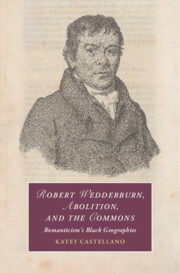
As he rose to leadership of the Spencean Philanthropists in 1817, Robert Wedderburn wrote and published six issues of Axe Laid to the Root, an inexpensive weekly periodical for working-class readers. Axe Laid to the Root instructed its white audience about the radical potential of African-Jamaican land and food-based liberation. The provision grounds, plots set apart from the plantation for enslaved people to grow their own food, were a source of resistance to plantation capitalism, providing food sovereignty and communal identity. The ecological knowledge of the Jamaican Maroons was another source of resistance to plantation economies. Finally, Wedderburn’s writing in “cheap” periodicals aspired to cultivate a transatlantic alliance between the English lower classes, the colonized Irish, and free and enslaved people in Jamaica. The chapter concludes by discussing George Cruikshank’s The New Union Club, which features Wedderburn as a central figure within abolitionist circles.
Building on scholarship in Romanticism, Black studies, and environmental humanities, this book follows the political thought of Robert Wedderburn, a Black Romantic-era writer. Wedderburn was deeply influenced by his enslaved mother and grandmother, who raised him in Jamaica. After migrating to London, he became a key figure in ultraradical circles and was prosecuted by the British government for blasphemous libel. Wedderburn's vision for abolition from below sought to forge a transatlantic alliance between English agrarian radicals and enslaved people in the Caribbean. Instead of emancipation administered by British colonial and commercial interests, Wedderburn championed the ecological projects of enslaved and Maroon communities in the Caribbean as models for liberation. His stories of Black, place-based opposition to slavery provide an innovative lens for rereading significant aspects of the Romantic period, including the abolition of slavery, landscape aesthetics, and nineteenth-century radical politics.
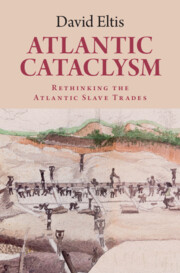
In this comprehensive work, David Eltis offers a two-thousand-year perspective on the trafficking of people, and boldly intervenes in the expansive discussions about slavery in the last half-century. Using new and underexplored data made available by slavevoyages.org, Eltis offers compelling explanations of why the slave trades began and why they ended, and in the process debunks long-held assumptions, including how bilateral rather than triangular voyages were the norm, and how the Portuguese rather than the British were the leading slave traders. Eltis argues that two-thirds of all enslaved people ended up in the Iberian Americas, where exports were most valuable throughout the slave trade era, and not in the Caribbean or the US. Tracing the mass involvement of people in the slave trade business from all parts of the Atlantic World, Eltis also examines the agency of Africans and their experiences in the aftermath of liberation.
From Francis Bacon to Zadie Smith, British essayists have played a crucial role in defining and interrogating the idea of transatlantic essayism. Not to be confused with its American form, which has been central to the promotion of exceptionalist cultural ideology in the United States from the Puritans to the present, British transatlantic essayism came into its own in the early twentieth century. Beginning with an account of D.H. Lawrence’s essays and their critical engagement with Americanness, this chapter explores the development of transatlantic essayism in the work of key essayists for whom the Anglo-American context has been of central importance, including W.H. Auden, Christopher Hitchens, Pico Iyer, Martin Amis, and Zadie Smith. What emerges is both a history of British transatlantic essayism and an account of the ways in which it continues to complicate our sense of the modern essay’s development on both sides of the Atlantic and beyond.
Augustus Hardin Beaumont has been acknowledged as a fleeting but important figure in British working-class radical literature during the reform agitation of the 1830s. Little consideration has been given, however, to Beaumont’s past as a Jamaican planter and defender of slavery. Formerly a slaveholder, magistrate, and member of the Jamaican Assembly, Beaumont fought in the French and Belgian revolutions of 1830 before organising a militia to put down the 1831−2 Jamaican Slave Revolt. Ostracised for proposing a gradual scheme of emancipation, Beaumont moved to Britain and became a radical abolitionist despite benefiting from the £20 million fund established to compensate former slaveowners. Far from aberrant, the apparent contradictions of Beaumont’s political career and literary output were underpinned by his admiration for America, the country of his birth, and the influence of Jeffersonian republicanism. He is, furthermore, illustrative of the broader ambiguity within British radicalism’s response to emancipation in the 1830s, which, although nominally anti-slavery, incorporated apologias for chattel slavery, especially in the United States.
The genre at the center of this essay—the Anglophone transmasculinity narrative in the long eighteenth century—was a popular and ubiquitous genre for imagining gender transformation and queer relations to sex, desire, and embodiment. I argue that the transmasculine figure was a crucial one for imagining transatlantic biopolitics, often embodying aspects of transformability long associated specifically with white masculinity in a settler colony. Thus, the genre is arguably more representative for the history of whiteness than it is for the history of either queer or trans imaginative or embodied life in the eighteenth-century Atlantic world. However, it offers a compelling case study of a genre that can seem spectacularly hyperlegible for contemporary identification. These texts show how sexuality and gender came to be narrative genres in a print/public sphere with privileged relations to intertwined origin stories of the nation, American literary history, and modern queer/trans identities—and a very useful case study in the limits of looking for queer/trans representation in the genres that seem most readily assimilable into a legible prehistory of “queer American literature.”