To save content items to your account,
please confirm that you agree to abide by our usage policies.
If this is the first time you use this feature, you will be asked to authorise Cambridge Core to connect with your account.
Find out more about saving content to .
To save content items to your Kindle, first ensure no-reply@cambridge.org
is added to your Approved Personal Document E-mail List under your Personal Document Settings
on the Manage Your Content and Devices page of your Amazon account. Then enter the ‘name’ part
of your Kindle email address below.
Find out more about saving to your Kindle.
Note you can select to save to either the @free.kindle.com or @kindle.com variations.
‘@free.kindle.com’ emails are free but can only be saved to your device when it is connected to wi-fi.
‘@kindle.com’ emails can be delivered even when you are not connected to wi-fi, but note that service fees apply.
Chapter 6 provides an analysis of the impact of diasporic state-building and its legacy for Iraq, asking what kind of state the diaspora helped to build. Analysing the effects of elite and civil society mobilisation shows how the legacy of diasporic state-building is still felt today and how it has shaped the relationship between state and society in significant ways. This chapter also briefly explores differences in diasporic mobilisation for state-building over time between the United Kingdom and Sweden. With each political period during Iraq’s nascent democracy, opportunities shifted and were reinforced by homeland political dynamics. Charting diasporic state-building over time underscores the patterns and trends that have emerged within the diasporic transnational field to reveal the hegemonic identities, actors, and movements being shaped between Iraq and the diaspora. This two-way transnational flow not only creates attachments, allegiances and loyalties but also has significant implications for the future of the Iraqi state and the Iraqi nation. Finally, the chapter briefly explores the transnationalism of second-generation Iraqis and their commitment to Iraq. It investigates the effects of events in Iraq on their identities and senses of belonging, as well as political transnationalism towards the country.
While much research has addressed the regressive anti-vax protests, this Element focuses on campaigns by progressive social movements to promote the development of vaccines for Covid-19 and ensure their equal access on a global level. Over the course of the pandemic, health and care have become central claims, mobilising health workers and patients as well as citizens in general. Together with various local and national social movement organizations which converged on health rights, through the use of care and cure as bridging frames, transnational campaigns addressing patents on vaccines also unfolded. This Element analyses these transnational campaigns, with particular attention to their organisational models, repertoires of action and collective framing. It assesses their outcomes by considering the complex sets of opportunities and constraints that the Covid-19 pandemic presented for progressive social movements that fight for access to medicines and cures at a global level.
This chapter discusses the variety of modernist theatrical practices grouped under the rubric ‘Theatre of the Absurd’ by Martin Esslin in the 1960s and demonstrates that absurdist theatre was a much more politically attuned and transnational phenomenon than commonly acknowledged. Esslin’s original aim was to understand theatrical practices in France that were related to, but stood outside of, the boundaries and timelines of the symbolist and surrealist movements, in particular the work of Samuel Beckett, Eugène Ionesco, Arthur Adamov, and Jean Genet. The chapter sets French absurdist drama of the 1950s and 1960s in a wider historical context and calls for the better recognition of a global absurdist canon, tracing the blossoming of a new absurdist drama through playwrights including Virgilio Piñera (Cuba), Halide Edib (Turkey), Issam Mahfouz (Lebanon), Osvaldo Dragún (Argentina), Kobo Abe (Japan), Yusuf Idris and Tawfiq al-Hakim (Egypt), and through the contemporary legacies of Beckett’s absurdist model.
What are the implications for global public sociology and labor studies when more than a score of Foxconn workers jump to their death and when a wave of protests, riots and strikes occur in their wake? This article documents the formation of a cross-border sociological intervention project and illustrates how sociological research fueled regional campaigns that gradually developed into a global campaign. This experience confirms the important political contribution that social science can make when linked with grassroots politics. The authors shed light on how social and economic injustice was creatively challenged by combining the strengths of workers, researchers and transnational movement activists. The study uses both quantitative (semi-structured questionnaires) and qualitative (in-depth interviews and participation observation) methods to gain insights concerning the experiences, world views and collective agency of Chinese workers who are struggling to make sense of the global production regime they inhabit and to contest the forces that shape their working and social lives.
The social movement field developed around domestic contention, but as globalization and internationalization proceeded, different forms of transnational contention developed. This has taken two main forms – the creation of transnational NGOs and transnational social movements. The most striking process is transnational diffusion, but two internal processes -- domestication and global framing – and two international processes – externalization and transnational coalition formation – reinforce the transnationalization of social movements.
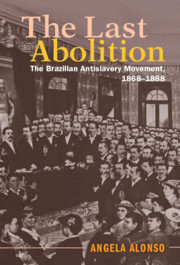
Seamlessly entwining archival research and sociological debates, The Last Abolition is a lively and engaging historical narrative that uncovers the broad history of Brazilian anti-slavery activists and the trajectory of their work, from earnest beginnings to eventual abolition. In detailing their principles, alliances and conflicts, Angela Alonso offers a new interpretation of the Brazilian anti-slavery network which, combined, forged a national movement to challenge the entrenched pro-slavery status quo. While placing Brazil within the abolitionist political mobilization of the nineteenth century, the book explores the relationships between Brazilian and foreign abolitionists, demonstrating how ideas and strategies transcended borders. Available for the first time in an English language edition, with a new introduction, this award-winning volume is a major contribution to the scholarship on abolition and abolitionists.
In this chapter, Melissa Williams begins from the challenge that most contemporary democratic theory is rooted exclusively in Euro-American thought traditions. This is problematic not only for understanding democracy in non-Western contexts but also for crafting democratic theory that can be responsive to globalization. How can a theory of democracy claim global validity if it draws exclusively on Western political experience? The chapter adopts an experimental and playful approach to mapping a strategy of inquiry for deparochializing democratic theory in a global age. It identifies points of contact between contemporary debates over global democracy and forms of contemporary politics that draw on non-Western understandings of the political, focusing on the scales of politics that are most salient for democratic political action: global, state, transnational, and local. The chapter considers three case studies of non-Western conceptions of democracy at these different scales: contemporary Chinese cosmopolitanism (tianxia theory), state-led local democratization in China, and the transnational peasants’ movement, La Vía Campesina. Drawing connections between these cases and the literature on democracy in the global era, the chapter argues that the cases press us toward a transcultural, trans-scalar, translocal, and systemic understanding of democracy’s global potential.
Recommend this
Email your librarian or administrator to recommend adding this to your organisation's collection.