To save content items to your account,
please confirm that you agree to abide by our usage policies.
If this is the first time you use this feature, you will be asked to authorise Cambridge Core to connect with your account.
Find out more about saving content to .
To save content items to your Kindle, first ensure no-reply@cambridge.org
is added to your Approved Personal Document E-mail List under your Personal Document Settings
on the Manage Your Content and Devices page of your Amazon account. Then enter the ‘name’ part
of your Kindle email address below.
Find out more about saving to your Kindle.
Note you can select to save to either the @free.kindle.com or @kindle.com variations.
‘@free.kindle.com’ emails are free but can only be saved to your device when it is connected to wi-fi.
‘@kindle.com’ emails can be delivered even when you are not connected to wi-fi, but note that service fees apply.
Anaïs Nin remains one of the most complex and contested literary figures of the twentieth century, whose life and work persistently resist reductive categorization. Renowned for her diaries and erotica, Nin constructed a literary persona that blurred boundaries between autobiography and fiction, private experience and public discourse. Her writings reveal an abiding commitment to self-exploration, psychological inquiry, and aesthetic experimentation, while her life embodied the sociocultural upheavals of modernity, sexual liberation, and feminist debates. Despite recurrent controversies – ranging from revelations in her unexpurgated diaries to enduring debates about fabrication and self-mythologization – Nin’s influence on Western literature and women’s writing remains profound. Anaïs Nin in Context commemorates the fiftieth anniversary of Nin’s death by situating her life and works within intersecting frameworks of gender, sexuality, psychoanalysis, Modernism, and cultural history, among others. Through thirty-four chapters, this volume examines Nin’s contributions across diverse genres, intellectual traditions, sociopolitical trends, and artistic movements, while reflecting on her afterlife in translation, cinema, biography, and contemporary creative practice. By engaging interdisciplinary perspectives, this collection illuminates Nin as a vital, innovative writer whose legacy continues to provoke critical reassessment and inspire artistic reinvention in the twenty-first century.
Anaïs Nin in Context restores Nin as a central voice of twentieth-century literature. Best known for her diaries and erotica, Nin was also an experimental novelist, essayist, and cultural figure, whose work resonates with questions of sexuality, creativity, and identity. This volume assembles an international team of scholars to explore Nin's life and legacy across seven thematic sections: life and genres; interpersonal and artistic influences; subjectivity and the mind; gender and women's rights; geographical settings; sociocultural contexts; and reception. Together, the thirty-four essays situate Nin within artistic circles from Paris to New York, examine her engagement with feminism and psychoanalysis, and trace her enduring afterlife in film, graphic novels, and contemporary scholarship. Accessible yet rigorous, Anaïs Nin in Context will serve students, researchers, and readers eager to reassess Nin's contributions and understand her as a cosmopolitan writer, whose voice continues to speak to issues pertaining to the woman artist.
Religion made the theatre modern. Since the late nineteenth century, theatre theorists have asserted that drama's origins lie in religious ritual. In this ambitious study, Rebecca Kastleman traces the surprising effects of that claim for the modern and contemporary stage. Across lucidly written chapters, she tracks the 'modern drama of religion,' a movement rooted in both the many modern plays that engage directly with religion and the dramatic debut of new religious practices in the modern theatre. Such works serve as crucibles for catalyzing skepticism, dissolving some religious attachments and strengthening others. Modern playwrights' fascination with religion expanded the frontiers of theatrical experimentation, such that in modernity, the purported origin of theatre in religious ritual came to signify the cutting edge of artistic invention. Spanning drama, performance, modernism, and religious studies, this study powerfully reconfigures the relations between all these fields.
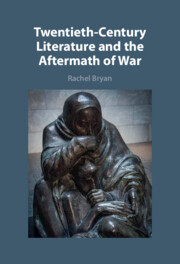
Students of twentieth-century literature are familiar with narratives that associate devastating wars with conceptual, societal, and aesthetic upheavals. What these accounts overlook, however, is a body of psychologically attuned modern writing that was less interested in this shattering of faith and form than in those counterfactual modes of resistance deployed by individuals and nations in response to mass violence and profound change. Twentieth-Century Literature and the Aftermath of War is an innovative study of the attention paid to such reparative, stabilising impulses in post-war writings from across the last century. Focusing on works by Henry James, Elizabeth Bowen, and Kazuo Ishiguro as case studies, it argues that to fully understand the relationship between modern warfare and literary art, we must learn to engage with texts whose modernity lies in their acknowledgement of the draw felt towards, and contested ethics of, consolatory counterfactuals.
This chapter examines how Bengali authors of the late nineteenth and early twentieth centuries use the mosquito to experiment with scale in fiction and poetry. Authors such as Rabindranāth Tagore, Trailokyanāth Mukhopadhyay, Annadāshankar Ray, and Tārāshankar Bandyopadhyāy question both Western medical perception and Western concepts of literary realism by stressing how malaria and mosquitoes escape neat categorizations of meaning. Furthermore, the mosquito in works of poetry and fantasy also shows the interconnection of medical, political, and environmental issues. This chapter uses postcolonial criticism, medical history, and methods drawn from the Health Humanities in order to engage the poetics and politics of Bengali literary interpretations of malaria. By so doing, it stresses the importance of non-Western perspectives to the study of literature and medicine, suggesting that scholarship engage the multiple medical value systems as well as literary traditions that reinterpret and subvert Western tenets of scientific thought.
The horror novel appears in the late twentieth century as a significant genre of popular fiction. Growing out of older traditions of the European Gothic and weird fiction, and their trajectory through American literature, the horror novel has produced some of the most famous names in writing, such as Shirley Jackson and Stephen King. Debates about the literary merits of horror have been frequent, but the genre undoubtedly holds an important place in fiction and in American culture more widely. The politics of the horror novel, then, are crucial. This chapter traces the history of critical commentary on the political position of horror, asking if it upholds or questions the status quo. It also moves beyond this model to examine modern transformations of the genre and self-conscious literary responses to the legacy of racism and misogyny that has been a subject of critique. Covering the horror novel’s response to varied social changes, including immigration, the sexual revolution, and the Civil Rights Movement, this chapter argues that it is capable of both reflecting on and exploiting social fears, and that its politics are as varied as its form, which has far more variety than narrow genre definitions might suggest.
Recommend this
Email your librarian or administrator to recommend adding this to your organisation's collection.