To save content items to your account,
please confirm that you agree to abide by our usage policies.
If this is the first time you use this feature, you will be asked to authorise Cambridge Core to connect with your account.
Find out more about saving content to .
To save content items to your Kindle, first ensure no-reply@cambridge.org
is added to your Approved Personal Document E-mail List under your Personal Document Settings
on the Manage Your Content and Devices page of your Amazon account. Then enter the ‘name’ part
of your Kindle email address below.
Find out more about saving to your Kindle.
Note you can select to save to either the @free.kindle.com or @kindle.com variations.
‘@free.kindle.com’ emails are free but can only be saved to your device when it is connected to wi-fi.
‘@kindle.com’ emails can be delivered even when you are not connected to wi-fi, but note that service fees apply.
This chapter examines the modes of learning associated with a practice deeply embedded in Brazilian society: football (soccer). Recognizing its unique position in the country – as part of everyday life, with minimal formal instruction, varying levels of participation, and strong historical, cultural, and identity dimensions. The ethnographic analysis focuses on the participation contexts of young footballers in the periphery of a Brazilian metropolis (Belo Horizonte, MG). Drawing on the perspective of learning as inherently embedded in social practices (Lave 2019), the chapter explores both the formation of young footballers and the historical development of the practice itself. By focusing the analysis on learning, it articulates the concepts of access and participation, seeking to trace the dynamics of football practices while acknowledging the foundational complexity that characterizes them. The aim is to foreground the discussion on how each participant is constituted, simultaneously and through the very relationships to which they contribute.
This chapter arises from the challenge of understanding how children of different ages participate in household care in Belo Horizonte (Brazil). We analyse their different learning trajectories based on in-depth interviews conducted in their homes. We explore interconnections between children’s experiences and inequalities related to gender, race, and social class. We used illustrated cards from a children’s board game to approach the material possibilities within the domestic space. We examine questions about children’s access to different household spaces and to participation in some household tasks and not others. These conditions shape how they learn to participate and even not to participate, rather than simply failing to learn how to participate. These differences reveal fundamental aspects of care practices – caring for oneself, caring for others, and caring for the world we live in.
The impact of nature’s rights on the legal system and in the world depends in part on perceptions of its compatibility with anthropocentric rights. The presumption that the protection of nature’s rights excludes human action has limited its perceived place and usefulness. Siting nature’s rights in cities contests this presumption. To do so, this article puts rights of nature and the human right to the city in conversation. It draws mostly on Ecuador, the only country with both types of rights enshrined in its constitution. While these appear to be very different sets of rights, this article analyzes three points of convergence. The first is the centrality of critiques of an extractivist model of collective life. The second is the insistence on the maintenance of various forms of difference, including different ways of living, which is meant to disrupt the political, economic, and cultural circuits of extractivism. The third is an ambiguous orientation toward established structures of political authority. Based on these convergences, this article argues that rights of nature and the right to the city may help to politicize the production of urban nature and broaden possible socio-environmental futures.
This chapter examines William Burroughs as a radical world builder within science fiction, exploring how his early and late works engage deeply with the genre’s tropes – time travel, space opera, interplanetary conflict, and dystopian urban control. From the Cut-Up/Nova trilogy to The Wild Boys and the Red Night trilogy, Burroughs constructs fragmented urban landscapes and hybrid futures that destabilize genre conventions and resist linear narrative. Situating Burroughs among proto-SF, Golden Age authors, and the New Wave of the 1960s, Hougue explores how his stylistic innovations – especially the cut-up method – helped redefine the speculative tradition. Clémentine Hougue traces Burroughs’ influence on writers like Samuel Delany, William Gibson, and Kathy Acker, showing how his mutating urban imaginaries prefigure cyberpunk and experimental SF. Moving from dystopian insurrections to utopian reimaginings of space and time, Burroughs’ work becomes a site of poetic and political speculation, operating at the boundaries of genre and form.
From the mid-nineteenth century on, the nation’s authentic character was sought among the ‘timeless’ countryfolk rather than in its ancient ancestry. Paradoxically, this turn from ‘past to peasant’ took place during a period of accelerated, technology-driven and urbanizing modernity, as more unrestricted, commercially driven, mass-appeal cultural media became available. This chapter traces the interaction between the modern city and the timeless country, from world fairs to the art theatres of the fin-de-siècle. The chapter concludes by outlining how the new modern and decorative arts (Arts and Crafts, art nouveau) functioned as carriers of progressive national revival movements in Europe’s sub-imperial capitals, from Dublin and Barcelona to Prague and Riga; and how their anti-imperial emancipation agenda was uneasily poised between progressive cosmopolitanism and nativist essentialism.
This article rethinks how colonial presence and foreign settlements reconfigured urban spaces beyond the treaty-port system by examining Chengdu, an inland, non-treaty-port city. Focusing on the 1930 boundary-wall controversy at West China Union University, a missionary college, it shows that anti-imperialism was refracted through local expectations of access to space and how everyday spatial practices had blurred the line between foreign enclave and local community. In the absence of colonial infrastructures, WCUU pursued indigenizing strategies to embed themselves in urban life; its later move to enclose the campus with walls was criticized as imperialist encroachment. Occurring amid heightened nationalism, the controversy drew force both from nationalist idioms and from ordinary residents’ everyday grievances—economic strain, insecurity, and disruptions to daily routines—in a notably turbulent interwar Chengdu. The conflict brought to the fore two visions of Chengdu’s urban identity: one championed by Western-educated local elites and another articulated by local people defending what they understood as public space. Moreover, I demonstrate how missionary institutions in less overtly colonial settings grappled with the contradictions inherent in their liminal status—simultaneously functioning as colonial enclaves and aspiring to integrate into local society.
The chapter retraces how a collective of Moroccan sociologists in Rabat reconceptualized the meaning of social emancipation in the spaces of the city. The 1965 Casablanca riots and subsequent state repression accelerated the demise of a vision of Moroccan class struggle embodied by Mehdi Ben Barka. This chapter explores how these sociologists departed from class analysis and proposed new new theorizations of Moroccan society as illustrated by Paul Pascon’s notion of the “composite society.” This chapter also tells the story of the periodicals that enabled these debates and such epistemological innovations—BESM, Lamalif and al-Asas— gave them cover to think, but also became sites of insulation. This was illustrated by the coverage of the “youth question” and these sociologists’ gradual struggle to explain younger generations’ discontent. By the late 1970s, these sociologists had unwillingly joined the country’s bourgeoisie. The chapter then ends with sociologist Fatema Mernissi as a counterpoint, who consciously trying to disrupt the boundaries and sought to foreground the voices and agency of subaltern women.
The purpose of this article is to bring provincial and local perspectives into the research of urban space in the wartime Habsburg monarchy. Using the case of Olmütz/Olomouc, a midsize town in central Moravia, it analyzes how various social actors used public space and how they could appropriate its symbolic meaning in wartime. While local urban geography had long been contested by political, most often nationalist actors, World War I introduced fresh themes to the context of the city. Public rituals of loyalty repurposed and intensified some of the old traditions, even as organized and unorganized actors sought to “capture,” “invade,” and potentially “occupy” the same spaces to highlight their agendas in public demonstrations whose form owed much to the traditional public rituals. After October 1918, when the balance of power shifted between nationalist groups, the contest for urban space continued, along with ongoing political unrest, showing strong continuity of wartime practices into the immediate postwar era both in terms of political instability and in terms of the patterns of public ritual.
Volume I offers a broad perspective on urban culture in the ancient European world. It begins with chronological overviews which paint in broad brushstrokes a picture that serves as a frame for the thematic chapters in the rest of the volume. Positioning ancient Europe within its wider context, it touches on Asia and Africa as regions that informed and were later influenced by urban development in Europe, with particular emphasis on the Mediterranean basin. Topics range from formal characteristics (including public space), water provision, waste disposal, urban maintenance, spaces for the dead, and border spaces; to ways of thinking about, visualising, and remembering cities in antiquity; to conflict within and between cities, economics, mobility and globalisation, intersectional urban experiences, slavery, political participation, and religion.
Science, technology, and medicine (STM) and the European city are inextricably linked. In the mid-nineteenth century this intricate relationship became dialectic. The urban space not only served as a facilitator of knowledge production and circulation, but was also transformed by STM.
Volume I offers a broad perspective on urban culture in the ancient European world. It begins with chronological overviews which paint in broad brushstrokes a picture that serves as a frame for the thematic chapters in the rest of the volume. Positioning ancient Europe within its wider context, it touches on Asia and Africa as regions that informed and were later influenced by urban development in Europe, with particular emphasis on the Mediterranean basin. Topics range from formal characteristics (including public space), water provision, waste disposal, urban maintenance, spaces for the dead, and border spaces; to ways of thinking about, visualising, and remembering cities in antiquity; to conflict within and between cities, economics, mobility and globalisation, intersectional urban experiences, slavery, political participation, and religion.
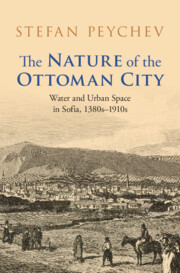
In this innovative interdisciplinary work, Stefan Peychev problematizes the dominant narrative of decline and stagnation in Ottoman Sofia. Drawing on a range of sources and perspectives, including environmental and urban history, archaeology and anthropology, he examines the creation and experience of urban space and place. By employing a longue durée framework and considering empire-wide developments, this work challenges the epistemological boundaries that have traditionally separated Ottoman from post-Ottoman space and the Middle East from Southeast Europe. Peychev argues instead for an integrated understanding of Sofia's water infrastructure, in which Ottoman ideas of the built environment fused with local cultural and technological traditions to create an efficient and long-lasting system.
Esta investigación plantea que el espacio urbano contribuye a la caracterización de movimientos sociales urbanos. Para ello, hace un análisis espacial cartográfico del Paro Nacional de 2021 en Bogotá y Cali (Colombia), el cual se realizó a partir de un mapeo de los lugares y tipos de protesta mediante revisión de prensa y redes sociales. Se encontraron patrones que permiten evidenciar estrategias de ocupación espacial de la protesta, así como una dispersión que caracteriza la agencia ciudadana. También se evidenció cómo la pobreza determina la selección de lugares por proximidad y visibilidad, mas no intersección, y que los sistemas de transporte guían la dispersión en función de su significado como materialidad del Estado. Finalmente, se identificó cómo tensiones sobre los bordes territoriales consolidan desplazamiento de las acciones del interior de los barrios o a los límites, lo que apoya procesos de territorialización que identifican a los movimientos sociales urbanos emergentes.
In Satire 1.6, Horace depicts himself as a private citizen free to move around as he wishes in opposition to another character who does not enjoy such freedom of movement, owing to the fact that he is a politician. Seneca, in De clementia (perhaps recalling Horace), extols the freedom of movement he enjoys in the urban space thanks to the emperor, who, on the contrary, complains about the limitations imposed on him by his role. In Xenophon, Hiero, who was a private citizen before becoming a tyrant, is questioned by Simonides about the joys and woes of the two conditions: private citizens can go anywhere, while for tyrants everywhere they go is like travelling in enemy territory. In Horace’s sermo, the concrete space of the city refers to a potentially open political space: the figures we see moving around the streets of Rome are free to choose between political abstention and participation on the basis of their own personal inclinations. But the political and social situation was uncertain and unstable. Situations and characters tend in fact to transcend their immediate concreteness, referring to something else as well: something suited to satisfying the search for a principle of authority.
This article examines the activities of Comunidades Cristianas Populares (Popular Christian Communities, CCPs) in marginalised neighbourhoods of Chile's capital, Santiago, during the Augusto Pinochet dictatorship. It traces how the CCPs emerged, thrived and then stopped, to showcase the uneasy co-existence between liberationist practices espoused by popular sectors and traditional ecclesiastical paradigms until their breaking point in 1990. In doing so, I argue that religious ritual is an important form of social protest against authoritarianism. Public processions exposed tensions between the Church and state, within the Church's diverse constituents, as well as between Christian community members and left-wing party militants. In the late 1980s, as the Church increasingly retreated from liberation theology, the dictatorship successfully co-opted social organisations and rendered religious rituals largely ineffective as a form of social protest.
This Element focuses on how music is experienced, articulated, and reclaimed in urban commercial environments. Special attention is paid to listeners, spaces, and music, co- and re-produced continuously in their triangular relationship affected by social, legal, economic, and technological factors. The study of the historical development of background music industries, construction of contemporary sonic environments, and individual meaning-making is based on extensive data gathered through interviews, surveys, and fieldwork, and supported by archival research. Due to the Finnish context and the ethnomusicological approach, this study is culture-sensitive, providing a fresh 'factory-to-consumer' perspective on a phenomenon generally understood as industry-lead, behavioral, and global. This title is also available as Open Access on Cambridge Core.
The last decades have seen great scholarly interest in the fate of Roman temples and cult statues during the Christianisation of the Roman Empire. The surge of studies on spatiality and lived religion in Roman studies have demonstrated that ancient religious practice was not confined to sanctuaries but rather infused into all spheres of everyday life. Informed by these studies, I argue that the Christianisation effort was not confined to temples and cult statues in sanctuaries, despite the narrow focus on these monuments in legal and patristic sources. The spaces where people most frequently moved, lived, and practised religion in their everyday lives were equally important religious arenas. In this article I venture out of the temples and into the streets of late antique Ephesus to the Triodos intersection to highlight an array of subtle transformations that are unassuming in isolation, but together effectively Christianised the streetscape. I demonstrate that streetscapes were arenas of material Christianisation alongside monumental sanctuaries. The Triodos is used as a point of departure to show how the Roman streetscapes functioned as more-than-material religious assemblages. Human–material interaction in ritual and everyday movement and practices made the streetscapes active participants in the Christianisation process.
The early modern Japanese city, in the paradigmatic form of the castle town (jōkamachi), gave spatial form to the social distinctions of status group (mibun), and it evolved through complex negotiations between multiple status communities, each with its own social logics and visions of urban life. This chapter sketches these spatial structures and social processes through a study of the shogunal capital of Edo, focusing on the triangular negotiation between three sets of agents: the shogunal administration, the propertied townspeople, and the diffuse occupational collectives of the unpropertied urban margins. This triangular negotiation is illuminated through a historical survey of the Edo firefighting system, revealing the ways in which the early modern city was shaped by competing interests and claims over space. Particular attention is given to the diverse forms of social agency that interacted in the urban process, complicating a binary model of governmental authority and popular subversion.
This chapter shows that due to the old configuration of the Mediterranean city and decades, if not centuries, of political corruption, Mediterranean detectives are confronted with a problematic urban environment, which they blame on political greed and laissez faire capitalism. Alongside this negative perception of urban development, through their work and private life, Mediterranean detectives attempt to resist a dominant culture of exclusion, and experience and build transcultural spaces where history and culture are shared. The Mediterranean detective feels a sense of belonging to the different communities that populate the Mediterranean city. By interacting with different people and ethnicities, and by inhabiting inter-class, transcultural and inter-ethnic places, the Mediterranean detective constructs an urban environment that overcomes stereotypical representations of the city as a dangerous and divisive place. Finally, this chapter shows that a focus on the Mediterranean Sea, as an ‘in-between’ space of both clashes and exchange, adds a new literary map in which traditional postcolonial distinctions between ‘centre’ and ‘periphery’ are overcome.