To save content items to your account,
please confirm that you agree to abide by our usage policies.
If this is the first time you use this feature, you will be asked to authorise Cambridge Core to connect with your account.
Find out more about saving content to .
To save content items to your Kindle, first ensure no-reply@cambridge.org
is added to your Approved Personal Document E-mail List under your Personal Document Settings
on the Manage Your Content and Devices page of your Amazon account. Then enter the ‘name’ part
of your Kindle email address below.
Find out more about saving to your Kindle.
Note you can select to save to either the @free.kindle.com or @kindle.com variations.
‘@free.kindle.com’ emails are free but can only be saved to your device when it is connected to wi-fi.
‘@kindle.com’ emails can be delivered even when you are not connected to wi-fi, but note that service fees apply.
Uncovers the hidden networks behind Catholic publishing in Restoration London, where politics, religion, and print intersected in unexpected ways under Charles II, James VII/II, and Queen Catherine of Braganza.
In the politically volatile decades following the Restoration, the Catholic book trade in London remained a vibrant and adaptive force. This study reconstructs the networks-commercial, familial, and religious-that sustained the production and circulation of Catholic texts between 1660 and 1688. These networks operated within and across confessional boundaries, drawing in Protestants and Catholics alike, and were shaped by shifting legal frameworks, urban patronage, and the ambiguities of what constituted a 'popish' text.
Focusing on the lived experience of printers, booksellers, and readers, the book challenges the notion of Catholic isolation in Protestant England. It reveals how Catholic print culture was embedded in the broader English print economy and public sphere, often sharing tools, spaces, and strategies with dissenting and loyalist traditions. From Somerset House to the streets of London, Catholic actors navigated censorship and suspicion with ingenuity, contributing to a paradoxical print culture that was both illicit and integrated.
Engaging with the fields of Catholic history, book history, and Restoration studies, this monograph offers a new framework for understanding religious identity, toleration, and the mechanics of clandestine publishing. It brings to light the agency of overlooked figures and repositions Catholic print as a central, rather than marginal, feature of early modern English society.
A vivid exploration of how Catholicism endured far longer into the Elizabethan era and continued to shape the very identity of early modern England.
This compelling study delves into the complexities of religious and political power during Elizabeth I's reign, presenting a further, important challenge to the traditional narratives of a swift and uncontested Protestant triumph. Here, Wilfred Hammond explores why Catholic aristocrats, despite wielding significant regional power and Court influence, failed to block or reverse the emerging religious revolution.
Focusing on the Stanley earls of Derby, the dominant noble family in Lancashire - a county described by the Elizabethan government as "the very sink of popery" - the author reconstructs their role in obstructing Protestant reform. Using the State and Cecil Papers, as well as foreign ambassadorial reports , the study re-evaluates the Stuart party-building efforts of Lady Margaret Douglas and Mary, Queen of Scots. Hammond re-examines the context of the papal bull of deposition, and uncovers the Stanley-Gerard conspiracy of 1570 with its links to the Ridolfi Plot.
This richly detailed analysis of the Stanleys positions them at the heart of a network of nobles, including the Percies and Nevilles, who were opposed to the religious change presented by Protestantism. As such, this vibrant case-study unfolds to offer fresh insights into the slow, fraught transformation of England's religious landscape during one of its most turbulent periods.
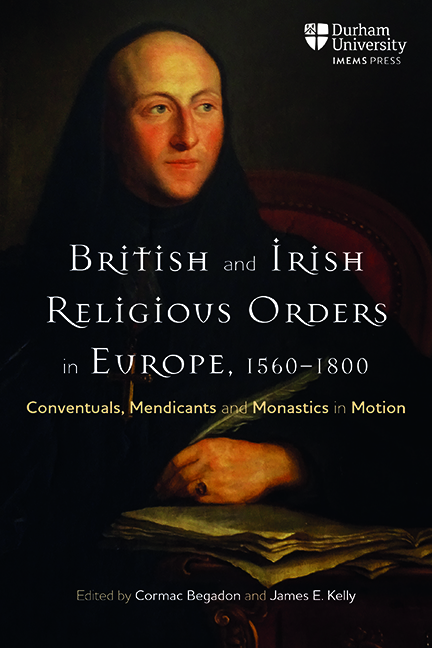
Demonstrates how, far from being peripheral, the stable communities of conventual religious in mainland Europe acted as important centres of religious and secular activity in the aftermath of the Protestant Reformation.
Recommend this
Email your librarian or administrator to recommend adding this to your organisation's collection.