To save content items to your account,
please confirm that you agree to abide by our usage policies.
If this is the first time you use this feature, you will be asked to authorise Cambridge Core to connect with your account.
Find out more about saving content to .
To save content items to your Kindle, first ensure no-reply@cambridge.org
is added to your Approved Personal Document E-mail List under your Personal Document Settings
on the Manage Your Content and Devices page of your Amazon account. Then enter the ‘name’ part
of your Kindle email address below.
Find out more about saving to your Kindle.
Note you can select to save to either the @free.kindle.com or @kindle.com variations.
‘@free.kindle.com’ emails are free but can only be saved to your device when it is connected to wi-fi.
‘@kindle.com’ emails can be delivered even when you are not connected to wi-fi, but note that service fees apply.
Unearths a rich tradition of creative flexibility, collaboration and mutual influence between literary culture and Egyptology.
The first monograph study to bring literature into conversation with Egyptological cultureIncorporates a number of archival primary sources which have, until now, escaped critical attentionAnalyses canonical literature alongside works by lesser-known authors Combines literary criticism with book history, the history of science, and reception studiesThis book explores literary and Egyptological cultures from the closing decades of the nineteenth century to the opening decades of the twentieth, culminating in the aftermath of the high-profile discovery of the tomb of Tutankhamun in 1922. Analysing the works of Egyptologists including Howard Carter, Arthur Weigall and E. A. Wallis Budge alongside those of their literary contemporaries such as H. Rider Haggard, Marie Corelli and Oscar Wilde, it investigates the textual, cultural and material exchanges between literature, Egyptology and visual and material culture across this period.
Explores the lasting cultural and political impact of the events of this remarkable year.
Oscar Wilde's libel suit against the Marquess of Queensberry and its disastrous repercussions dominated British newspapers during the spring of 1895, but as this innovative study reveals, the Wilde scandal was by no means the only event to capture the public's imagination that year. Freak weather, a flu epidemic, a General Election, industrial unrest, 'sex novels' and New Women, trials of murderers and fraudsters, accidents, anarchists, bombers, balloonists and bicyclists were all topics of interest and alarm. Had Jack the Ripper returned? Did the Prime Minister have a dreadful secret? Were Aubrey Beardsley's drawings corrupting the nation's morals? Were overpaid foreign players corrupting English football? Could cricket save a degenerate nation from moral ruin?Drawing on strikingly diverse primary sources, Nicholas Freeman examines the recurrent preoccupations of a turbulent year, showing how 1890s' Britain is at once far removed from our own day and yet strangely familiar.
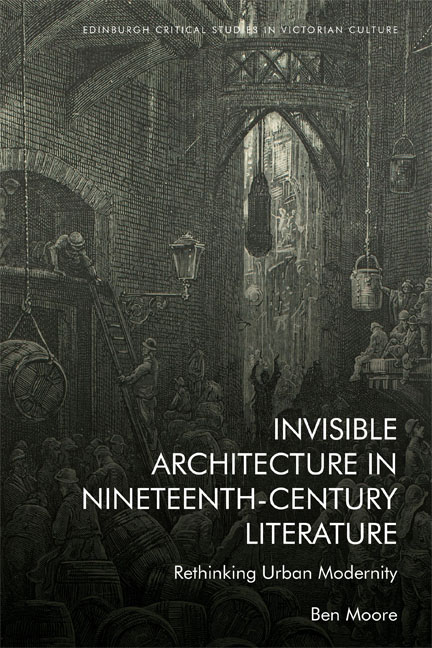
Ben Moore presents a new approach to reading urban modernity in nineteenth-century literature, by bringing together hidden, mobile and transparent features of city space as part of a single system he calls 'invisible architecture'. Resisting narratives of the nineteenth-century as progressing from concealment to transparency, he instead argues for a dynamic interaction between these tendencies. Across two parts, this book addresses a range of apparently disparate buildings and spaces. Part I offers new readings of three writers and their cities: Elizabeth Gaskell and Manchester, Charles Dickens and London, and Émile Zola and Paris, focusing on the cellar-dwelling, the railway and river, and the department store respectively. Part II takes a broader view by analysing three spatial forms that have not usually been considered features of nineteenth-century modernity: the Gothic cathedral, the arabesque and white walls. Through these readings, the book extends our understanding of the uneven modernity of this period.
A lonely damsel imprisoned within a castle or convent cell. The eavesdropping of a prisoner next door. The framed image of a woman with a sinister past. These familiar tropes from 1790s novels and tales exploded onto the English literary scene in 'low-brow' titles of Gothic romance. Surprisingly, however, they also re-emerged as features of major Victorian poems from the 1830s to 1870s. Such signature tropes - inquisitional overhearing; female confinement and the damsel in distress; supernatural switches between living and dead bodies - were transfigured into poetic forms that we recognise and teach today as canonically Victorian. The Gothic Forms of Victorian Poetry identifies a poetics of Gothic enclosure constitutive of high Victorian poetry that came to define key nineteenth-century poetic forms, from the dramatic monologue, to women's sonnet sequences and metasonnets, to Pre-Raphaelite picture poems.
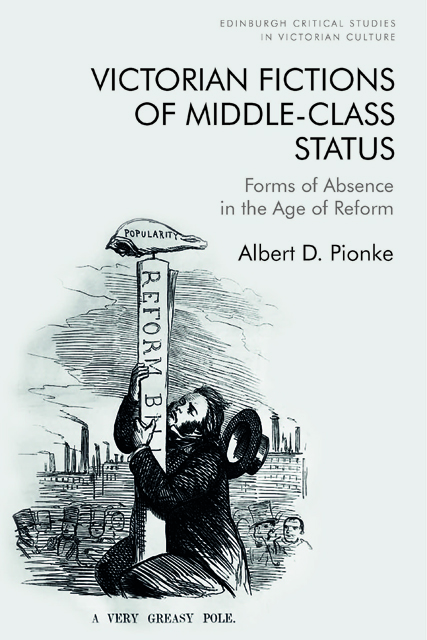
Victorian Fictions of Middle-Class Status recovers the novelistic pervasiveness of a Reform-Era rhetorical form, the negative assertion of value, which grounds middle-class claims to social authority in repudiations of such conventional warrants as birth, wealth, numerical preponderance, command of fact and, specifically for women, the symbolic phallus. Bringing together historical, literary and sociological theory, this study recaptures the Victorians' broad sense of epistemological uncertainty about their rapidly changing society, reconstructs novelists' specific attempts to legitimate their traditionally low-status genre and offers fresh readings of novels by Charlotte Brontë, Wilkie Collins, Charles Dickens, George Eliot, Elizabeth Gaskell, William North, Anthony Trollope, William Makepeace Thackeray and Charlotte Yonge, among others.
This book examines late nineteenth-century feminism in relation to technologies of the time, marking the crucial role of technology in social and literary struggles for equality.
Recommend this
Email your librarian or administrator to recommend adding this to your organisation's collection.