This series provides a forum for the best new work in the field of British music studies, placing music from the early seventeenth to the late twentieth centuries in its social, cultural, and historical contexts. Its approach is deliberately inclusive, covering immigrants and emigrants as well as native musicians, and explores Britain's musical links both within and beyond Europe. The series celebrates the vitality and diversity of music-making across Britain in whatever form it took and wherever it was found, exploring its aesthetic dimensions alongside its meaning for contemporaries, its place in the global market, and its use in the promotion of political and social agendas.
To save content items to your account,
please confirm that you agree to abide by our usage policies.
If this is the first time you use this feature, you will be asked to authorise Cambridge Core to connect with your account.
Find out more about saving content to .
To save content items to your Kindle, first ensure no-reply@cambridge.org
is added to your Approved Personal Document E-mail List under your Personal Document Settings
on the Manage Your Content and Devices page of your Amazon account. Then enter the ‘name’ part
of your Kindle email address below.
Find out more about saving to your Kindle.
Note you can select to save to either the @free.kindle.com or @kindle.com variations.
‘@free.kindle.com’ emails are free but can only be saved to your device when it is connected to wi-fi.
‘@kindle.com’ emails can be delivered even when you are not connected to wi-fi, but note that service fees apply.
Explores the breadth, diversity and significance of the commercial music trade and its communities across Britain during the late seventeenth and eighteenth centuries.
Adding to the existing scholarship on music publishers and instrument makers, mostly based in London and the university cities, the collection challenges this historiography by offering the first collective narrative for the commercial trade in musical goods and services - including the printing, publishing and sale of printed music, the sale of manuscript music, musical instruments and related wares, and the tuning and general maintenance of musical instruments such as organs and pianos.
Contributions draw on evidence from across the country of the trade's activities, networks and communities, and recognize the significance of small cities, market towns and regional hubs in cultural dissemination. The Music Trade in Regional Britain therefore contributes to a growing body of work offering a nationwide account of musical culture. It foregrounds a trade that was far more geographically dispersed, economically significant and culturally broad than has previously been acknowledged.
CONTRIBUTORS: Stephanie Carter, Simon D.I. Fleming, David Griffiths, Nancy A. Mace, Martin Perkins, Christopher Roberts, Roz Southey, Matthew Spring, Robert Thompson
Using John Ireland's fascination with Arthur Machen as case study, this book challenges our perception of the correspondence between music and literature in twentieth-century Britain.
The composer John Ireland (1879-1962) declared repeatedly that no one could understand his music until they had first read the work of his favourite writer, Arthur Machen (1863-1947). This book is the first study to take Ireland at his word. Revolving around Machen's classification as a founding figure of 'weird fiction', it uses weird aesthetics as an interpretative lens with which to understand Ireland's notoriously cryptic life and music. Its four chapters deal respectively with Machen's and Ireland's parallel experience of fin-de-siècle London; with their engagement with the English pastoral tradition; with their explorations of weird art's relationship with eroticism; and with unsettling implications of alternative historiography.
The resulting portrait reveals Ireland to be one of Britain's pre-eminent 'weird artists', placing Ireland in the aesthetic context with which he wished to be associated. It therefore fills a significant gap in British musicology, while at the same time contributing to a growing appreciation of Machen as a major figure in British culture, one whose influence exceeds far beyond the literary sphere to which he is traditionally confined. Using Ireland's fascination with Machen as its case study, this book makes a timely and necessary connection between the literary weird and its musical doppelgänger, enriching and challenging our perception of the correspondence between music and literature in twentieth-century Britain.
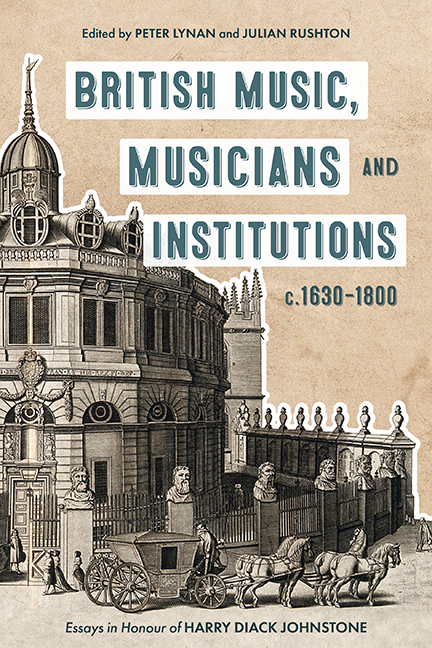
Building upon the developing picture of the importance of British music, musicians and institutions during the eighteenth century, this book investigates the themes of composition, performance (amateur and professional) and music-printing, within the wider context of social, religious and secular institutions.
Combining approaches from reception studies and historical musicology, this book demonstrates how the representation of music at exhibitions drew the press and public into debates about music's role in society.
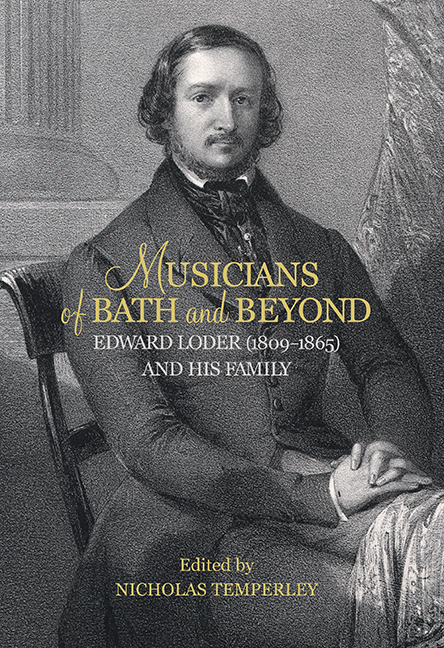
Musicians of Bath and Beyond: Edward Loder (1809-1865) and his Family illuminates three areas that have recently attracted much interest: the musical profession, music in the British provincesand colonies, and English Romantic opera. The Loder family was pre-eminent in Bath's musical world in the early nineteenth century. John David Loder (1788-1846) led the theatre orchestra there from1807, and later the Philharmonic orchestra and Ancient Concerts in London; he also wrote the leading instruction manual on violin playing and taught violin at the Royal Academy of Music. His son Edward James (1809-65) was a brilliant but underrated composer of opera, songs, and piano music. George Loder (1816-68) was a well-known flautist and conductor who made a name in New York and eventuallysettled in Adelaide, where he conducted the Australian premieres of Les Huguenots, Faust, and other important operas. Kate Fanny Loder (1825-1904) became a successful pianist and teacher in early Victorian London, and she is only now getting her due as a composer. This book takes advantage of new and often surprising biographical research on the Loder family as a whole and its four main figures. It uses them to illustrate several aspects of music history: the position of professional musicians in Victorian society; music in the provinces, especially Bath and Manchester;the Victorian opera libretto; orchestra direction; violin teaching; travelling musicians in the US and Australasia; opera singers and companies; and media responses to English opera. The concludingsection is an intense analysis and reassessment of Edward Loder's music, with special emphasis on his greatest work, the opera Raymond and Agnes.
NICHOLAS TEMPERLEY is Professor Emeritus of Musicology at the University of Illinois at Urbana-Champaign and is a leading authority on Victorian music.
CONTRIBUTORS: Stephen Banfield, David Chandler, Andrew Clarke, Liz Cooper,Therese Ellsworth, David J. Golby, Andrew Lamb, Valerie Langfield, Alison Mero, Paul Rodmell, Matthew Spring, Julja Szuster, Nicholas Temperley
To evaluate the familiar, even over-familiar, story of Handel's life could be seen as a quixotic endeavour. How can there be anything new to say? This book seeks to distinguish fact from fiction, notonly to produce a new biography but also to explore the concepts of biography and dissemination by using Handel's life and lives as a case study. By examining the images of Handel to be found in biographies and music histories - the genius, the religious profound, the master of musical styles, the distiller into music of English sentiment, the glorifier of the Hanoverians, the hymner of the middleclass, the independent, the prodigious, the generous, the sexless, the successful, the wealthy, the bankrupt, the pious, the crude, the heroic, the devious, the battler of ill-fortune, the moral exemplar - and by adding new factual information, David Hunter shows how events are manipulated into stories and tropes. One such trope has been employed to portray numerous persons as Handel's enemies regardless of whether Handel considered them as such. Picking apart the writing of Handel's biographers and other reporters, Hunter exposes the narrative underpinnings - the lies, confusions, presumptions, and conclusions, whether direct and inferred or assumed - to show how Handel's 'lives' in biographies and histories have moulded our understanding of the musician, the man and the icon.
DAVID HUNTER is Music Librarian at the University of Texas at Austin.
Sir George Thomas Smart (1776-1867) was a significant musical animateur of the early nineteenth century, who earned his living primarily as a conductor but was also significant as an organist, composer and recorder of events. Smart established successful and pioneering London concert series, was a prime mover in the setting up of the Philharmonic Society and the Royal Academy of Music, and taught many of the leading singers of the day, being well versed in the Handelian concert tradition. He also conducted the opera at the Covent Garden Theatre and introduced significant new works to the public - he was most notably an early champion of the music of Beethoven. His journeys to Europe, and his contacts with the leading European musical figures of the day (including Weber, Meyerbeer, Spohr, and Mendelssohn), were crucial to the direction music was to take in nineteenth-century Britain.This detailed account of Smart's life and career presents him within the context of the vibrant concert life of London and wider European musical culture. It is the first full length, critical study of this influential musical figure.
John Carnelley is Deputy Director of Music and Head of Academic Music, Dulwich College, London. He holds a PhD in Historical Musicology from the University of London (Goldsmiths College) and has previously published research on the eighteenth-century organ manuscripts of John Reading, held in the Dulwich College Archive.
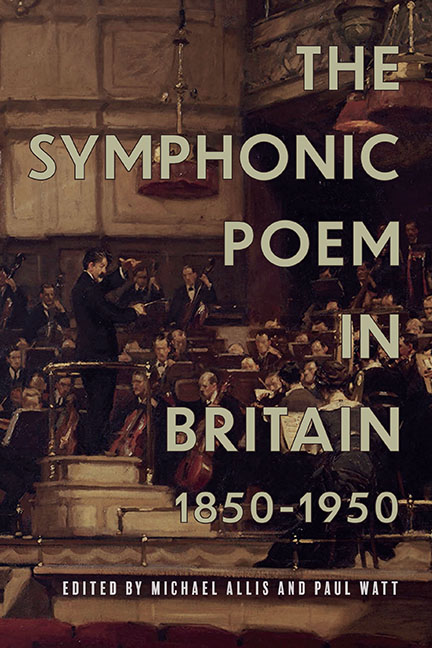
The Symphonic Poem in Britain 1850–1950 aims to raise the status of the genre generally and in Britain specifically, by reaffirming British composers' confidence in dealing with literary texts.
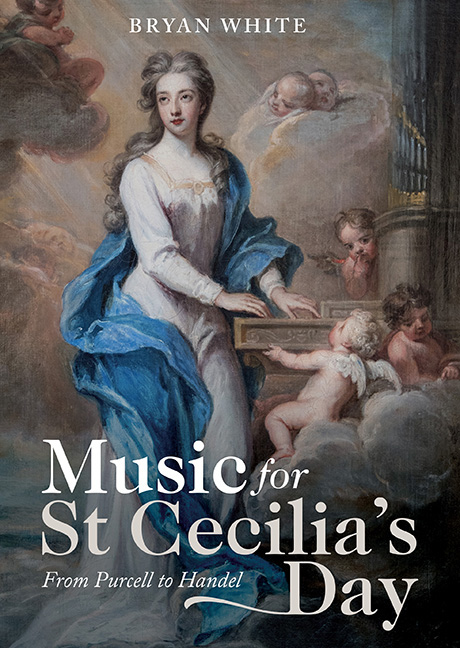
In 1683 English court musicians and the Musical Society of London joined forces to celebrate St Cecilia's Day (22 November) with a feast and the performance of specially composed music. The most prominent composers and poets of the age wrote for these occasions, including Henry Purcell, John Blow, John Dryden and William Congreve.
Ernest Newman (1868-1959) left an indelible mark on British musical criticism in a career spanning more than seventy years. His magisterial Life of Richard Wagner, published in four volumes between 1933 and 1946, is regarded as his crowning achievement, but Newman wrote many other influential books and essays on a variety of subjects ranging from early music to Schoenberg. In this book, the geneses of Newman's major publications are examined in the context of prevailing intellectual trends in history, criticism and biography. Newman's career as a writer is traced across a wide range of subjects including English and French literature, evolutionary theory and biographical method, and French, German and Russian music. Underpinning many of these works is Newman's preoccupation with rationalism and historical method. By examining particular sets of writings such as composer-biographies and essays from leading newspapers such as the Manchester Guardian and the Sunday Times, this book illustrates the ways in which Newman's work was grounded in late nineteenth-century intellectual paradigms that made him a unique and at times controversial figure. PAUL WATT is Senior Lecturer in Musicology in the Sir Zelman Cowen School of Music at Monash University.